
Spasticity Exercises at Home: A Safe Starter Routine | Rehabana
Safe spasticity exercises at home: splints, gentle stretching, weight-bearing and assisted movements, plus caregiver tips and when to call a PM&R doctor.
Trishna Manna is a physiotherapist with over 5 years of clinical experience, currently serving as a Therapist Lead. She specializes in neurological rehabilitation, patient assessment, individualized treatment planning, and team supervision.
She completed her Bachelor in Physiotherapy (BPT) in 2019 from the National Institute for Locomotor Disabilities (Divyangjan), Kolkata, affiliated with the West Bengal University of Health Sciences (WBUHS). Her professional experience includes working as a Neuro Rehab Physiotherapist at Rehabana Care Pvt. Ltd. since August 2021, as well as prior clinical roles at Rinchi Trust Hospital and Asha Bhavan Centre. She is experienced in managing a wide range of complex neurological cases—such as stroke, cerebral palsy, Parkinson's disease, and transverse myelitis—alongside various orthopedic conditions.
Safe spasticity exercises at home: splints, gentle stretching, weight-bearing and assisted movements, plus caregiver tips and when to call a PM&R doctor.

Can physiotherapy help Parkinson's disease? Yes. How it improves walking, balance, posture and freezing, what exercises involve and when to start.

How gait training after stroke works: assessment, braces and walking aids, overground, treadmill and robotic practice, and what progress looks like.

How long stroke rehab takes depends on severity, timing and therapy dose. What recovery looks like if rehab starts early, at 3 months or after a year.
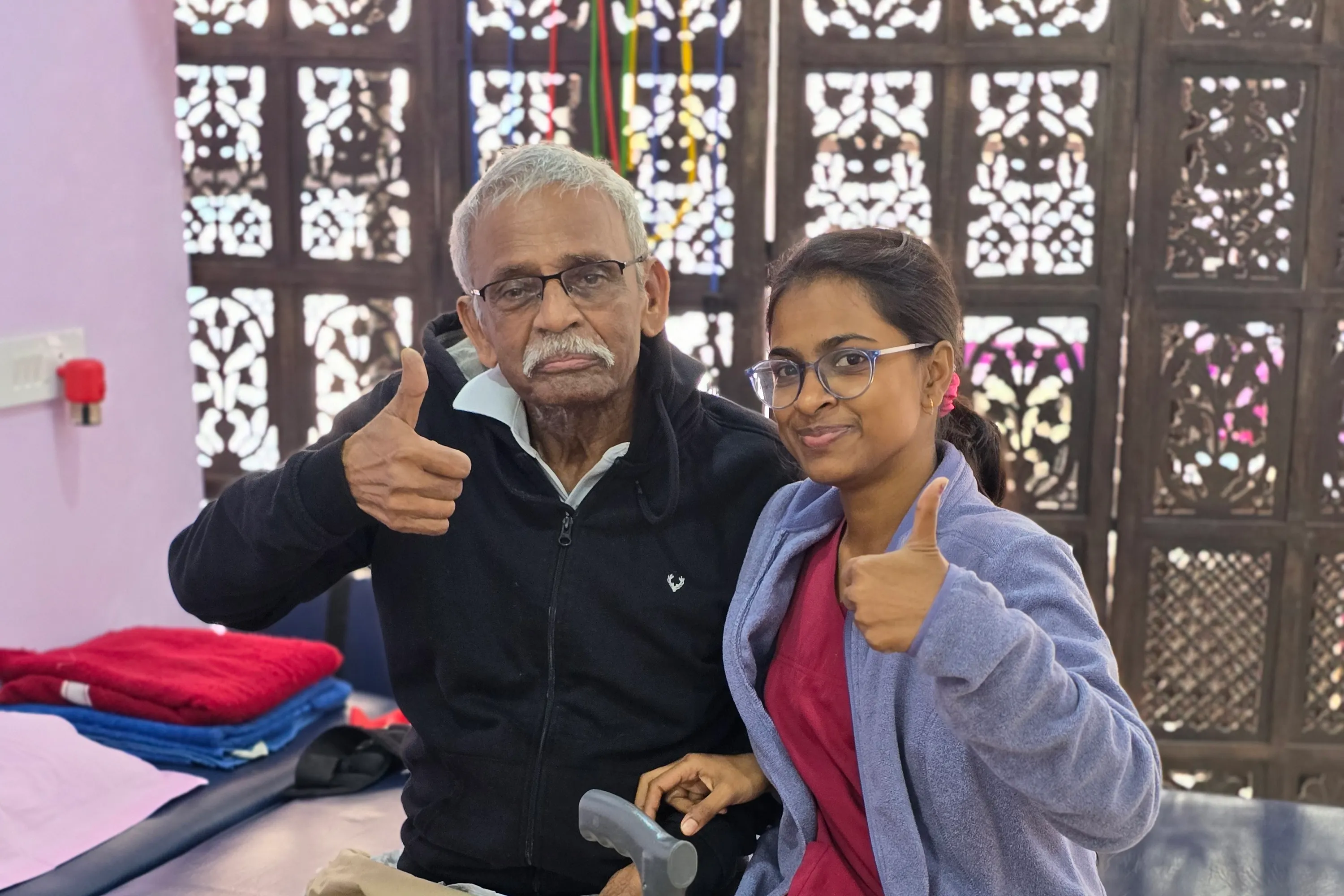
What Parkinson's rehabilitation involves: PM&R-led assessment, physio, OT, speech therapy, tests like Berg and TUG, medicine timing and home practice.

Choosing a traumatic brain injury rehab centre in Kolkata? Use this 9-point checklist: PM&R-led assessment, family training, progress reports and more.

Dysphagia is difficulty swallowing food, liquids or saliva. Learn the warning signs, why it follows stroke or Parkinson's, and how swallowing rehab helps.

Physiotherapy vs occupational therapy: PT improves movement, strength and walking; OT builds daily skills like eating and dressing. When you need both.

How balance training helps elderly adults walk with confidence and reduce fall risk: static vs dynamic balance, Berg and TUG tests, and robotic training.

What is neuroplasticity and does it help recovery after a stroke or brain injury? Learn how rehab uses it at each stage, and what it cannot promise.