

Neuro Rehabilitation in Kolkata After Hospital Discharge
Returning to West Bengal after hospital treatment? Continue structured, multidisciplinary Neuro Rehabilitation closer to home with Rehabana.
Read MoreMaybe your mother knows exactly what she wants to say, but the words come out jumbled. Or your father has coughed through every meal since the stroke. Speech therapy helps with both, and the family has a big part to play.
Doctor-led speech and swallowing therapy
Help for aphasia, slurred speech, weak voice
Safer eating and drinking, step by step
Short home practice the family can join

Speech, language, voice, swallowing
You'll hear it called speech therapy, speech and language therapy or speech-language pathology. Plenty of people just ask, "speech therapy kya hai?" It covers far more than speech. Think about what happens before one sentence comes out. You understand what was said. You find the right word. Your lips and tongue shape it. Then your breath and voice box push it out loud enough to hear. It can go wrong at any point, and the therapist's first job is finding where. Swallowing is part of the work too, since the same mouth and throat muscles do both jobs. A qualified speech therapist holds a BASLP degree or higher and is registered with the Rehabilitation Council of India (RCI).
Problems speech therapy treats
From outside, it all looks like "can't talk properly". But the cause differs, and so does the therapy.
Aphasia means the brain struggles to find, understand or put words together. Thinking is usually fine. It's most common after a stroke on the left side of the brain. Therapy works on finding words, reading and writing.
Dysarthria is when the speech muscles are weak, stiff or badly coordinated. The person knows what to say, but it comes out slurred, quiet or jerky. Dysarthria treatment works on breath, voice, clearer sounds and a slower pace.
Here the muscles are fine. Apraxia means the brain has trouble planning the movements for a word. The person tries, gets it wrong, then gets it wrong a different way. Therapy uses lots of careful repeats, often watching the therapist's mouth.
A hoarse, strained or very soft voice. Teachers get this, and so do many people with Parkinson's. Voice therapy teaches better breath support and gentler voice use. Hoarse for over three weeks? See an ENT doctor first.
Dysphagia means difficulty swallowing. Food or drink can stick, or slip into the windpipe instead of the food pipe. Doctors call that aspiration. It can cause chest infections, sometimes without any cough at all.

Signs worth noticing
Ask for an assessment if any of this is happening at home:
Conditions we see most
Most adults we see have a brain or nerve condition. Each one affects talking and swallowing differently. Quick notes below, or browse every condition we treat.
At least 3 in 10 stroke survivors have trouble communicating, and swallowing problems are common too. Swallowing should be checked before the person eats or drinks anything at all. See speech and swallowing after stroke.
The voice slowly gets quieter and flatter, often before the person notices. Swallowing and drooling can follow. Oddly, practising speaking louder than feels right is what helps. More on speech and swallowing in Parkinson's disease.
After a head injury, staying on track in a conversation is often the hard part. A tracheostomy (a breathing tube in the neck) can affect voice and swallowing. See speech and swallowing after traumatic brain injury and cognitive rehabilitation after brain injury.
Speech may turn slow or slurred, and the voice tires, usually on days when tiredness is bad. Swallowing changes tend to come later. See speech and swallowing in multiple sclerosis.
MND usually affects speech and swallowing more over time, so we plan early. Some people record their voice now for a device to use later. That's called voice banking. See speech and swallowing in motor neuron disease.
Speech itself is usually fine. But after a high neck injury, a tracheostomy or a breathing machine can affect the voice and swallowing. See speech and swallowing after spinal cord injury.

Our rehabilitation doctors supervise the medical side, and the speech therapist reports back as things change.

Our speech therapists hold a BASLP or equivalent degree and are registered with the RCI.

Audiologists on the team test hearing, because poor hearing can look a lot like poor understanding.

You get a plan in plain words, with a rough session count, home practice and review dates.

Physiotherapy, occupational therapy and psychology work alongside speech therapy, all aiming at the same goals.

We can write support letters for school, work, travel or exams when speech is getting in the way.
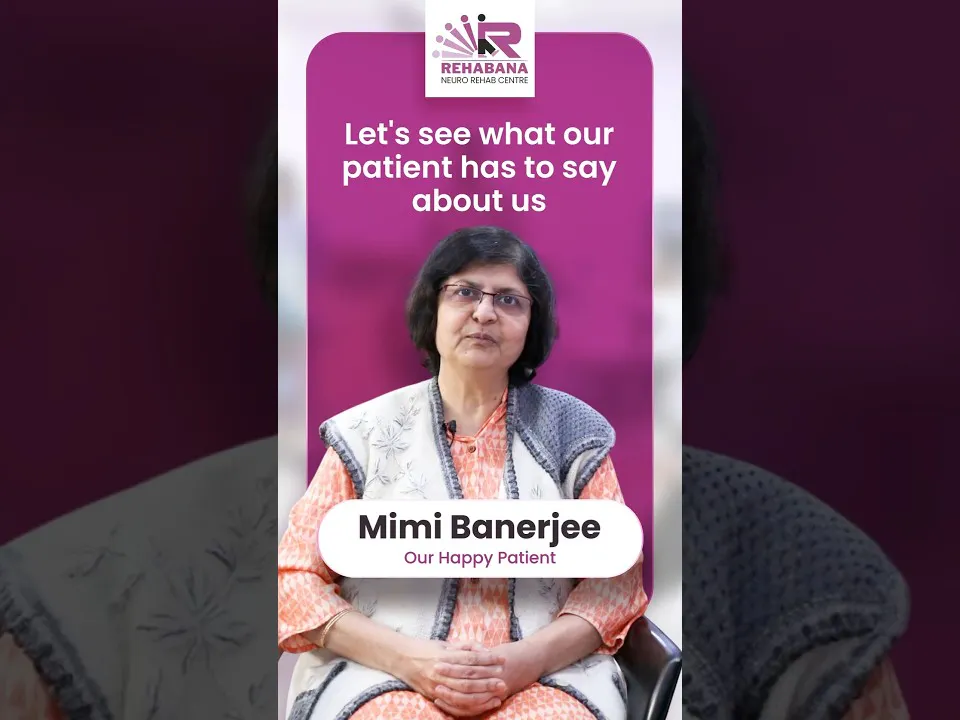
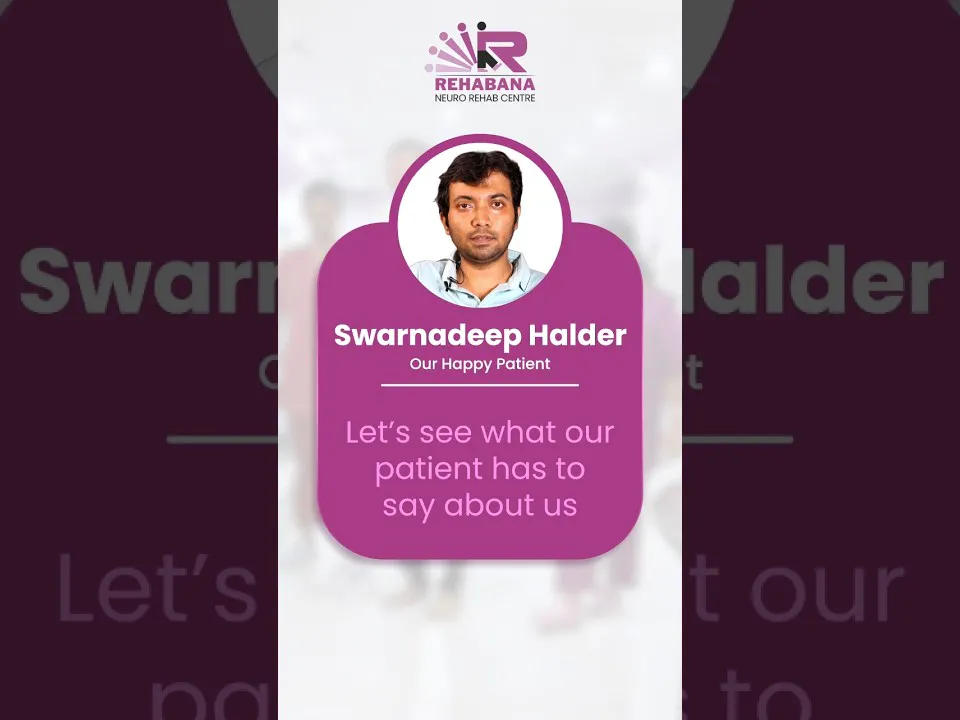
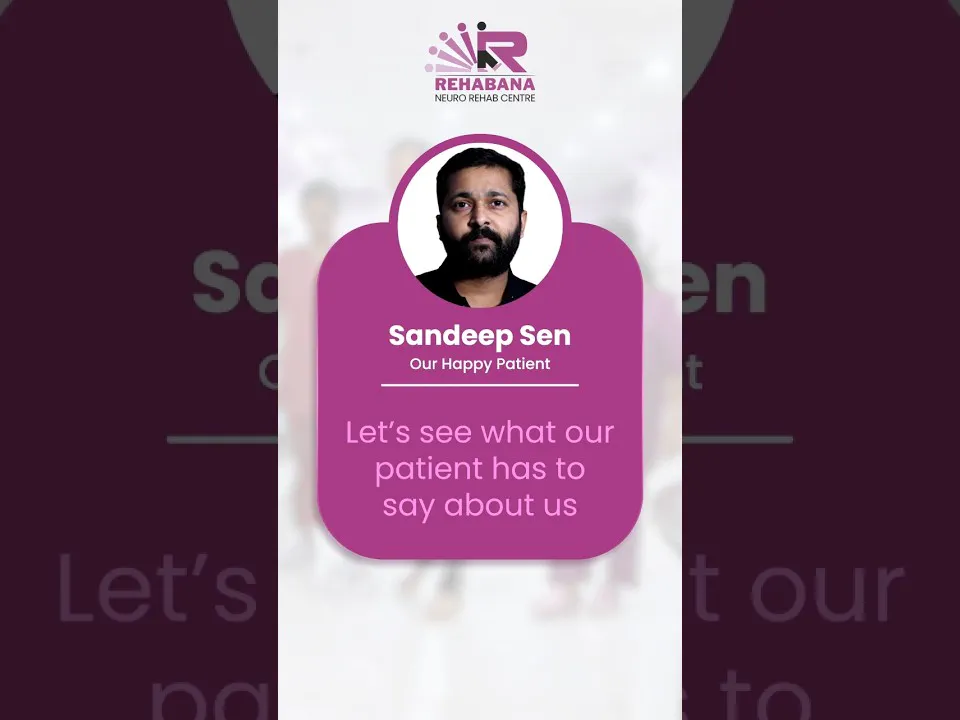
Patient Stories
Hear directly from patients and families who have experienced meaningful recovery at Rehabana. Their stories reflect our commitment to personalized care, consistent progress, and compassionate support throughout the rehabilitation journey.
Your Recovery Starts With the Right Care

Our treatments follow evidence-based protocols delivered by certified rehabilitation professionals.

Specialized care for stroke, paralysis, spinal injuries, and chronic pain recovery.

Continuous care and emergency assistance whenever you need us.
What to expect
It goes in rounds. Check, set goals, practise, then check again.

About 45 to 60 minutes. We talk first. Then you name pictures, follow instructions, read a little and hold a long "aaah".
Real-life goals, set in blocks of 4 to 8 weeks. Something like "eat a soft lunch without coughing".


Sessions run 40 to 45 minutes, at the centre or as guided therapy at home, plus 10 to 15 minutes of daily practice.
We repeat the same tasks and record speech over time. If a goal turns out too easy or too hard, it changes.


Inside a session
Bring glasses and hearing aids if you use them.

Eating and drinking safely
The aim is safer meals that still feel normal. A bedside check comes first. But it can miss silent aspiration, where food slips into the windpipe with no cough to warn anyone. So the doctor may suggest a proper test. A videofluoroscopy is an X-ray video of you swallowing. FEES passes a thin camera through the nose to watch the throat. Therapy might then mean the effortful swallow, which is swallowing hard and squeezing every muscle. Or tucking the chin down. Or thicker drinks for a while. Massage and electrical stimulation help some people too, but only along with the exercises. Indian meals bring their own puzzles. Rice with thin dal mixes runny and solid in one mouthful, often the hardest kind to swallow. Crisp papad is another to ask about.

How long it takes
Nearly every family asks this at the first meeting. The truthful answer is that nobody can give you a fixed date. It depends on the cause, how severe it is, how early therapy starts and how much practice happens between sessions. Some people notice changes within weeks. Many need months. Research on aphasia after stroke shows therapy improves everyday communication, and more of it tends to help more. Still, a heavy schedule is hard when tiredness is high. Expect good days and flat weeks. Starting late is still worth it, because people can keep improving years after a stroke. With Parkinson's, MS or MND, the aim may shift to holding on to skills and eating safely.

Hospital, centre or home
Yes, and most of the practice ends up happening there anyway. In hospital, therapy often starts with safe swallowing. People who need daily therapy with a doctor close by may stay for inpatient rehabilitation. Later, many come to the centre, where the whole team is in one place. Home sessions suit someone who can't manage the stairs or the travel. There's a bonus, too. You practise right where you need the skill, at your own dining table. Tablet and computer exercises add practice between visits. See digital rehabilitation. They don't replace the therapist, though. And please get a proper assessment first. The wrong swallowing exercise at home can do real harm.

For the family
Say your father is trying to ask for his tea and the word won't come. It's tempting to finish the sentence for him. We know. But wait, and let him point or draw if he's stuck. Turn the TV off when you talk. Keep sentences short and check you've understood. Talk to him as the adult he is, because trouble speaking isn't trouble thinking. Do the home exercises together for 10 to 15 minutes a day, with family members taking turns. Follow the mealtime advice exactly, even when he says he's fine. And don't stop the moment things improve, since skills can slip back. Our caregiver guide for families after stroke has more.

Signs that can't wait
Speech therapy doesn't replace medical care. If speech suddenly turns slurred or muddled, or someone suddenly can't find words, think stroke. More so with a drooping face or a weak arm. Call 112 or 108 for an ambulance straight away. Don't wait to see if it settles. A few other things need a doctor soon, though not an emergency ride. Choking that's hard to clear. A fever after coughing at meals. Weight loss, or not drinking enough. New swallowing trouble with no clear cause. And a voice that has stayed hoarse for more than three weeks.
A Closer Look at Healing in Action
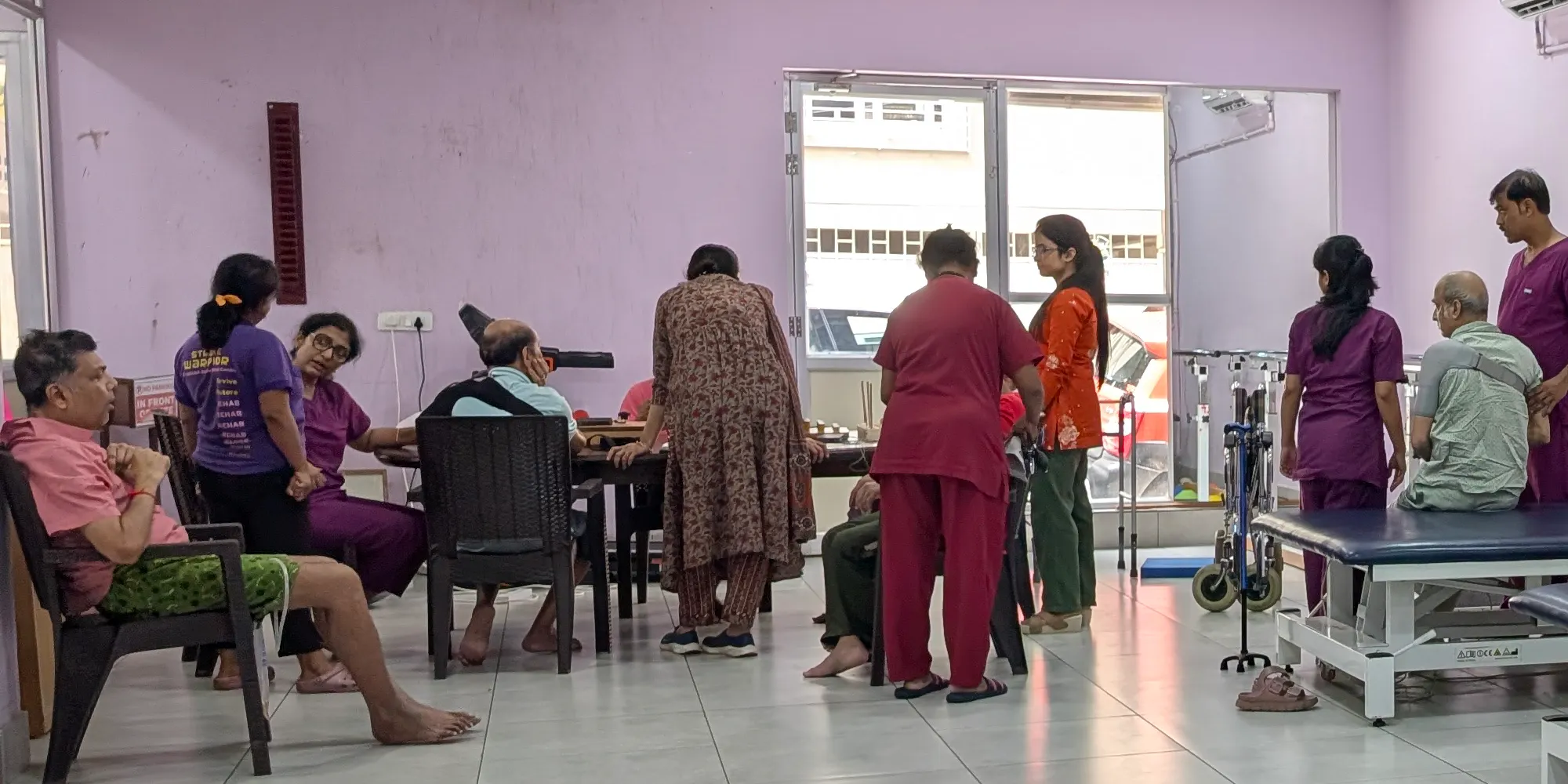
Step inside Rehabana and experience our doctor-led rehab environment. From advanced therapy equipment to guided sessions, every space is designed to support meaningful neurological recovery.
Take the first step
Worried about someone's speech or swallowing? Start with an assessment. Bring the discharge summary, any scan reports and the list of medicines. We'll tell you plainly what we think therapy can do, and what it can't.
FAQs
They test speech, language, voice and swallowing, explain the results in plain words and set goals with you. Then they run the sessions and coach the family to help at home.
Knowledge That Guides Recovery
Get expert neuro rehabilitation tips from the doctors at Rehabana, Kolkata — simple guidance on stroke recovery, spinal cord injury rehab, Parkinson’s care, and enhancing quality of life after neurological conditions.
Returning to West Bengal after hospital treatment? Continue structured, multidisciplinary Neuro Rehabilitation closer to home with Rehabana.
Read More
Join the Neuro Rehabilitation Support Network, a community initiative convened by Rehabana. Connect with survivors, caregivers and professionals to learn, share and rebuild life together.
Read More
Complete Parkinson's home care guide for families, rehabilitation, safety and daily living.
Read MoreKnowledge That Guides Recovery
Get expert neuro rehabilitation tips from the doctors at Rehabana, Kolkata — simple guidance on stroke recovery, spinal cord injury rehab, Parkinson’s care, and enhancing quality of life after neurological conditions.
Returning to West Bengal after hospital treatment? Continue structured, multidisciplinary Neuro Rehabilitation closer to home with Rehabana.
Read MoreJoin the Neuro Rehabilitation Support Network, a community initiative convened by Rehabana. Connect with survivors, caregivers and professionals to learn, share and rebuild life together.
Read MoreComplete Parkinson's home care guide for families, rehabilitation, safety and daily living.
Read More