Parkinson's Disease Rehabilitation

Parkinson's disease affects slowness of movement and the ability to initiate and perform intentional movements, and can also affect communication, sleep, mood and everyday activities. Rehabilitation supports function through an individual plan; it does not replace medical care or promise to stop the disease.

Explore

Living with Parkinson's

Practical guides on the parts of daily life Parkinson's affects most.

Parkinsons Disease Treatment in Kolkata

Caregiver Guide

Practical advice for families: daily routines, safety at home, medicines, and looking after yourself.

Parkinsons Disease Treatment in Kolkata

Gait, Balance and Mobility

Why walking changes in Parkinson's, what freezing is, and the exercises that help prevent falls.

Parkinsons Disease Treatment in Kolkata

Non-Motor Symptoms

Sleep, mood, memory, constipation and other symptoms that are not about movement but matter just as much.

Parkinson’s Treatment & Rehab in Kolkata

Occupational Therapy

Keeping up with dressing, eating, writing and work: how occupational therapy protects independence.

Parkinsons Disease Treatment in Kolkata

Physiotherapy and Exercise

How physiotherapy and regular exercise help people with Parkinson's stay strong, flexible and independent.

Parkinsons Disease Treatment in Kolkata

Rehabilitation

What a complete Parkinson's rehabilitation programme looks like, who is in the team, and when to start.

Parkinsons Disease Treatment in Kolkata

Speech and Swallowing

Why the voice gets softer and swallowing gets harder, and how speech therapy, including LSVT LOUD, helps.

Parkinson’s Treatment & Rehab in Kolkata

Symptoms and Early Signs

The early signs of Parkinson's, the main motor symptoms, and when to see a neurologist.

Parkinsons Disease Treatment in Kolkata

Treatment Options

Medicines, surgery, rehabilitation and the research on the horizon: an overview of Parkinson's treatment.

Parkinsons Disease Treatment in Kolkata

Understanding the condition

What is Parkinson's disease?

Parkinson's is a progressive neurological condition, defined by a gradual decrease in the production of dopamine, that can affect movement and many parts of daily life.

It is associated with changes in brain cells involved in movement control. People may experience slowness, stiffness, tremor or changes in balance, but symptoms and their impact vary. Non-motor changes can also occur, sometimes before or alongside movement changes.

Parkinson's treatment is planned with a doctor and may include medicines and other options. Rehabilitation complements that care by focusing on activities, safety and participation that matter to the person.

Explore next: Symptoms of Parkinson's disease • Parkinson's treatment

Parkinsons Disease Treatment in Kolkata

Hoehn & Yahr scale

Stages of Parkinson's disease

Staging of Parkinson's disease uses the Hoehn & Yahr scale. At Rehabana, we assess each patient's disease severity and movement difficulties using this scale.

Unfortunately, most patients visit Rehabana at Stage 3 or Stage 4 because of poor awareness. Early detection and rehabilitation can help preserve independence for a longer period.

  • Stage 0: No sign of disease
  • Stage 1: Unilateral symptoms only
  • Stage 1.5: Unilateral and axial involvement
  • Stage 2: Bilateral symptoms, no impairment of balance
  • Stage 2.5: Mild bilateral disease with recovery on pull test
  • Stage 3: Mild to moderate bilateral disease, some postural instability, physically independent
  • Stage 4: Severe disability, still able to walk or stand unassisted
  • Stage 5: Wheelchair bound or bedridden unless aided
Parkinsons Disease Treatment in Kolkata

Symptoms

Symptoms and non-motor changes

Parkinson's symptoms differ from person to person and can change over time.

Movement changes may include slowness, stiffness, tremor, freezing of gait, smaller steps, difficulty starting a step or turning, and changes in standing balance. Some people also notice softer speech, reduced facial expression, handwriting changes or difficulty with hand movements.

Non-motor symptoms may involve sleep, mood, thinking, bowel or bladder function, pain, fatigue or other concerns. Tell the care team about changes, even when they do not seem connected to movement.

Explore next: Non-motor symptoms • Walking and gait

Parkinson’s Treatment & Rehab in Kolkata

Daily life

Problems that can affect everyday life

A symptom becomes a practical problem when it makes an important activity harder, less safe or less comfortable.

Rehabana has observed that a person might find it harder to get out of bed or a chair, turn in a narrow space, dress, prepare a meal, write, join a conversation or swallow comfortably. The same symptom can affect people differently depending on their routines, home, work and support.

Not every difficulty needs the same therapy. A conversation with the person and their care team can identify which challenges deserve attention first.

Explore next: Parkinson's disease rehabilitation

Parkinsons Disease Treatment in Kolkata

Personal priorities

Functional impact and personal priorities

Rehabilitation starts with what the person wants or needs to do in daily life.

Rehabana first identifies the problems, such as changes in bed mobility (for example, moving from lying on the back to the side, or rolling), standing with or without support, transfers, walking speed, standing and walking balance, hand use, speech or energy, that can affect independence, increase agitation, and limit social participation, work, hobbies and confidence. Family members may notice changes too, but the person's own priorities should guide the plan.

Examples of goals might include moving around the home more confidently, making dressing easier, being understood in conversation or discussing swallowing concerns with a clinician. Goals should be specific, meaningful and reviewed together.

Explore next: Caregiver support
How rehabilitation can help

Rehabana's step-by-step rehabilitation goals

Parkinson's disease rehabilitation adapts therapy to a person's symptoms, abilities and goals. Rehabana aims to improve patients' functional abilities through a systematic, goal-oriented approach, helping every patient progress step by step from basic mobility to greater independence in daily life.

Explore next: Physiotherapy • Occupational therapy • Speech and swallowing support

Swallowing Problems Are Part of This Too

Bed mobility

Improve bed mobility.

Step 1

Sit to stand

Achieve sit-to-stand ability.

Step 2

Transfers

Improve transfers from bed to chair and back.

Step 3

Standing balance

Improve static and dynamic standing balance.

Step 4
Occupational Therapy
Swallowing Problems Are Part of This Too

Walking

Achieve walking with or without an assistive device.

Step 5

Gait training

Improve gait using big-step cueing and dual-task training.

Step 6

Community walking

Achieve safe and independent community walking, according to the patient's ability.

Step 7
Parkinsons Disease Treatment in Kolkata

Assessment

Rehabana's assessment and rehabilitation planning process

An assessment helps the rehabilitation team understand current function and the person's priorities.

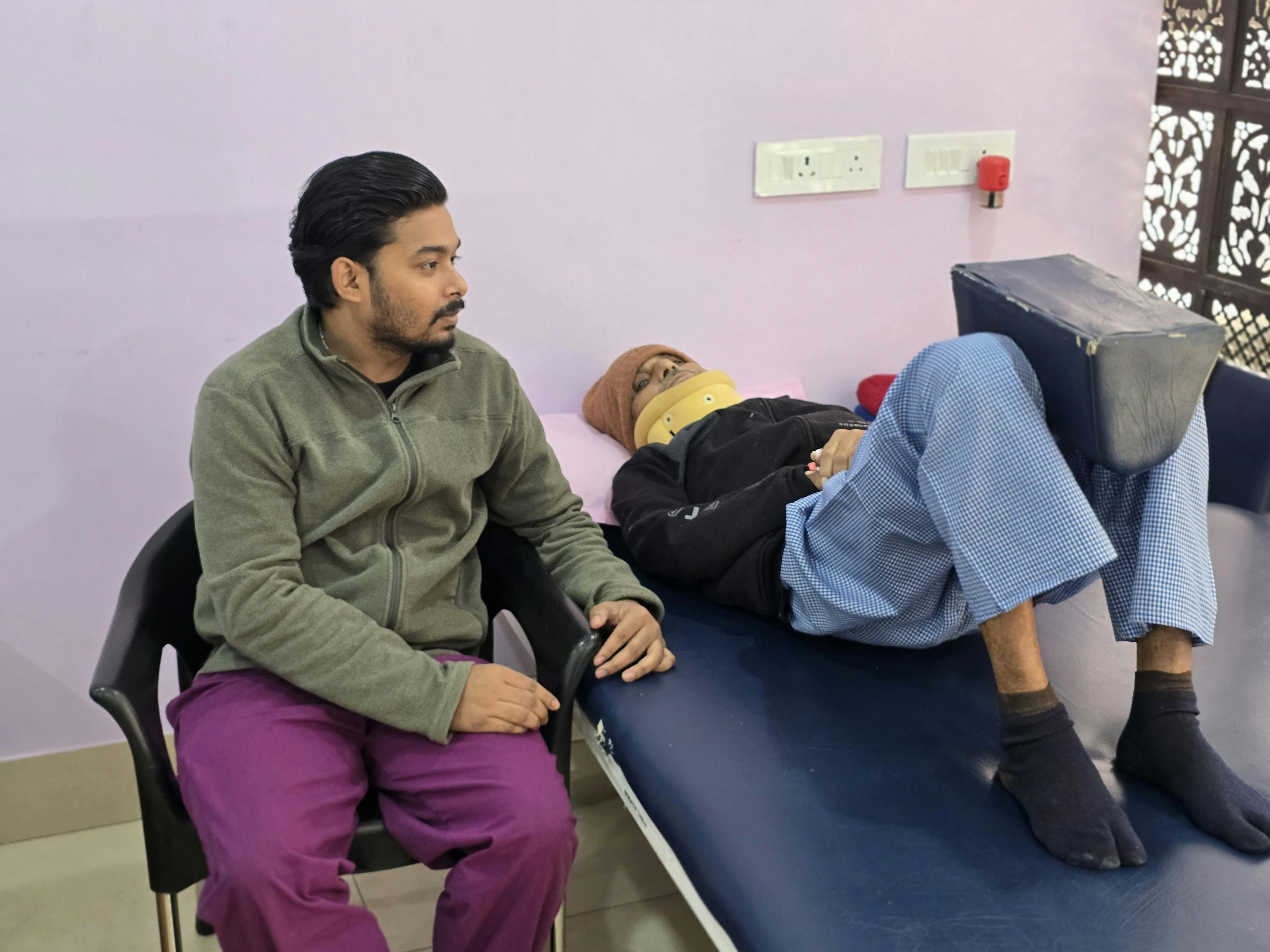
First, our doctor takes the patient's basic history, medical history and any history of falls to identify potential risks and plan an appropriate rehabilitation programme. Next, our multidisciplinary therapy team conducts a detailed assessment using standardised tools.

The findings help our team set individualised rehabilitation goals, decide the next steps in the programme, and monitor progress through regular reassessment and ongoing therapy.

  • Physical ability: Timed Up and Go (TUG), Berg Balance Scale (BBS) and Five Times Sit-to-Stand Test (5xSTS)
  • Functional ability: Functional Independence Measure (FIM) and Nine-Hole Peg Test (9HPT)
  • Cognitive ability: Montreal Cognitive Assessment (MoCA)
  • Swallowing ability: Gugging Swallowing Screen (GUSS)

Baseline goals

Agreeing what matters

Baseline goals turn assessment findings into practical, shared priorities.

The person and clinician can agree on a small number of goals tied to daily life, such as practising a safer transfer strategy or making a chosen activity more manageable. Goals should reflect current ability, preferences and relevant clinical advice.

We do not focus only on baseline goals; we also aim to prevent further injuries and complications through appropriate rehabilitation.

Explore next: Parkinson's disease rehabilitation

Interventions

A plan shaped around the person

Interventions may combine guided practice, education and strategies for everyday activities.

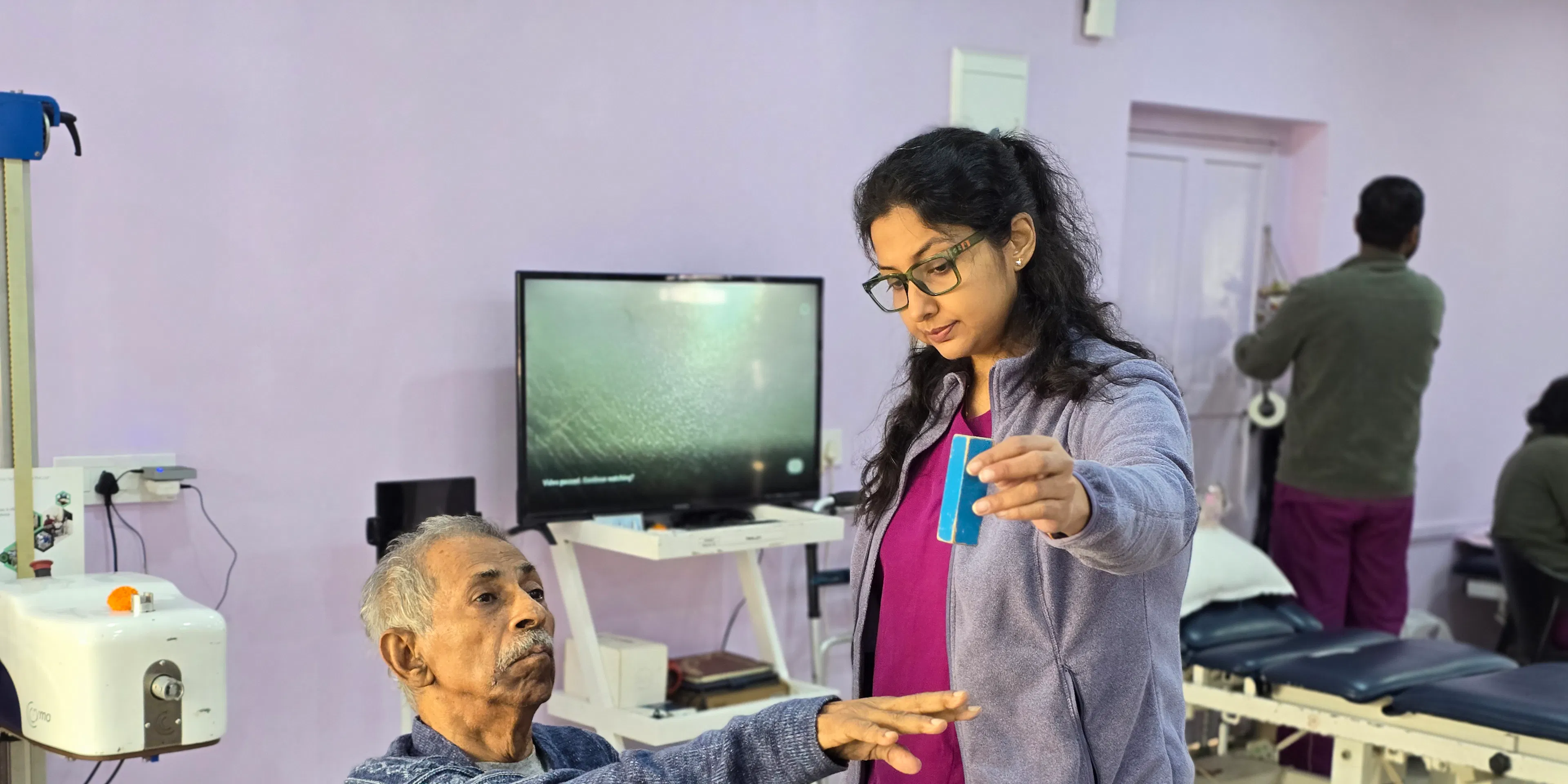
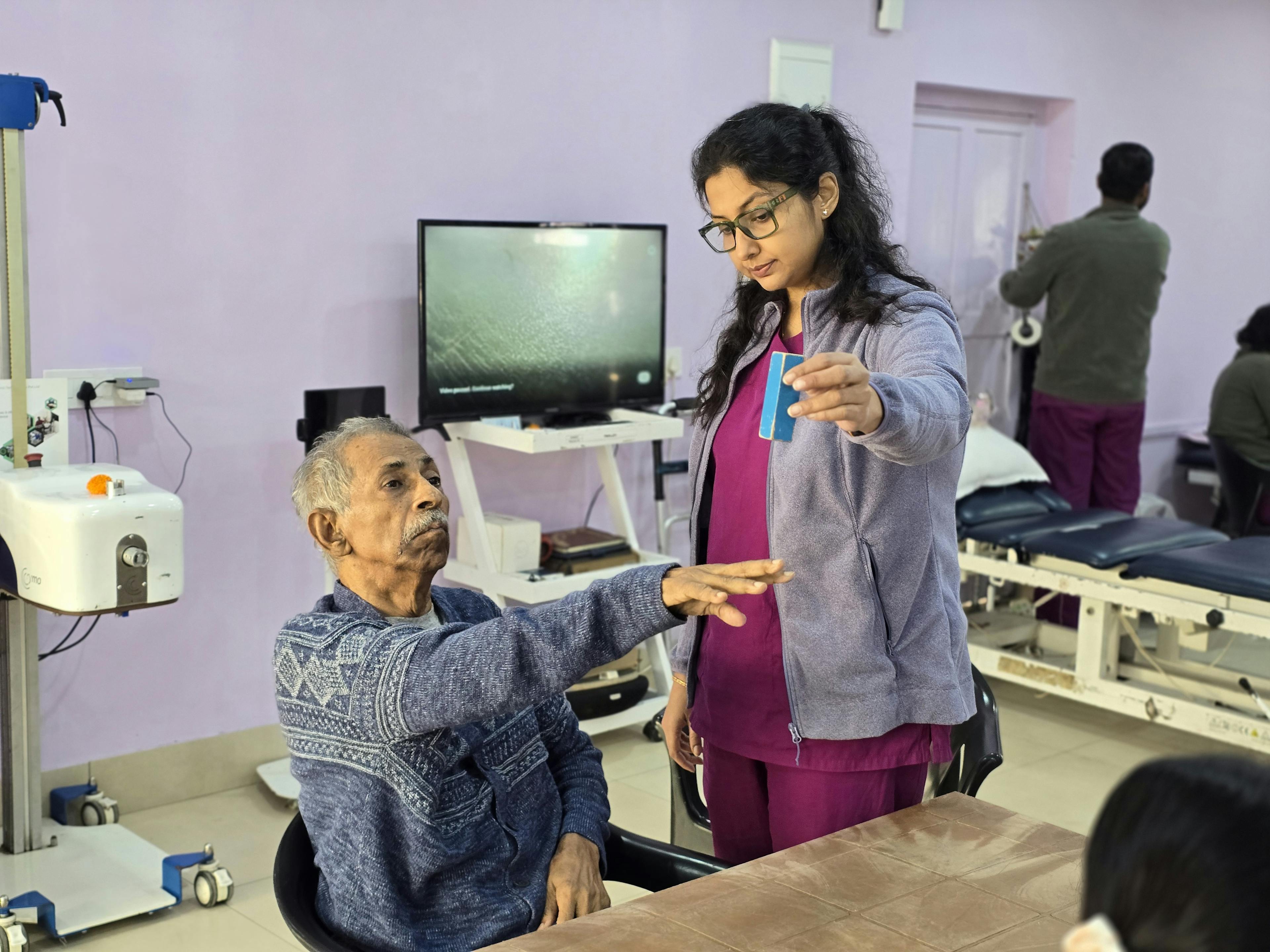
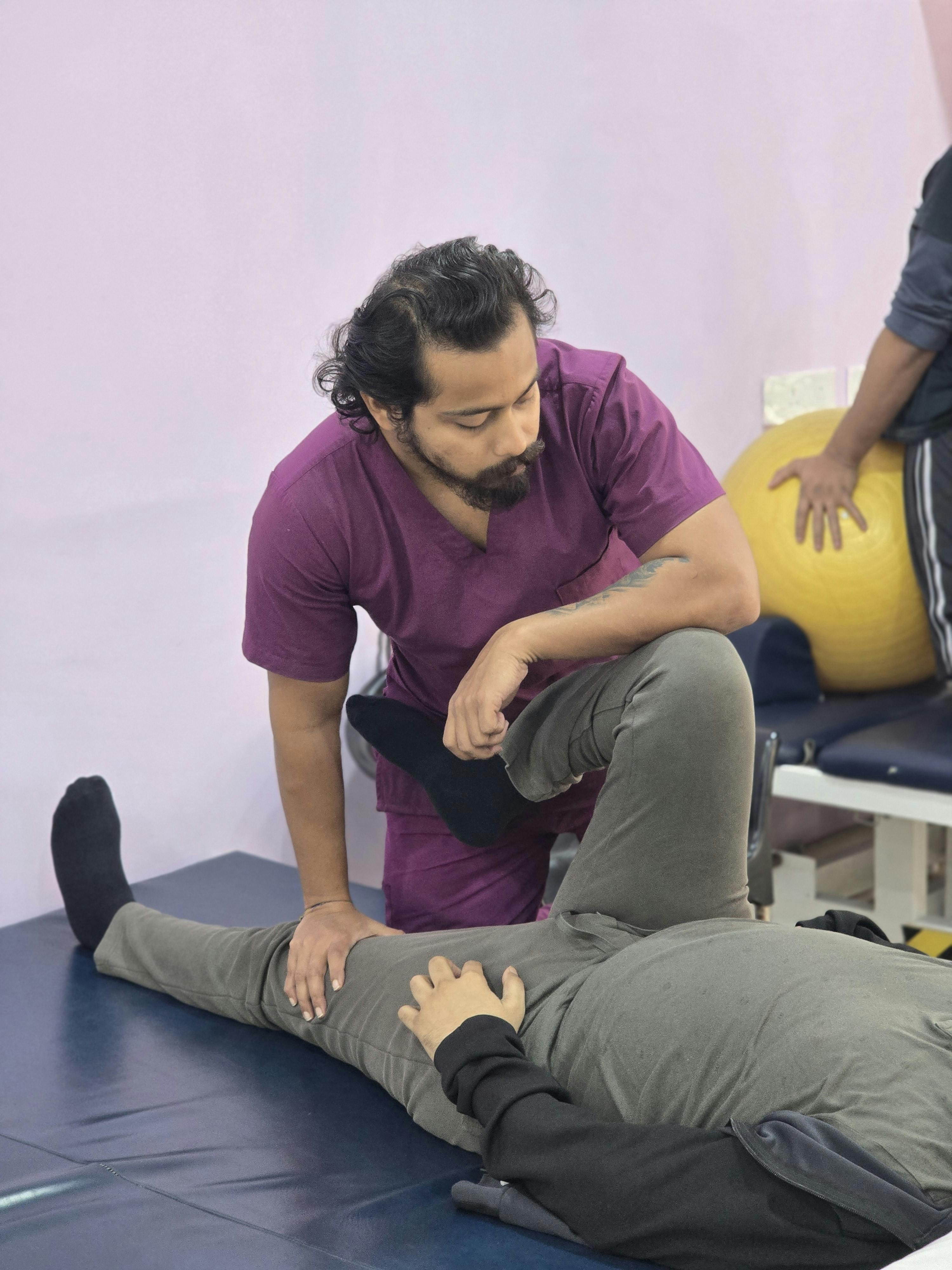
Our physiotherapy team may address movement, walking or balance; our occupational therapy team may explore task changes, routines or the environment; our speech and language therapy team may address communication or swallowing after assessment; and our psychology team may address poor cognition and aggressive behaviour. A plan can include practice between visits when a clinician considers it suitable.

Robotic rehabilitation or other equipment may be relevant only for selected people and goals. Ask the treating team what a service includes, who it may suit and what evidence supports it.

Explore next: Robotic rehabilitation services • Physiotherapy • Occupational therapy

Parkinsons Disease Treatment in Kolkata

Reassessment

Checking and adjusting

Reassessment helps the team review progress, new difficulties and whether the plan still fits.

Before each follow-up, our multidisciplinary team discusses the patient's progress, remaining impairments and unmet goals, then reassesses the patient and sets new rehabilitation goals. At follow-up, the person and clinician can revisit goals, discuss what is helping or difficult, and decide whether to continue, adjust or seek another opinion.

Parkinson's symptoms and life circumstances can change, so plans may need to change too. The timing of reviews depends on clinical need and the service plan.

Parkinsons Disease Treatment in Kolkata

Outcomes

Meaningful changes in daily life

Useful outcomes are changes that matter to the person, measured in ways agreed with the care team.

Outcomes may relate to a goal, such as completing a chosen task with a strategy or taking part in an activity. Progress can look different for each person and may include maintaining a skill, adapting an activity or identifying a new support need.

Parkinsons Disease Treatment in Kolkata

Coordinated care

Review and coordination of care

Parkinson's rehabilitation works best as part of coordinated care that reflects changing needs.

The person may discuss rehabilitation with their neurologist or other treating clinician, especially when symptoms change or new concerns arise. With the person's agreement, rehabilitation professionals can share relevant observations with the wider care team.

Medication decisions and diagnosis belong with qualified medical professionals. Rehabilitation recommendations should be coordinated with the person's clinical advice.

Explore next: Parkinson's treatment in Kolkata

Parkinson’s Treatment & Rehab in Kolkata

Caregivers

Caregiver support

Caregivers can support daily routines while also sharing observations and looking after their own wellbeing.

A family member or care partner may help communicate priorities, notice changes and practise agreed strategies. Their role should be discussed with the person and care team, respecting the person's preferences and independence.

If caregiving feels difficult, ask the care team about practical support, education and local resources. Support needs can change as the condition and family circumstances change.

Explore next: Caregiver support
Parkinsons Disease Treatment in Kolkata

Evidence

Evidence and clinical guidance

Professional guidance supports considering early physiotherapy, occupational therapy and speech and language therapy assessment, with therapy offered for relevant movement, daily activity, communication or swallowing problems. Recommendations depend on individual needs.

For more detail, explore the focused pages on symptoms, rehabilitation, walking, communication, swallowing and caregiver support.

Explore next: Parkinson's disease rehabilitation • Symptoms of Parkinson's disease • Parkinson's treatment

FAQs

Frequently asked questions

What is Parkinson's disease and how can rehabilitation help?

Parkinson's disease is a progressive neurological condition, and rehabilitation can support function and everyday participation.

It may affect movement and non-motor aspects of health. Depending on a person's needs, rehabilitation can include physiotherapy, occupational therapy, or speech and swallowing support, alongside medical care.

When should rehabilitation for Parkinson's disease begin?

What does Parkinson's disease rehabilitation involve?

Next steps

Arrange a Parkinson's rehabilitation assessment

A first conversation can help you understand available services and the next appropriate step. Contact Rehabana to confirm current services, location and how to arrange an assessment, and ask whether the service can address the person's goals and coordinate with their treating doctor.

Explore next: Parkinson's treatment in Kolkata

Looking for Parkinson's Disease treatment in Kolkata?

Best Parkinsons Disease Treatment in Kolkata - Rehabana

See treatment at Rehabana