

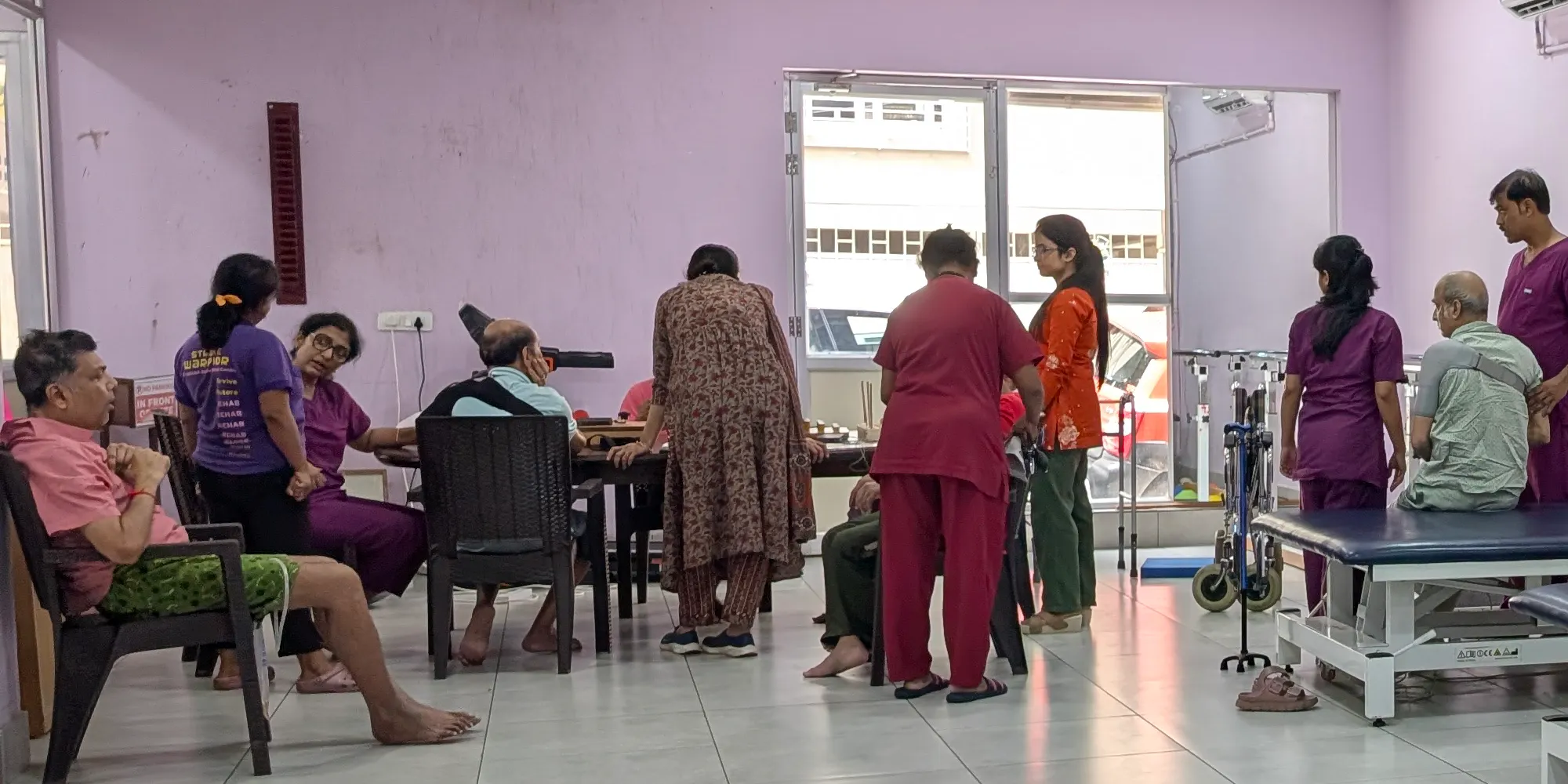
Neuro Rehabilitation in Kolkata After Hospital Discharge
Returning to West Bengal after hospital treatment? Continue structured, multidisciplinary Neuro Rehabilitation closer to home with Rehabana.
Read MoreYour mother can't stand yet without two people holding her. Or your brother's hand has a flicker of movement and not much more. A rehabilitation robot can hold that leg or arm and guide it, so they get hundreds of practice moves in one session. The therapist stays right beside them.
Doctor-planned robotic gait and arm therapy
A trained therapist beside you throughout
Always alongside hands-on physiotherapy
Progress checked every two weeks
Robots that help you practise
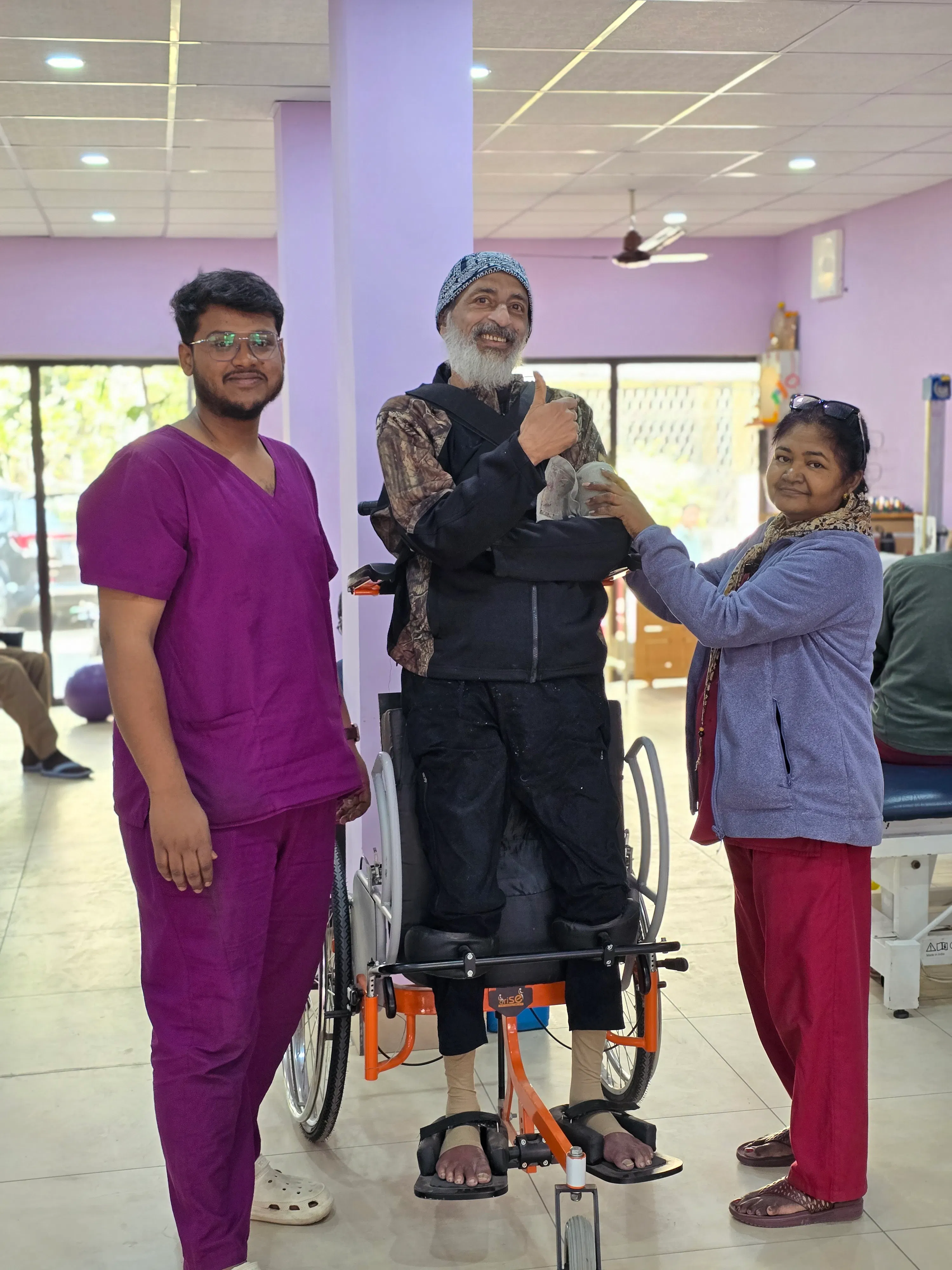
People call it robotic therapy, robotic physiotherapy, robot-assisted rehab. All the same idea. A motorised machine holds a weak leg or arm and moves it along the right path, while the person puts in as much effort as they can. Why bother? Because the brain relearns movement through practice, lots of it. Doctors call this neuroplasticity, which just means healthy parts of the brain slowly taking over lost work. But practice is hard when the foot won't swing forward. Two therapists might manage ten steps before everyone is worn out. On a gait robot, the same person can often take several hundred. And if they can push the leg forward a little, the robot lets them, and helps only with the rest. Therapists call it "assist as needed".

Legs, arms and hands
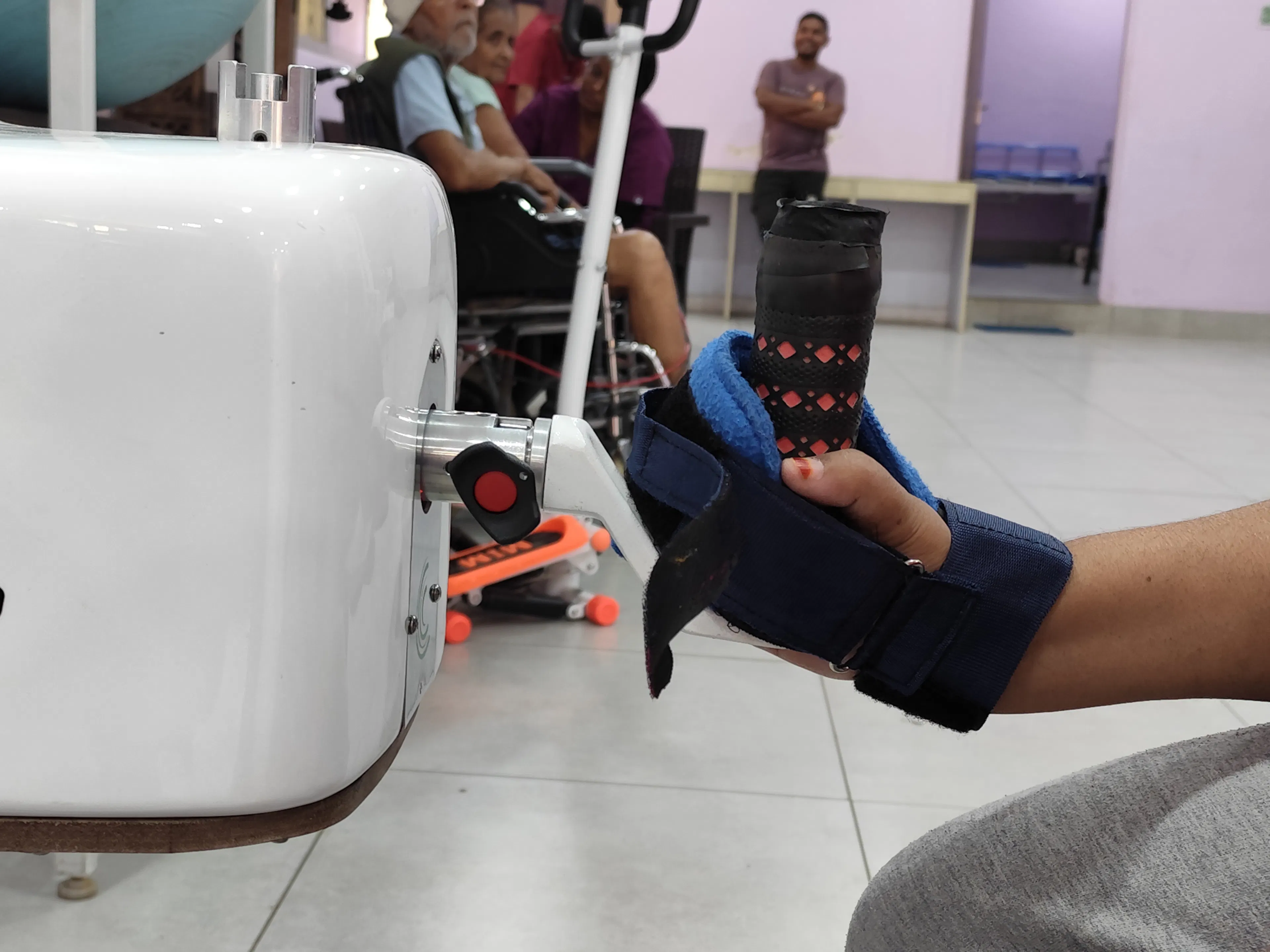
Rehab robots mostly work on two parts of the body. For the legs there's robotic gait training (gait simply means the way someone walks). It usually comes with body weight support, a harness from above that takes some of the weight, so the person can practise stepping before the legs are strong enough. For the arm, upper limb robots help with reaching and bending the elbow. Robotic gloves work on the fingers. Some machines, called end-effectors, hold only the far end of the limb, like footplates that move the feet. Exoskeletons are frames that sit along the leg or arm, lined up with the joints. Most link to simple screen games, which oddly makes the hundredth reach less dull. More on that on our digital rehabilitation page.

When to ask about it
Worth raising with your rehab team if this sounds familiar:
Conditions we use it for
Most of the research is in stroke, but robots help in other conditions too. Each one needs its own settings and goals. Below is the short version, with the detailed guides linked.
The most common reason people use rehab robots. A gait robot lets someone practise stepping before they can walk alone, and an arm robot adds extra reaching practice. See walking after stroke and arm and hand recovery after stroke.
With an incomplete injury, meaning some signals still get through, a robot can help with standing and stepping practice. A complete injury needs different goals. See walking after spinal cord injury and hand function after spinal cord injury.
A head injury often upsets balance as well as strength. The robot lets someone practise walking while their balance still can't be trusted. Sessions are paced gently, because attention tires quickly. Read about walking and balance after brain injury.
Supported walking practice may help with step length and keeping a steady rhythm. Parkinson's changes over time, so robotic therapy usually comes in blocks, with checks in between. See walking in Parkinson's.
MS brings a heavy tiredness that comes and goes. A robot gives walking practice with rest built in, which helps on the bad days. See walking in MS and balance and coordination in MS.
Robots are sometimes used after bone or joint surgery. With motor neuron disease the focus is usually comfort, safety and the right equipment, so intensive robot training is rarely the answer.

Every robotic plan is designed and supervised by MD doctors in Physical Medicine and Rehabilitation.

A trained therapist runs each session, changes the settings and coaches the person to actually push.

We have robotic gait trainers, body weight supported walking, sensory-based balance machines and upper limb robotic therapy.

Our robots are paired with gaming devices, because long practice goes better when it's a bit of fun.

Physio, OT, speech therapy, counselling and rehab nurses all work towards the same goals with you.

We repeat the tests every fortnight. If something isn't moving, the plan changes. Sometimes that means less robot.
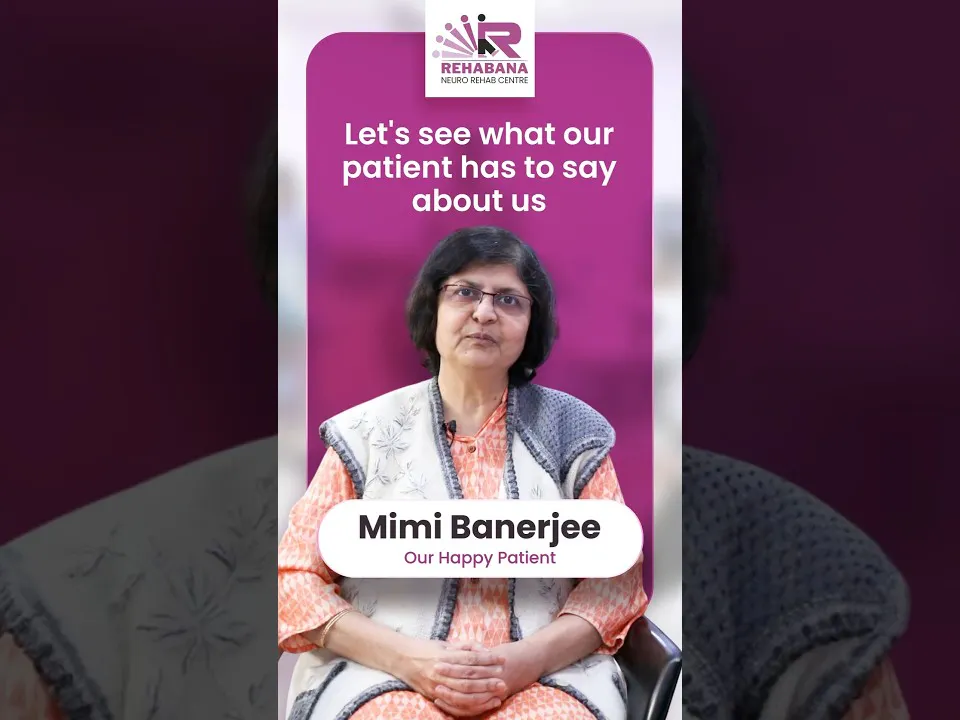
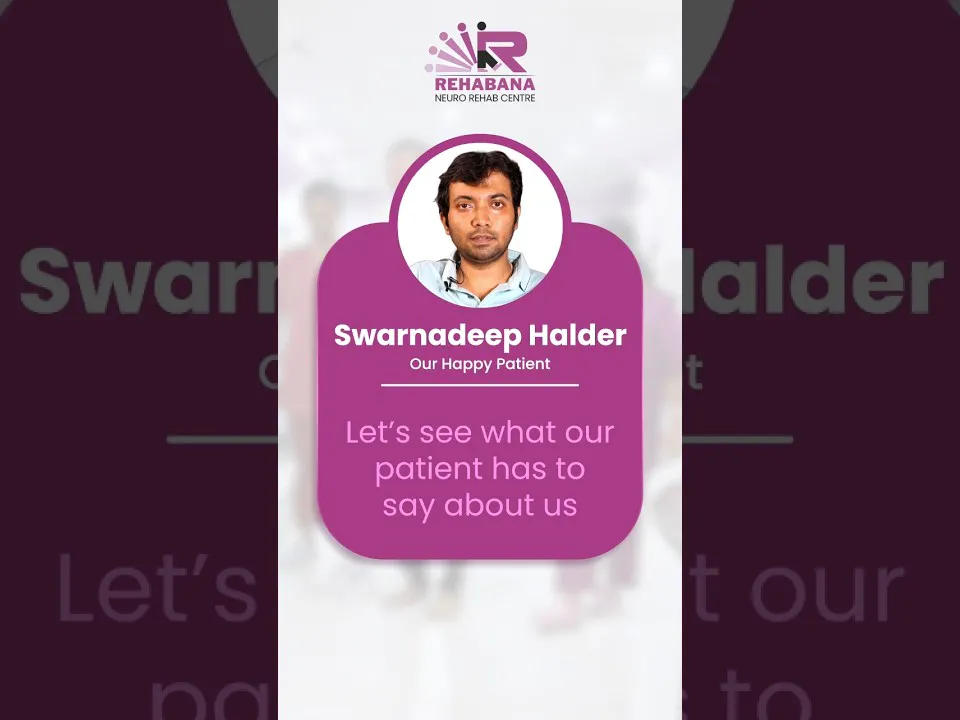
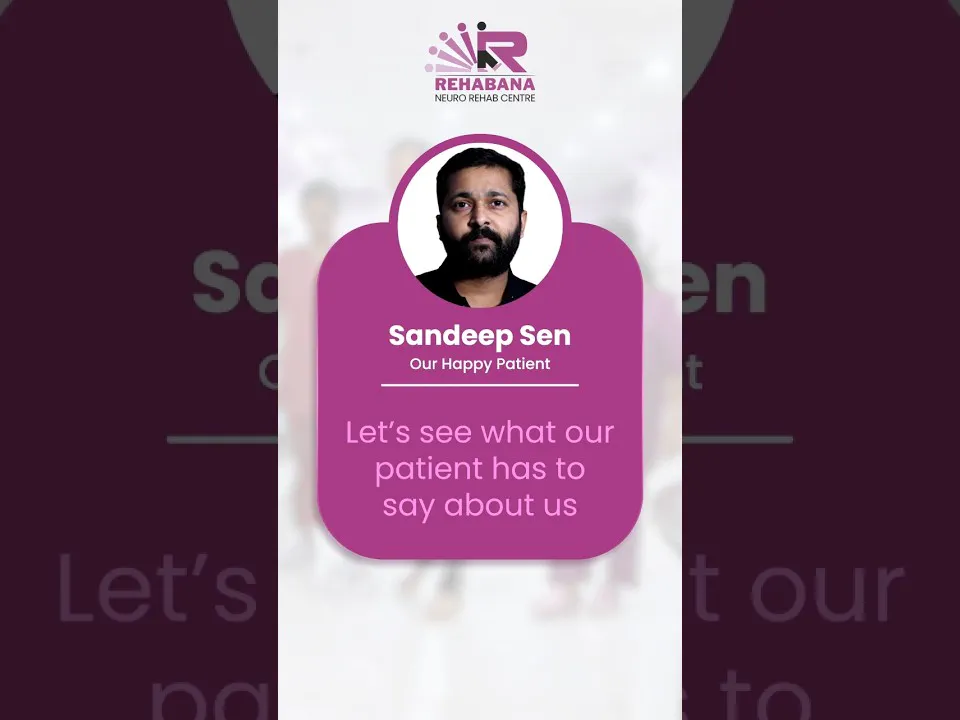
Patient Stories
Hear directly from patients and families who have experienced meaningful recovery at Rehabana. Their stories reflect our commitment to personalized care, consistent progress, and compassionate support throughout the rehabilitation journey.
Your Recovery Starts With the Right Care

Our treatments follow evidence-based protocols delivered by certified rehabilitation professionals.

Specialized care for stroke, paralysis, spinal injuries, and chronic pain recovery.

Continuous care and emergency assistance whenever you need us.
What to expect
Same loop as any good rehab. Check, agree goals, practise, check again.

Our rehab doctor (an MD in Physical Medicine and Rehabilitation, or PM&R) reads the reports, then checks strength, stiffness, balance and walking.
A goal you can picture, like reaching the bathroom with a stick and one person nearby, broken into small pieces.


Robotic sessions mixed with physiotherapy and occupational therapy, so gains on the machine carry over to real floors.
We repeat the tests, look at the robot's own data and ask what's changed at home. Then we adjust.

Inside a session
Wear loose, comfortable clothes. And expect to sweat a bit.

What the research says
Families ask this a lot, and fair enough, the machines look impressive. The truthful answer is that a robot is a way to get more practice. That's it. It isn't a cure, and we won't promise it makes recovery faster. A large summary of 62 trials found that adding robot walking practice to physio helped more people walk on their own, mostly those who couldn't walk at all to begin with. For the arm, the gains were small, and one big UK trial found no extra benefit over good usual therapy. So the guidelines don't agree. American stroke experts say it may be considered alongside usual therapy. The UK guideline is more cautious and advises against robot arm training. For spinal cord injury, Parkinson's and MS, the studies are smaller still.

Time and patience
Usually it runs in blocks of a few weeks, with reviews in between. Trials have used all sorts of schedules. Nobody can give you a magic number of sessions. It depends on the condition, how long ago it happened and what you're aiming for. Early on, after a stroke or spinal injury, the nervous system is most ready to change, and progress tends to come quicker. Years later? People can still improve with focused practice. The changes are usually smaller and slower, though. And progress rarely goes in a straight line. Some weeks nothing seems to move, then one morning turning over in bed is suddenly easier.
Centre or home
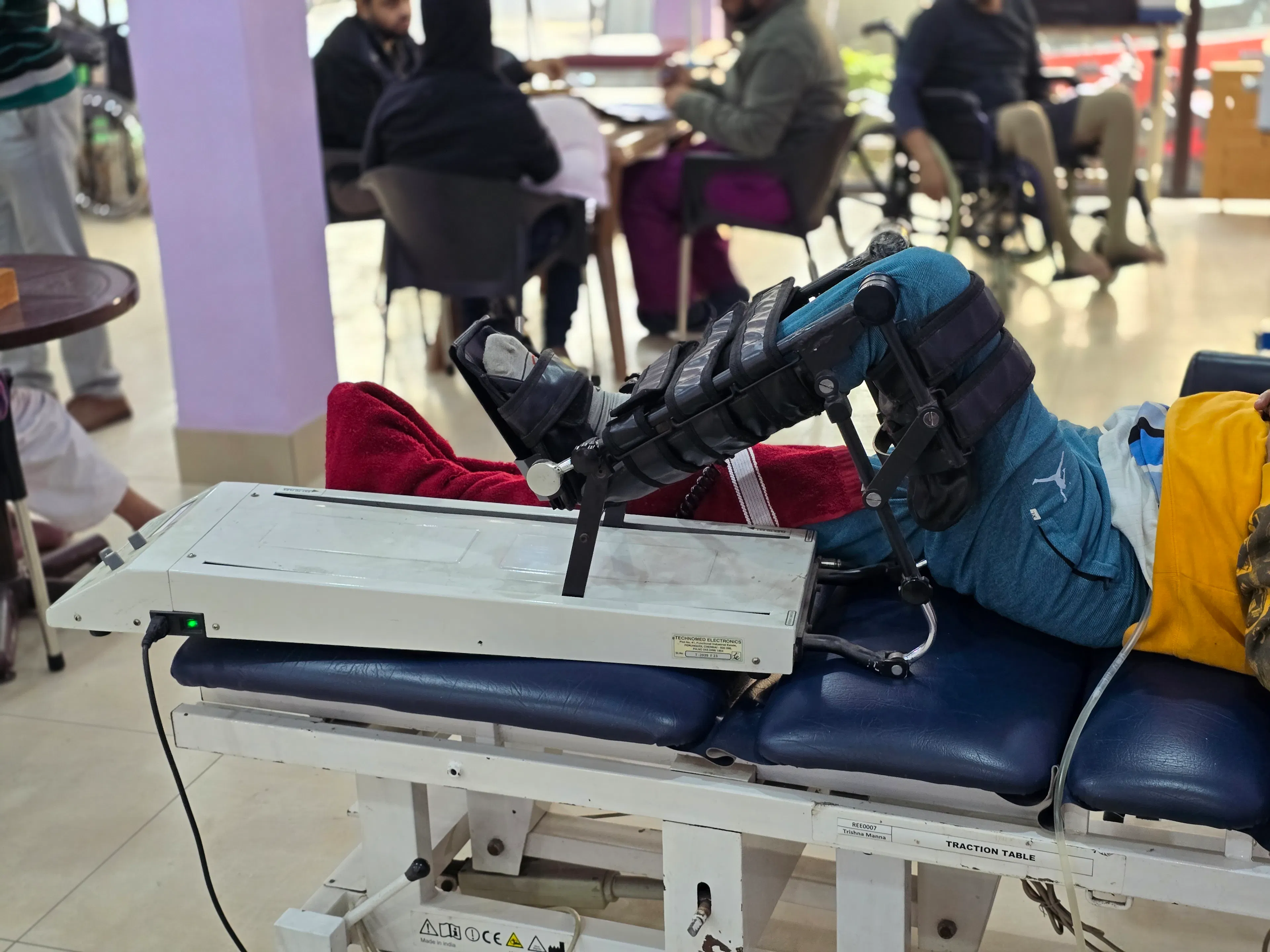
Not really, no. Rehab robots are big, heavy machines, and they need a trained therapist standing next to them. So the robot part happens at a rehabilitation centre. Everything else can carry on at home. If your family member needs therapy every day, with nursing and a doctor close by, an inpatient stay lets robot sessions fit around physio, OT and medical checks. Someone already living at home might come in a few times a week instead. And the home exercises in between matter a great deal, because the stepping practised on the robot still has to work on the two steps at the front door.

For families
Say your father has just come off the gait robot after a few hundred supported steps. Back home, lifting him out of bed is quicker. We know. But if you only steady him and let him push, every one of those stands is more practice. Come to a session or two and ask the therapist which movements to encourage. Take turns in the family, so one person isn't doing it all. Keep a small diary of what's getting easier, like holding his cup of tea or walking to the gate, and bring it to reviews. Watch for tiredness and low mood as well. Both are common, and both can be treated. "What's the goal this fortnight?" is a fair thing to ask any rehab team.

Stay safe
For most people, yes, as long as a doctor checks first and a trained therapist is there. In studies, serious problems were rare. The usual small ones are skin rubbing under the straps, sore muscles and tiredness. Some things rule it out for a while, though, like stiff joints that won't straighten (contractures), an unhealed fracture, very fragile bones, uncontrolled blood pressure or broken skin under the straps. Stop and tell the team about chest pain, sudden breathlessness, dizziness or a red mark that won't fade. A drooping face, a suddenly weak arm or slurred speech can mean a new stroke, so call 112 or get to hospital straight away. Tight, jumpy muscles (spasticity) can get in the way too. Our spasticity and pain management team can help with that first.
A Closer Look at Healing in Action
Step inside Rehabana and experience our doctor-led rehab environment. From advanced therapy equipment to guided sessions, every space is designed to support meaningful neurological recovery.
Take the first step
Not sure a robot will help? Come for an assessment with one of our rehab doctors. Bring the discharge papers, scan reports and medicine list. We'll tell you plainly if it suits, and if it doesn't.
FAQs
Therapy where a motorised machine guides a weak leg or arm through stepping or reaching. A trained therapist sets it up and stays close. It's used mostly after stroke, spinal or brain injury.
Knowledge That Guides Recovery
Get expert neuro rehabilitation tips from the doctors at Rehabana, Kolkata — simple guidance on stroke recovery, spinal cord injury rehab, Parkinson’s care, and enhancing quality of life after neurological conditions.
Returning to West Bengal after hospital treatment? Continue structured, multidisciplinary Neuro Rehabilitation closer to home with Rehabana.
Read More
Join the Neuro Rehabilitation Support Network, a community initiative convened by Rehabana. Connect with survivors, caregivers and professionals to learn, share and rebuild life together.
Read More
Complete Parkinson's home care guide for families, rehabilitation, safety and daily living.
Read MoreKnowledge That Guides Recovery
Get expert neuro rehabilitation tips from the doctors at Rehabana, Kolkata — simple guidance on stroke recovery, spinal cord injury rehab, Parkinson’s care, and enhancing quality of life after neurological conditions.
Returning to West Bengal after hospital treatment? Continue structured, multidisciplinary Neuro Rehabilitation closer to home with Rehabana.
Read MoreJoin the Neuro Rehabilitation Support Network, a community initiative convened by Rehabana. Connect with survivors, caregivers and professionals to learn, share and rebuild life together.
Read MoreComplete Parkinson's home care guide for families, rehabilitation, safety and daily living.
Read More