

Neuro Rehabilitation in Kolkata After Hospital Discharge
Returning to West Bengal after hospital treatment? Continue structured, multidisciplinary Neuro Rehabilitation closer to home with Rehabana.
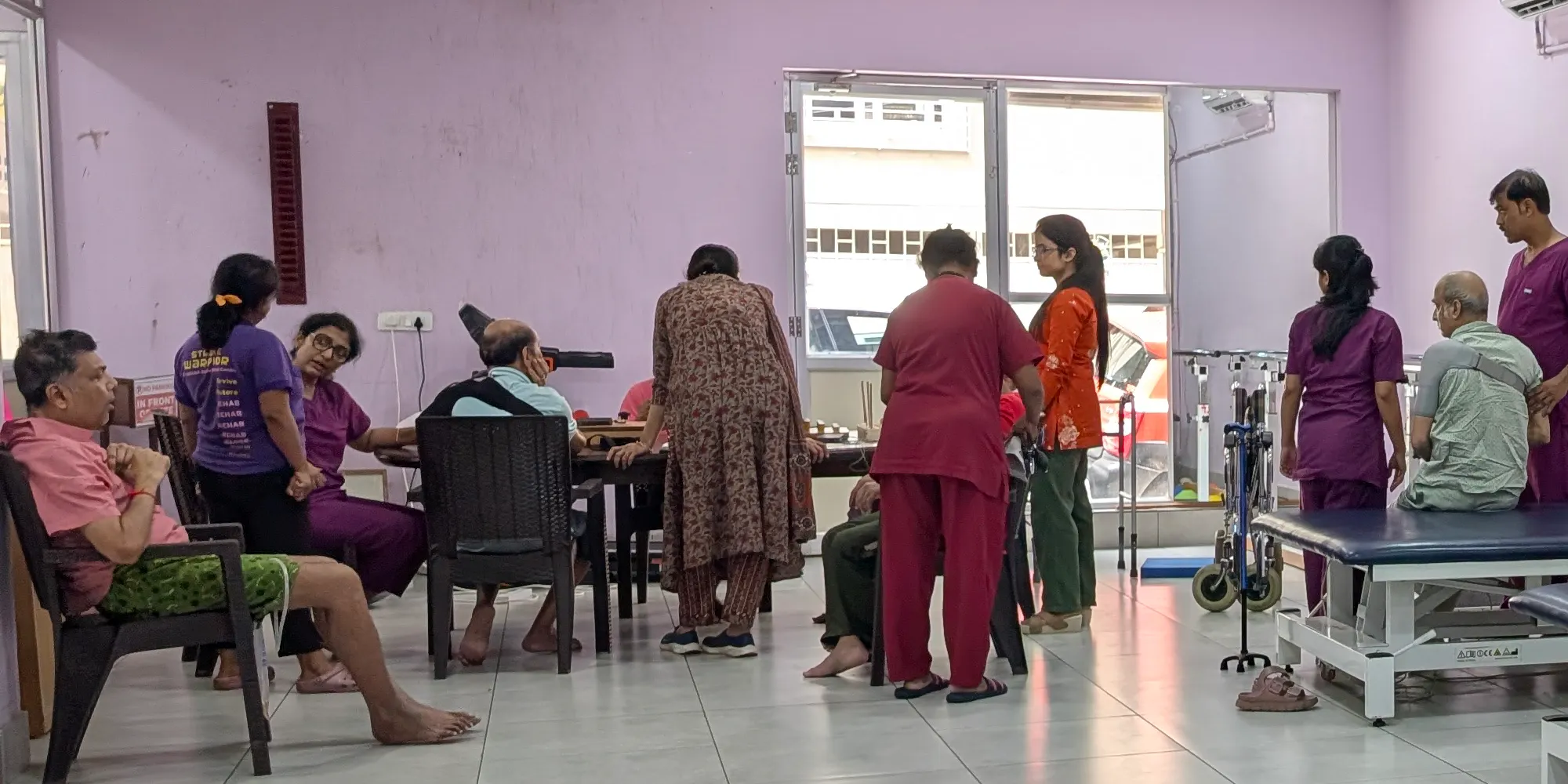
Read MoreMaybe the hospital says your father can go home. But he still can't stand without two people, and even a cup of tea goes down the wrong way. That gap is what inpatient rehabilitation is for. He stays at a rehab centre for a few weeks. Therapy every day, nurses and a doctor close by.
Doctor-led programme, reviewed every two weeks
Physio, OT and more, every day
Nurses on hand day and night
For people who are medically stable

A rehab stay, explained
Some people call it inpatient rehab. Others say residential rehabilitation, or just "admitting him for rehab". All the same idea. The person sleeps and eats at a rehab centre for a while, and the day is planned around getting everyday abilities back. In hospital, the question was how to keep him safe. Once he's stable, it becomes how he starts doing things for himself again. A PM&R doctor leads the work. That's short for physical medicine and rehabilitation, the branch of medicine focused on getting function back. Physiotherapists, occupational therapists, speech therapists and rehab nurses work alongside, plus a psychologist when needed. Anyone who needs close medical monitoring should stay in hospital until their doctors say otherwise.

Hospital, step-down or rehab centre
The words overlap, so families mix them up all the time. A hospital treats the emergency. Transitional care, also called post-acute care, is the in-between step for people past the emergency who still need a lot of nursing, say with a tracheostomy, which is a breathing tube placed in the neck. An inpatient rehab centre, or rehabilitation hospital, is for people who are stable and can join therapy most days. For stroke, American heart and stroke guidelines say people who qualify for an inpatient rehab facility, and can get to one, should go there rather than to a nursing home. Either way, the hospital team should first confirm the person is stable enough to move.

When to think about it
Worth talking to the doctor if this sounds like your house right now:
Conditions we see
A stay makes most sense when lots of things need work at once. Walking, hand use, swallowing, memory. Short notes below, with the full guides linked.
A stroke can weaken one side and upset speech, swallowing and thinking. UK guidance from NICE suggests at least three hours of rehab a day, five days a week, for people who can manage it. Easier during a stay. See how stroke rehabilitation works.
A blow to the head can change movement, memory, mood and behaviour. Early on, people may be confused or act quite unlike themselves, and that's very hard to handle at home. Read about rehabilitation after a brain injury.
Damage to the spinal cord can bring weakness or paralysis below the injury, plus bladder, bowel and skin problems. A stay gives time to learn transfers, meaning moving safely from bed to chair and back. More on spinal cord injury rehabilitation.
Most people with Parkinson's do fine with outpatient therapy. Still, a short stay can help after a fall, a hospital admission or a sudden drop in how well they move. See Parkinson's rehabilitation.
After a relapse, which is a flare of new or worse symptoms, some people lose walking or self-care quickly. Intensive rehab helps, as long as it's paced around the heavy tiredness MS brings. See MS rehabilitation.
Rehab can't reverse MND, and we won't pretend it can. What a short stay can do is sort out equipment, keep the person comfortable and train whoever will be caring at home. See MND rehabilitation.

Our MD Physical Medicine and Rehabilitation doctors plan each programme and keep reviewing it.

Physio, occupational therapy, balance and daily-task practice each day. Speech therapy and psychological support when needed.

Rehab nurses and trained staff help with transfers, positioning, medicines and stopping falls, day and night.

Therapy steps up as your family member gets stronger, with rest breaks so they don't burn out.

We track progress daily. Every two weeks we sit down with the family and adjust goals openly.

Robotics, therapy machines and structured mobility systems, used only for the people they actually suit.
Patient Stories
Hear directly from patients and families who have experienced meaningful recovery at Rehabana. Their stories reflect our commitment to personalized care, consistent progress, and compassionate support throughout the rehabilitation journey.
Your Recovery Starts With the Right Care

Our treatments follow evidence-based protocols delivered by certified rehabilitation professionals.

Specialized care for stroke, paralysis, spinal injuries, and chronic pain recovery.

Continuous care and emergency assistance whenever you need us.
What to expect
Four steps. The last one loops back to the first.

The rehab doctor goes through the discharge summary, scans and medicines, examines your family member and may speak to the hospital doctors.
We ask what matters most to you. Then big hopes get broken into small steps. Sit without support. Stand with one helper.


A timetable of sessions through the day, with rest in between, and nurses helping new skills turn into habit.
Same tests again every couple of weeks. If progress stalls, we look for the reason. Pain? Poor sleep? Low mood? Then the plan changes.

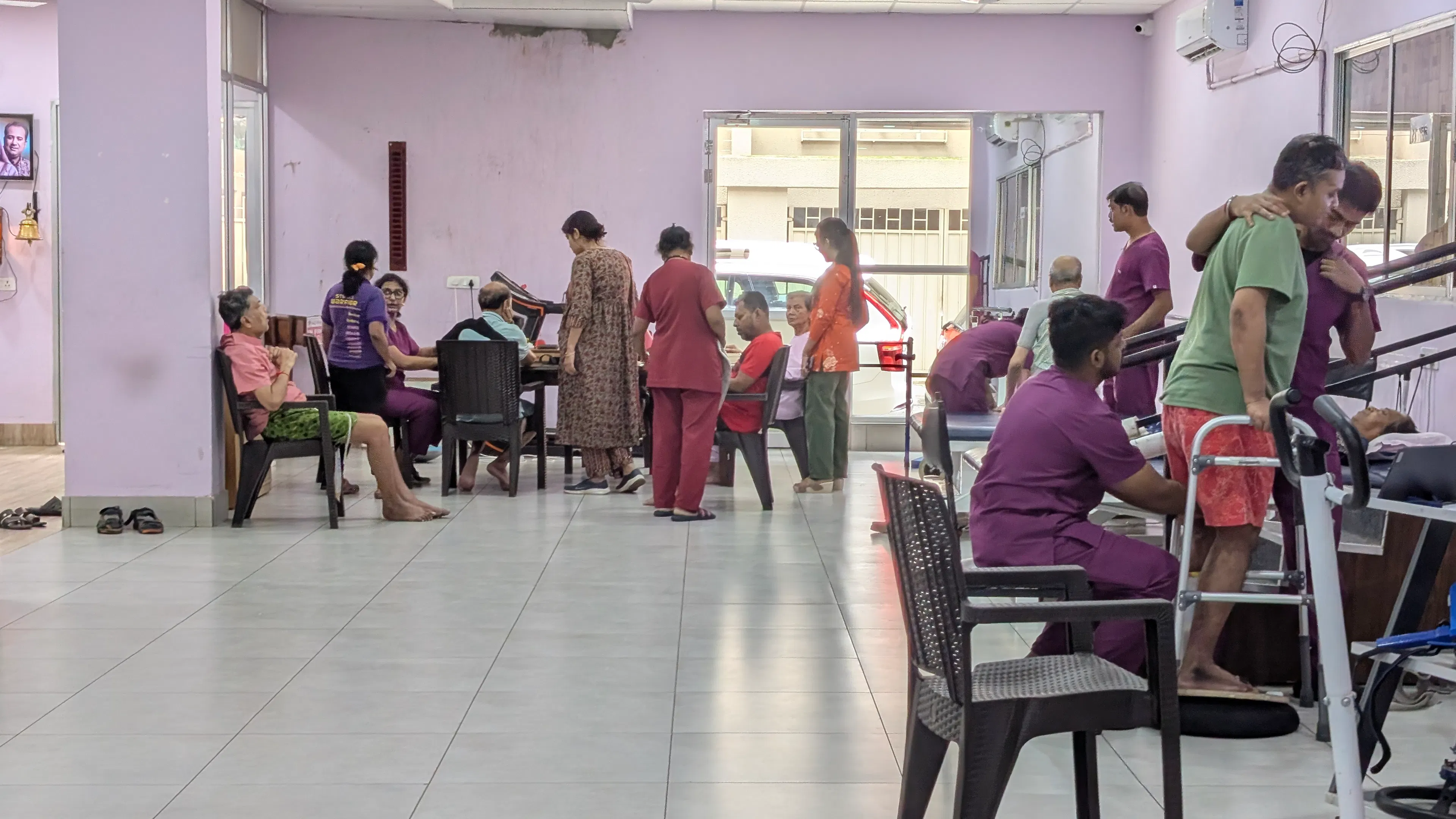
Inside a typical day
Mornings are usually busiest, because that's when energy is highest.

Keeping score
Families often tell us "she looks brighter". Lovely to hear. But it doesn't say whether she can get to the toilet alone yet, so we score things on the first day and keep scoring. The Functional Independence Measure, or FIM, rates how much help someone needs across 18 everyday activities. The Barthel Index is a shorter list of 10, like feeding and bathing. The Berg Balance Scale checks balance through a set of small tasks, and the 10-metre walk test times walking speed. Those first scores become the baseline, which simply means the starting point. Do the same tests a few weeks later and you can see what has changed. Or what hasn't, yet.

How many weeks?
Most stays run a few weeks. Some go on for a few months. No honest team can give you an exact number at the first visit, so be a little careful of anyone who does. It depends on how severe the injury was, other health problems and how much therapy the person can handle each day. A severe brain injury or a high spinal cord injury can take much longer, sometimes in stages. A stay usually ends once the goals can carry on safely at home or as an outpatient. But recovery often keeps going for months after that, so before discharge we'll talk through what therapy should come next.

Centre, outpatient or home
The right place is wherever your family member can safely get enough of the right practice. A stay suits someone who needs help with most things, or several sessions a day. Outpatient visits suit people who can travel without being wiped out afterwards. Home rehab suits people who can't travel but are safe at home. Oddly, home has a bonus. They practise on the real two steps at the front door and the real Indian-style toilet. And digital rehabilitation can keep practice going between visits. Then there's money, and we know it worries people. A study of stroke survivors in India found cost and clear information were among the biggest unmet needs for families. Daily taxis with a wheelchair, an ayah, a visiting nurse. It adds up. For some families a stay works out easier. For others, home wins.

For families
Come and watch sessions when you can, and ask the therapists to teach you transfers and the exercises. Say your father has just relearned how to stand up from a chair. If everyone at home lifts him to save time, he can lose that within weeks. If the family has practised with the therapist, the skill comes home with him. Tell the team about your house. The steps at the gate, the bed height, whether there's room for a plastic chair in the bathroom. Take turns if you can. If you're travelling from far away, ask us whether a relative can stay during the programme, or what's possible nearby. And look after yourself too. Our stroke caregiver guide can help.

Stay safe
A rehab centre isn't an ICU. If your family member still needs frequent medical checks or a breathing machine, hospital or transitional care comes first. Some signs mean you stop and get help at once. Call 112 or your local ambulance for sudden new weakness, a drooping face, slurred speech, a seizure (a fit), a sudden severe headache, chest pain or breathlessness. A painful, swollen calf could be a blood clot. New confusion or a high fever needs a doctor too. After a spinal cord injury at chest level or higher, a pounding headache with flushing above the injury can mean autonomic dysreflexia, a sudden and dangerous rise in blood pressure. Treat that as an emergency.
A Closer Look at Healing in Action
Step inside Rehabana and experience our doctor-led rehab environment. From advanced therapy equipment to guided sessions, every space is designed to support meaningful neurological recovery.
Take the first step
Finishing hospital treatment and not sure what comes next? Bring the discharge summary, scan reports and the medicine list. We'll tell you plainly whether a stay, outpatient sessions or home rehab suits best.
FAQs
It's a planned stay at a rehab centre with daily therapy, nursing care and a doctor overseeing things. It's for people who are medically stable but not yet safe or strong enough at home.
Knowledge That Guides Recovery
Get expert neuro rehabilitation tips from the doctors at Rehabana, Kolkata — simple guidance on stroke recovery, spinal cord injury rehab, Parkinson’s care, and enhancing quality of life after neurological conditions.
Returning to West Bengal after hospital treatment? Continue structured, multidisciplinary Neuro Rehabilitation closer to home with Rehabana.
Read More
Join the Neuro Rehabilitation Support Network, a community initiative convened by Rehabana. Connect with survivors, caregivers and professionals to learn, share and rebuild life together.
Read More
Complete Parkinson's home care guide for families, rehabilitation, safety and daily living.
Read MoreKnowledge That Guides Recovery
Get expert neuro rehabilitation tips from the doctors at Rehabana, Kolkata — simple guidance on stroke recovery, spinal cord injury rehab, Parkinson’s care, and enhancing quality of life after neurological conditions.
Returning to West Bengal after hospital treatment? Continue structured, multidisciplinary Neuro Rehabilitation closer to home with Rehabana.
Read MoreJoin the Neuro Rehabilitation Support Network, a community initiative convened by Rehabana. Connect with survivors, caregivers and professionals to learn, share and rebuild life together.
Read MoreComplete Parkinson's home care guide for families, rehabilitation, safety and daily living.
Read More