

Neuro Rehabilitation in Kolkata After Hospital Discharge
Returning to West Bengal after hospital treatment? Continue structured, multidisciplinary Neuro Rehabilitation closer to home with Rehabana.
Read MoreMaybe the exercises have started to feel like a chore. Or she used to love her balcony pots and hasn't touched them since the stroke. Garden therapy puts that love of plants to work. Potting, watering and trimming become practice for a weak hand, shaky balance and a low mood.
Plant tasks picked by trained therapists
Works on grip, balance and focus
Can be done seated or from a wheelchair
Part of a doctor-led rehab plan

Gardening with a purpose
Horticultural therapy is a long name for a simple idea. Gardening, used on purpose, as part of a rehab plan. Most families just call it garden therapy. A trained therapist picks the plant task, always for a reason. Scooping soil works the grip. If the marigold wilts, that's alright. The reaching and gripping that went into planting it was the real work. You may also hear "therapeutic horticulture" or "nature therapy". Those usually mean time with plants for general wellbeing, with no fixed goals. Horticultural therapy has goals, and someone checks them. In neuro rehab it sits very close to occupational therapy, which is therapy built around the everyday tasks a person wants back.

When to ask about it
Worth asking us about if this sounds familiar:
Conditions we use it for
The plants stay the same. What we're working on changes a lot from one condition to the next. Below is the short version, with links to the fuller guides.
Mostly the weak arm and hand, plus standing balance. Low mood is common too, and a plant to look after can lift it a little. See hand and arm recovery after stroke, and mood and thinking changes after stroke.
A garden is slow and quiet, which can ease the short temper that often follows a head injury. Group sessions give safe practice at taking turns. More on getting back into community life after a brain injury.
We go for big, deliberate movements, like a wide sweep of the watering can, and simple step-by-step cues. Tending plants may also help with apathy, the flat, can't-be-bothered feeling that is one of the non-motor symptoms of Parkinson's.
Raised beds and table-top trays let people garden from a wheelchair. Reaching across a tray works trunk balance, which means control of the body from the waist up. See wheelchair skills and independence.
Tiredness comes fast with MS, and heat makes it worse. So sessions stay short and shaded, early in the day, with rest breaks built in. Read about fatigue in multiple sclerosis.
No big promises here. NICE, a UK body that writes clinical guidelines, lists gardening among the activities people with dementia should be able to choose. Small studies link therapeutic gardens with calmer moods. Close supervision matters.

Our rehab doctors set and review each plan. Garden therapy is never a stand-alone activity here.

Patients on an inpatient stay adopt a tub in our balcony garden and care for a sapling.

Trained therapists and mental health professionals run it, mixing occupational therapy with psychotherapy, or talking therapy.

Tasks are matched to your physiotherapy goals. Potting might be chosen simply because it works the grip.

Thick-handled tools, waist-high tables and seated work. A weak hand or a wheelchair won't stop you.

The research is hopeful but small. We use this alongside physio and OT, never instead of them.
Patient Stories
Hear directly from patients and families who have experienced meaningful recovery at Rehabana. Their stories reflect our commitment to personalized care, consistent progress, and compassionate support throughout the rehabilitation journey.
Your Recovery Starts With the Right Care

Our treatments follow evidence-based protocols delivered by certified rehabilitation professionals.

Specialized care for stroke, paralysis, spinal injuries, and chronic pain recovery.

Continuous care and emergency assistance whenever you need us.
Inside one session
Every session follows the same four steps. Familiar is good, especially after a brain injury.

A few minutes to settle in. The therapist explains today's task and what it's meant to work on.
The actual gardening. Mixing soil, sowing seeds, watering, trimming dead leaves, all broken into small pieces you can manage.


A slower bit. Smelling the tulsi, feeling damp soil, noticing the colours and the birds.
A chat about what felt easy and what felt hard. Often the worries come out here.


Making it doable
Most of the skill is in the set-up:

Why plants, of all things
One gardening task can work the body and the mind at once, which an exercise on a mat rarely does. Picking up a single seed trains pinch, the fine grip between thumb and finger. Standing to water a plant asks the legs and trunk to hold you steady while the arms are busy. Remembering which pot got water yesterday is memory practice too. Doctors call that cognitive rehabilitation, meaning therapy for thinking skills, and in a garden it doesn't feel like a test. Mood often lifts as well. Now the truthful part. The research is encouraging but thin. A 2017 review of 22 studies linked gardening with less depression and anxiety, but few were in neuro rehab. We use garden therapy next to physio and OT. Never in place of them.

Checks first, then goals
Before anyone hands you a trowel, the doctor and therapists check movement, balance, skin feeling, thinking and mood. They'll ask about allergies, open cuts and how the person copes with heat. We use the same tests as the rest of rehab. The Berg Balance Scale is a 14-item balance check. The Functional Independence Measure scores how much help someone needs with daily tasks like bathing and eating. Then we agree a goal together. "Stand at the potting table for ten minutes" is a goal. "Get better at gardening" isn't. We count what we can. But we listen to the family as well. A man who starts watering his plants without being reminded is telling us something.

Keeping it going at home
Yes, and a few pots on the balcony are plenty. Ask the therapist which task to repeat. Keep the pots on a steady table at waist height. Pick hardy plants that grow almost anywhere in India, like tulsi, mint, coriander or marigold. Skip thorny ones, and garden early, before the sun gets strong. Say your father was a keen gardener and now forgets whether he's watered the plants. A chart on the wall that he ticks each morning, after his tea, gives him memory practice and hands back a job that was always his. The hard part? Not grabbing the watering can yourself. We know. Our stroke caregiver guide has more on helping without taking over.

Stay safe in the garden
Supervised gardening is low risk. Still, be a little careful. Heat is the big one, so work in shade and keep water close, because people with spinal cord injury or MS can struggle to control body temperature. If skin feeling is reduced, wear gloves and check hands and feet for cuts afterwards. Soil can carry tetanus, a serious infection that gets in through cuts, so ask your doctor whether the tetanus injection is up to date. With asthma or allergies, use plain compost and skip sprays. Stop and call a doctor for new weakness, chest pain, dizziness or a fall. A cut that turns red, hot and swollen needs checking. Jaw stiffness or muscle spasms after a cut need urgent help.
A Closer Look at Healing in Action
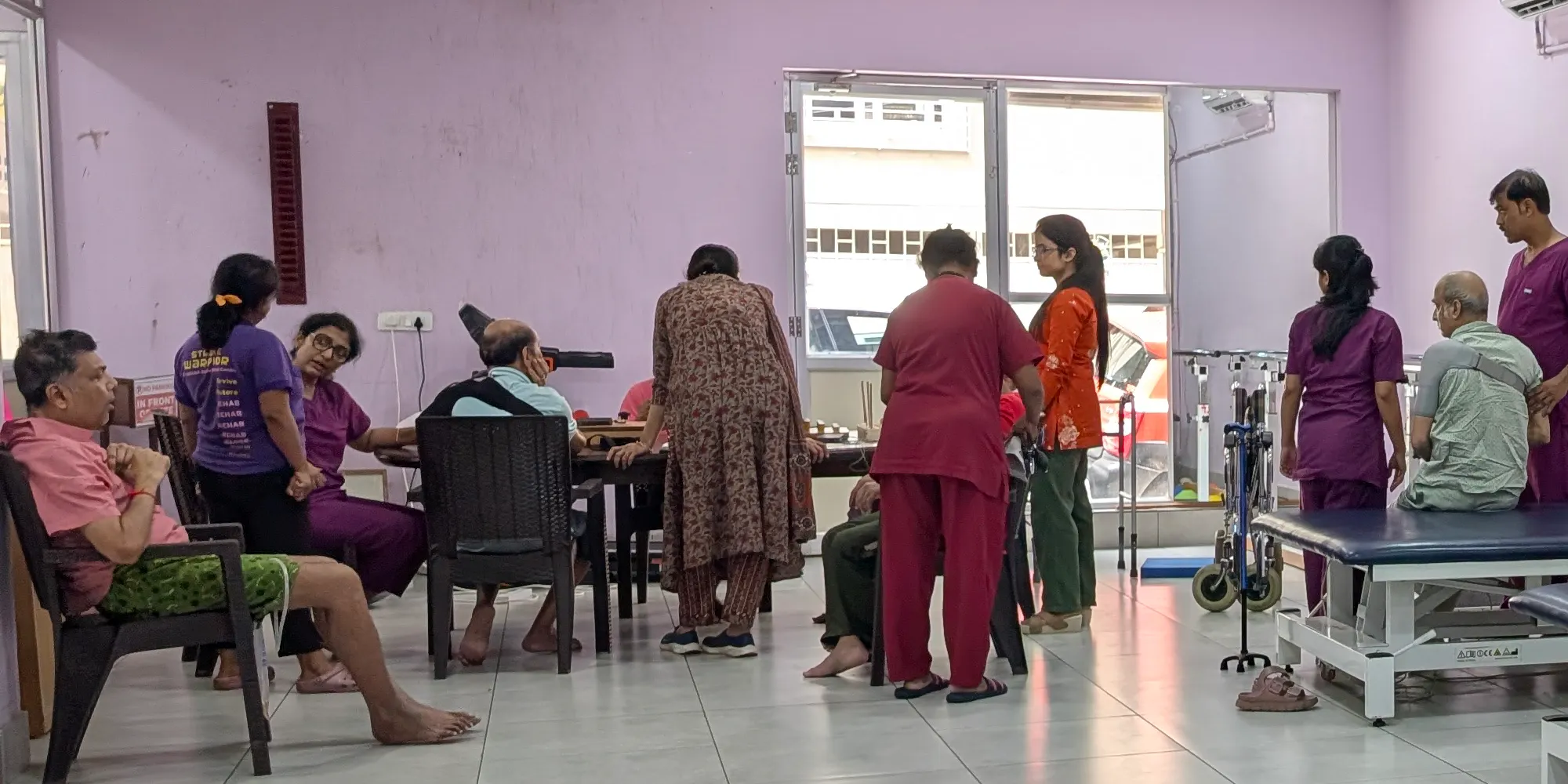
Step inside Rehabana and experience our doctor-led rehab environment. From advanced therapy equipment to guided sessions, every space is designed to support meaningful neurological recovery.
Take the first step
Not sure it'll suit your family member? Come in for an assessment and ask. Bring the discharge papers and the list of medicines. We also offer animal-assisted therapy at our centre, if animals are more their thing.
FAQs
It's gardening guided by a trained therapist to reach set treatment goals. In neuro rehab we use it for hand use, balance, attention and mood. Most people call it garden therapy.
Knowledge That Guides Recovery
Get expert neuro rehabilitation tips from the doctors at Rehabana, Kolkata — simple guidance on stroke recovery, spinal cord injury rehab, Parkinson’s care, and enhancing quality of life after neurological conditions.
Returning to West Bengal after hospital treatment? Continue structured, multidisciplinary Neuro Rehabilitation closer to home with Rehabana.
Read More
Join the Neuro Rehabilitation Support Network, a community initiative convened by Rehabana. Connect with survivors, caregivers and professionals to learn, share and rebuild life together.
Read More
Complete Parkinson's home care guide for families, rehabilitation, safety and daily living.
Read MoreKnowledge That Guides Recovery
Get expert neuro rehabilitation tips from the doctors at Rehabana, Kolkata — simple guidance on stroke recovery, spinal cord injury rehab, Parkinson’s care, and enhancing quality of life after neurological conditions.
Returning to West Bengal after hospital treatment? Continue structured, multidisciplinary Neuro Rehabilitation closer to home with Rehabana.
Read MoreJoin the Neuro Rehabilitation Support Network, a community initiative convened by Rehabana. Connect with survivors, caregivers and professionals to learn, share and rebuild life together.
Read MoreComplete Parkinson's home care guide for families, rehabilitation, safety and daily living.
Read More