Stroke: Signs, Treatment & Recovery

A stroke happens when blood can’t reach part of the brain, and every minute counts. On this page you’ll find the warning signs to watch for, what causes a stroke, how doctors treat it, and what recovery can look like in the weeks and months after. We’ve kept it in plain language for patients and families.

Understanding Stroke Rehabilitation

Stroke: Symptoms, Effects, Recovery and Rehabilitation

A stroke can change how a person holds their body and moves, and also their speech, thinking, swallowing and how much they can do alone. Structured rehabilitation helps them get back the skills daily life needs, bit by bit.
A stroke is a medical emergency. It happens when blood can't get to a part of the brain, or when a blood vessel in the brain bursts and bleeds. After that, a lot depends on which part of the brain got hurt and how badly. One person gets better quite fast. Another needs rehab and support for much longer. So the first thing we do is find out what the stroke has really changed for your family member.

Different brain areas, different effects. Alt text: Simplified side view of the brain with coloured areas linked to problems a stroke there can cause, such as weakness on one side, trouble speaking or understanding speech, memory and thinking problems, changes in feeling, vision, balance and coordination, and swallowing.

What is a stroke?

In simple words, a stroke is damage to part of the brain. It happens when a blood vessel gets blocked, or when one bursts and bleeds.

Think of your brain as a busy control centre. It moves your hands and legs, and lets you speak, see, swallow, remember and keep your balance. To do all this, it needs a steady supply of blood carrying oxygen and nutrients.

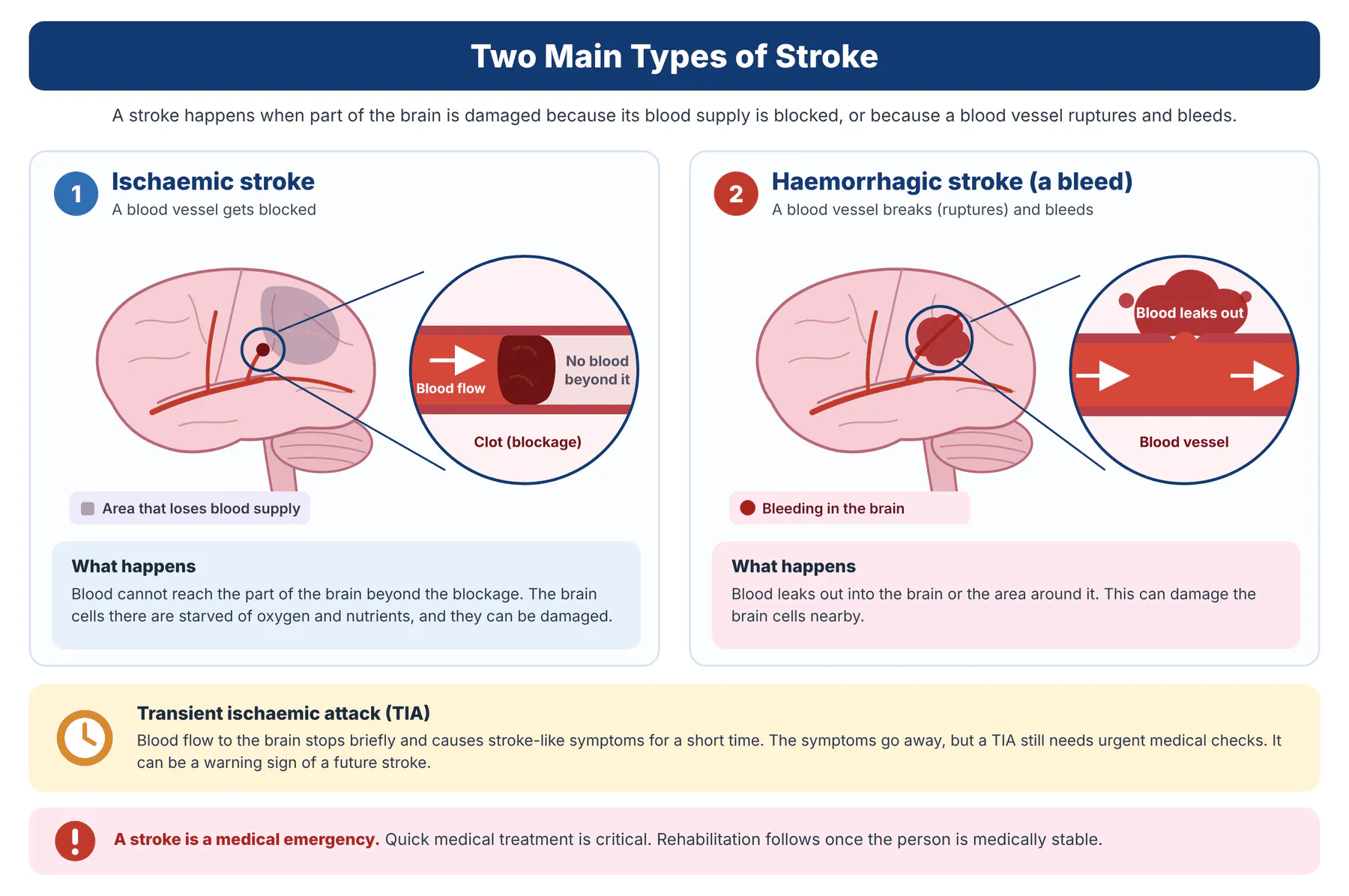
If a blood vessel gets blocked, it's like a traffic jam. Blood can't reach the brain cells beyond it, and they start to get damaged. This is an ischaemic stroke. If a blood vessel breaks, blood leaks into or around the brain and hurts the cells nearby. That's a haemorrhagic stroke, or a bleed.

What changes after a stroke depends on which part of the brain is hit and how badly. Weakness or paralysis on one side of the body is the classic sign. But there can also be trouble speaking, swallowing, seeing or keeping balance, or changes in memory and thinking. That's why two people who've had a stroke can have very different problems.

A stroke is a medical emergency, so fast treatment always comes first. Once the person is stable, rehab helps them get skills back, do more for themselves and learn to live with any problems that stay. Our stroke rehabilitation in Kolkata focuses on what matters to your family member, like walking safely, using a weak hand or speaking clearly, so they can get back to everyday life at home.
Two main types of stroke. Alt text: Side-by-side brain diagrams showing an ischaemic stroke, where a clot blocks a blood vessel and the area beyond it loses its blood supply, and a haemorrhagic stroke, where a blood vessel bursts and blood leaks into the brain, with a note that a TIA is a warning sign that needs urgent checks.

What are the different types of stroke?

Most strokes have one of two causes. Either a blood vessel gets blocked, or there's bleeding in the brain.

When a blood vessel is blocked, it's an ischaemic stroke, and the brain doesn't get enough blood and oxygen. A haemorrhagic stroke comes from bleeding or leaky blood vessels. Then there's one that people often brush off. In a transient ischaemic attack (TIA), blood flow to the brain stops for a short time. Stroke-like symptoms come and then go away. But a TIA still needs urgent medical checks, because it can be a warning sign of a future stroke.

Stroke Rehab in Kolkata: First 90 Days Recovery Guide

What happens to the brain during a stroke?

Brain cells get hurt in two ways. Either they don't get enough oxygen and nutrients, or bleeding damages the brain tissue.

The brain has no backup supply. It needs blood all the time. When the blood is cut off, the part that's hit can lose control of movement, feeling (sensation), speech, eyesight or coordination. How much disability there is depends on which parts are hurt, and how badly. The good news is that the nervous system can adapt and learn again during recovery, through practising real tasks again and again. Rehab builds on exactly that to help people get skills back and find safer ways to manage daily tasks.

Kolkata’s Innovative Use of Exergames in Stroke Rehab

What causes a stroke?

The usual causes are blood vessel disease, clots and bleeding. Behind these are several risk factors.

Families often ask about blood pressure first. Yes, high blood pressure raises the risk. So do diabetes, high cholesterol, smoking, binge drinking (a lot of alcohol in one go), stress and depression. Heart problems like an irregular heartbeat (atrial fibrillation) count too. Being very overweight (obesity), too little exercise and past blood vessel disease count as well. Still, a stroke can happen to someone with no clear risk factor. Every stroke needs a medical check to find the cause, because that helps prevent another one.

Patient walking with a cane while a therapist walks alongside, stroke rehabilitation at Rehabana, Kolkata

What are the common effects of a stroke?

Movement is only one part of it. Every person ends up with a different mix of problems.

Say your father has weakness or paralysis on one side. He may also find walking hard, or he can't use his hand like he used to. His muscles may feel stiffer or looser (a change in muscle tone). There can be bladder problems, and trouble with speech or language, swallowing, balance or eyesight. His thinking (cognition) can change. Emotional or mental health problems are common, and so are tiredness (fatigue) and pain. Going back to work and social life can be hard too. And these problems add up. Tight or weak muscles plus poor balance can make walking and looking after himself much harder than either would alone.

Therapist mobilising the shoulders of a seated older man, stroke rehabilitation at Rehabana, Kolkata

What problems can happen after a stroke?

First, we need to understand what the stroke has changed in the person's abilities and daily life.

The problems show up in the body, in daily activities and in taking part in life. Sitting, standing, walking or using the hand on the stroke side may be hard. So can everyday jobs like talking, eating, dressing, bathing or managing at home. Muscles that stay tight and stiff (spasticity), pain, swelling (oedema), shoulder problems, tiredness, thinking problems and emotional changes take away even more independence. Should your team treat these one at a time? No. Good rehabilitation looks at how they affect each other, and at the person's real-life goals.

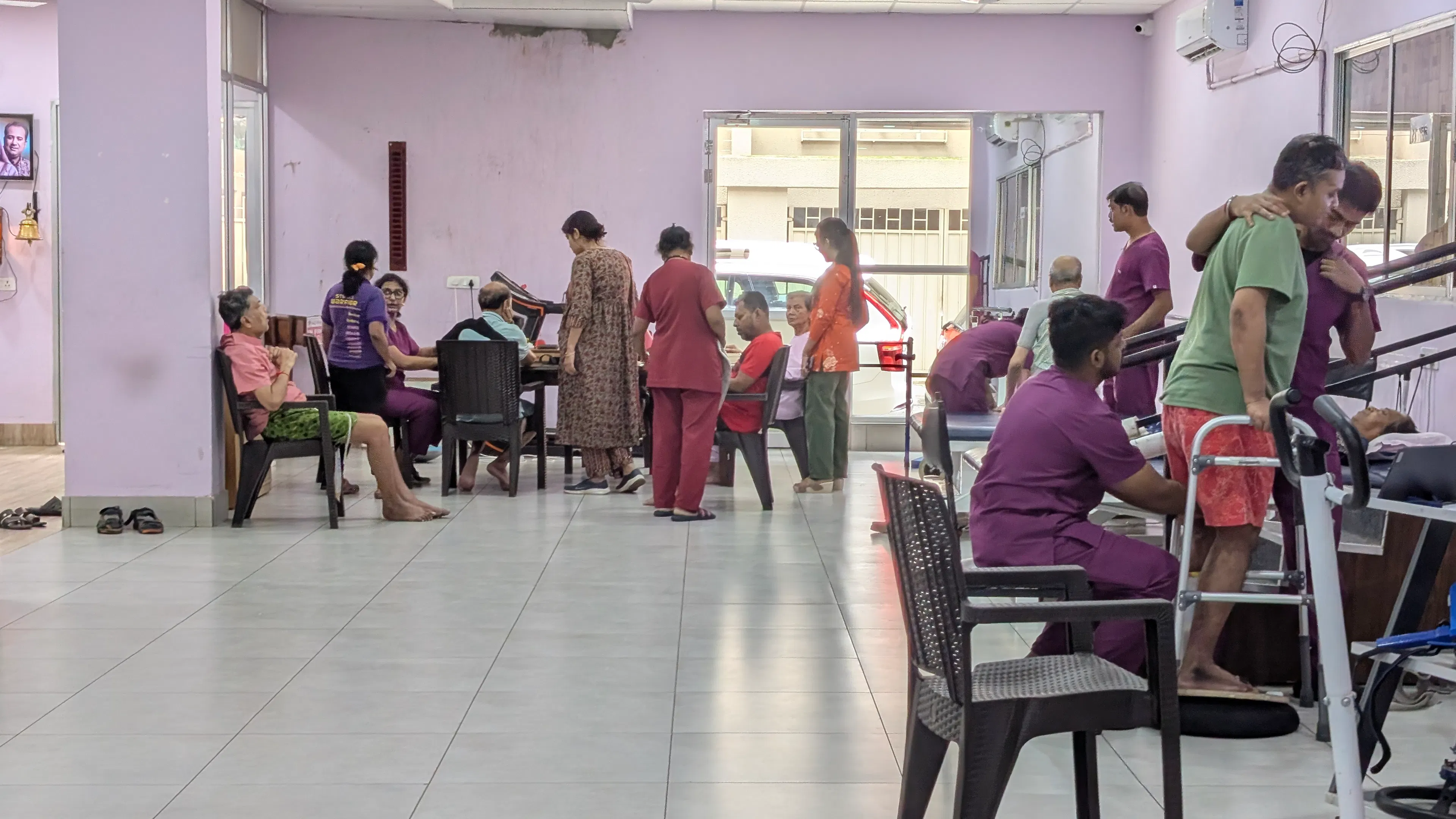
Busy therapy hall with patients working with their therapists, stroke rehabilitation at Rehabana, Kolkata

What is stroke rehabilitation?

Stroke rehabilitation is a structured plan that helps the person do more after a stroke, and do more on their own. Then they can take part in life again.
It's more than a set of exercises. Depending on the person's needs, we may work on movement, balance, walking and using the hand. Or on speech, swallowing, thinking and eyesight, or self-care and getting back out into the community. Daily life is what links it all. A structured programme starts with an assessment (a careful check) and goals that really matter. Then the team picks the right treatments, checks progress and keeps changing the plan as the person changes.

Therapist with a reassuring hand on an older man's shoulder, stroke rehabilitation at Rehabana, Kolkata

Why is rehabilitation important after a stroke?

The brain can recover to some extent. Rehab is what turns that into progress you can see in daily life.

Families often ask if they can just wait, since some abilities do come back on their own. Sometimes they do. But recovery may also need focused practice and support. Rehabilitation shows us what the person can do now, what's limiting their independence and what to work on next. Practising real daily tasks (task-specific activities) helps a lot, because it helps people do more on their own. A goal might be sitting better, or moving from bed to chair (transfers). Later, it might be walking alone, using the hand on the stroke side, communicating well or getting back to community activities. What counts is the useful things the person can do, not the number of exercises done.

Therapist sitting with an older woman resting in a hospital bed, stroke rehabilitation at Rehabana, Kolkata

When should rehabilitation start after a stroke?

Rehab should start as early as it's medically safe, keeping in mind how awake and alert the person is. And it should keep going as their needs change.

Exactly when, and how hard? It depends on how medically stable the person is, how bad the stroke was, any complications and how well they can take part. It may start in hospital in the early (acute) stage. Then it can carry on while the person is admitted (inpatient), in day care, as an outpatient (coming in for sessions) or at home. But early doesn't mean pushing someone past what's medically safe. We review the plan as recovery goes on, and change it when the person's abilities, goals or situation change.

Occupational therapists running table activities with a group of patients, stroke rehabilitation at Rehabana, Kolkata

Who is involved in stroke rehabilitation?

Stroke rehabilitation works best when all the different experts are aiming for the same everyday goals.

Who's on the team depends on what the person needs. It can include a Physical Medicine and Rehabilitation physician, physiotherapist, occupational therapist, speech and language therapist, rehabilitation nurse, psychologist, dietitian and other specialists. The patient and family are important members of the team too. Each expert sees the person from a different side, which helps. But everyone should aim for the same goals, not treat each problem on its own.

Doctor watching a patient carry out a hand task during assessment, stroke rehabilitation at Rehabana, Kolkata

How does multidisciplinary stroke rehabilitation work?

A team of experts from different fields (a multidisciplinary team) brings the separate parts of rehabilitation together into one joined-up plan.

Stroke problems are often linked to each other. Take weak control of the body's middle part (poor trunk control). It's one problem, but it makes moving in bed, sitting, transfers and walking harder. Trouble communicating makes it hard to join in therapy. Thinking problems get in the way of learning and staying safe. A multidisciplinary team can spot these links and plan treatment together. At Rehabana, this means we build rehabilitation around shared goals, regular assessment and review, not separate, unlinked therapy sessions.

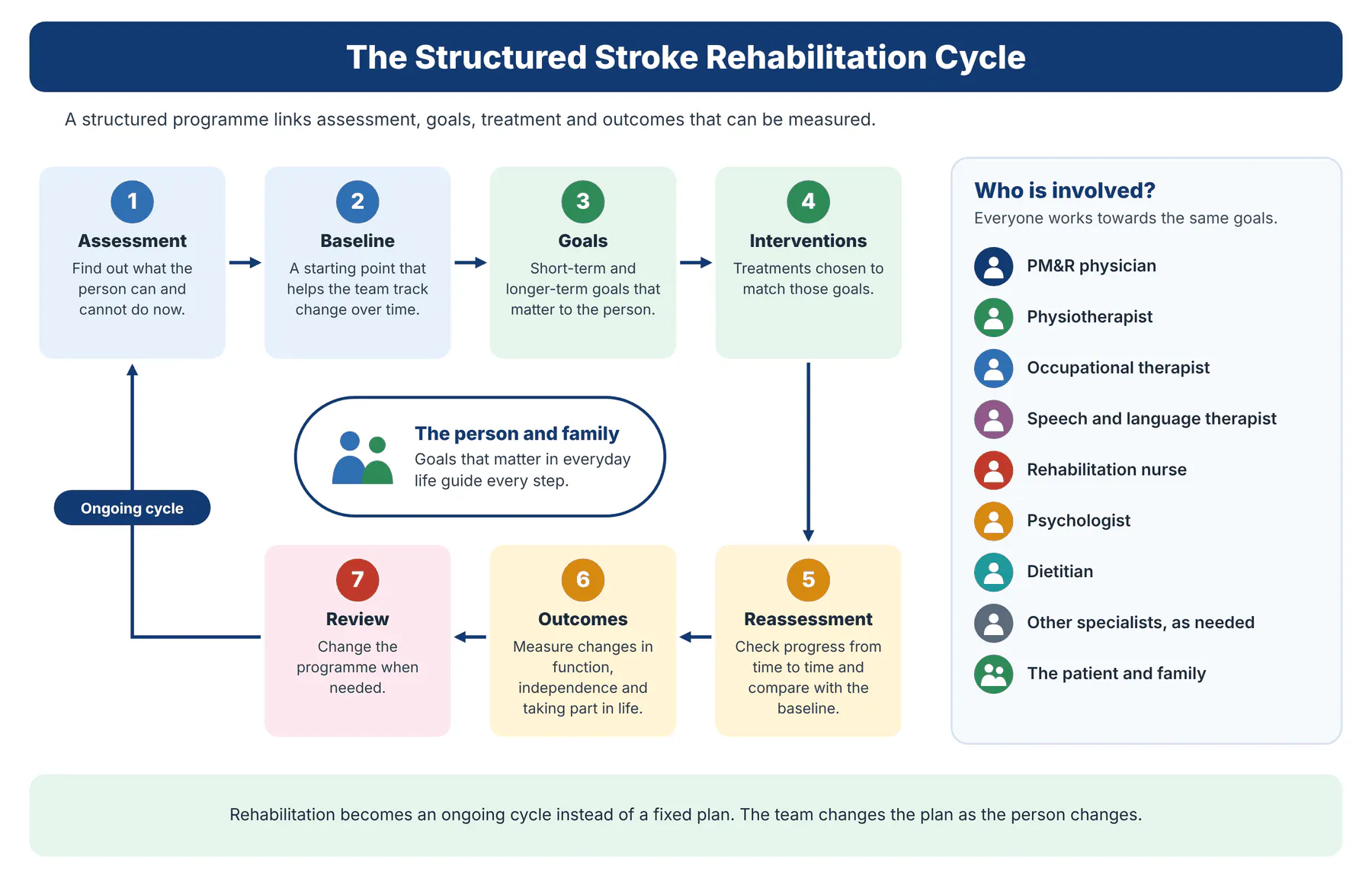
The structured stroke rehabilitation cycle. Alt text: Flow diagram of seven steps (assessment, baseline, goals, interventions, reassessment, outcomes and review) that loop back to assessment around the person and family, next to a list of the rehabilitation team members.

What should a structured stroke rehabilitation programme include?

A structured programme links assessment, goals and treatment to results you can measure.
A well-planned programme usually goes through these steps:

Assessment → Baseline → Goals → Interventions → Reassessment → Outcomes → Review

First, we find out what the person can and can't do now. Then we set goals that matter to them, for the short term and for later. We choose treatments to match, check progress every so often and change the programme when needed. Then we go round the loop again, because it isn't a fixed plan.

Doctor checking the hand and finger movement of a patient, stroke rehabilitation at Rehabana, Kolkata

Assessment: how do we know where the person is starting?

Assessment turns what the stroke has done into facts we can measure and use to guide rehab.

What do we actually check? Movement, how the person holds their body (posture), feeling, muscle tone, balance and walking, to start with. Then arm and hand use, communication and swallowing, thinking, and how independent the person is in daily activities. Standard tests give us a starting point (baseline), so we can track change over time. But scores aren't everything. What we really want are answers to practical questions like "What can the person do now?", "What is limiting independence?" and "What should we work on next?"

Clinician talking with a family member across a desk, stroke rehabilitation at Rehabana, Kolkata

From baseline to rehabilitation goals

A good goal says what the person will be able to do. It doesn't count how many exercises they've done.

Once the assessment is done, we decide what comes first. A short-term goal might be moving in bed, keeping the trunk steady when sitting, transfers, standing balance or walking with help. Longer term, it might be getting around alone, self-care or taking part in community life. Goals should be realistic and measurable, and they should fit the person's life. And they need review, because recovery doesn't always go in a straight line.

Older man using an upper-limb robotic device with a tablet game while a therapist assists, stroke rehabilitation at Rehabana, Kolkata

Stroke rehabilitation interventions

We choose treatments to suit the person. That means their problems, their goals, their stage of recovery and how they're responding to rehab.

There are quite a few options. There's movement practice using real tasks, walking training (gait training) and balance work. There's also arm and hand rehab, occupational therapy, speech and language therapy and help with swallowing. In some cases the person needs help with thinking, mood and social life (cognitive or psychosocial interventions). Technology and robotic rehabilitation may suit some patients. Is there one treatment that works for everyone? No. Each treatment should link back to a clear problem in daily life, and we check that it's working.

Older man with a walker on a computerised balance trainer facing a screen, stroke rehabilitation at Rehabana, Kolkata

Reassessment: is the rehabilitation programme working?

Checking again, regularly, is how we know the treatment is really helping.

A programme shouldn't stay the same just because that's how it was planned. Every now and then, the team should check again what matters and compare it with the starting point. Is the person moving better, walking further, moving from bed to chair more safely or talking more clearly? Progress can also mean more independence, or taking a bigger part in daily activities. And what if things are slower than we hoped? Then we stop and think again about the goals, what's getting in the way and the treatment itself.

Older man climbing training stairs with a therapist, stroke rehabilitation at Rehabana, Kolkata

Measuring recovery and outcomes

Better test results are nice to see, but recovery is best measured by how much more the person can do, how independent they are and how much they take part in life.

On paper, we track better movement, balance, hand use, communication, swallowing, self-care and independence. In real life, what matters most is personal. For one person, it's walking to the bathroom alone. For another, it's eating safely, with or without a helping device (assistive device). Or it's getting dressed, with or without help or a device. Someone else wants to go back to work, or join in family and community life again. Measuring all this tells us and the family if the programme is moving the person towards their goals.

Family member helping an older woman eat a meal in bed, stroke rehabilitation at Rehabana, Kolkata

Caregiver support after stroke

Family members are often right at the centre of recovery. They need guidance and support too.

In the first few weeks at home, a lot falls on the caregiver. You may need to learn safe transfers from bed to chair, how to place the side hit by the stroke and how to help them move around. We also show you ways to talk with them, how to keep swallowing safe and which exercises to do at home. The hard part is helping them be independent without doing everything for them (tempting, we know). You'll also want to know what changes to expect and when to get professional advice. Good caregiver training should make the home safer and keep the person as independent as possible.

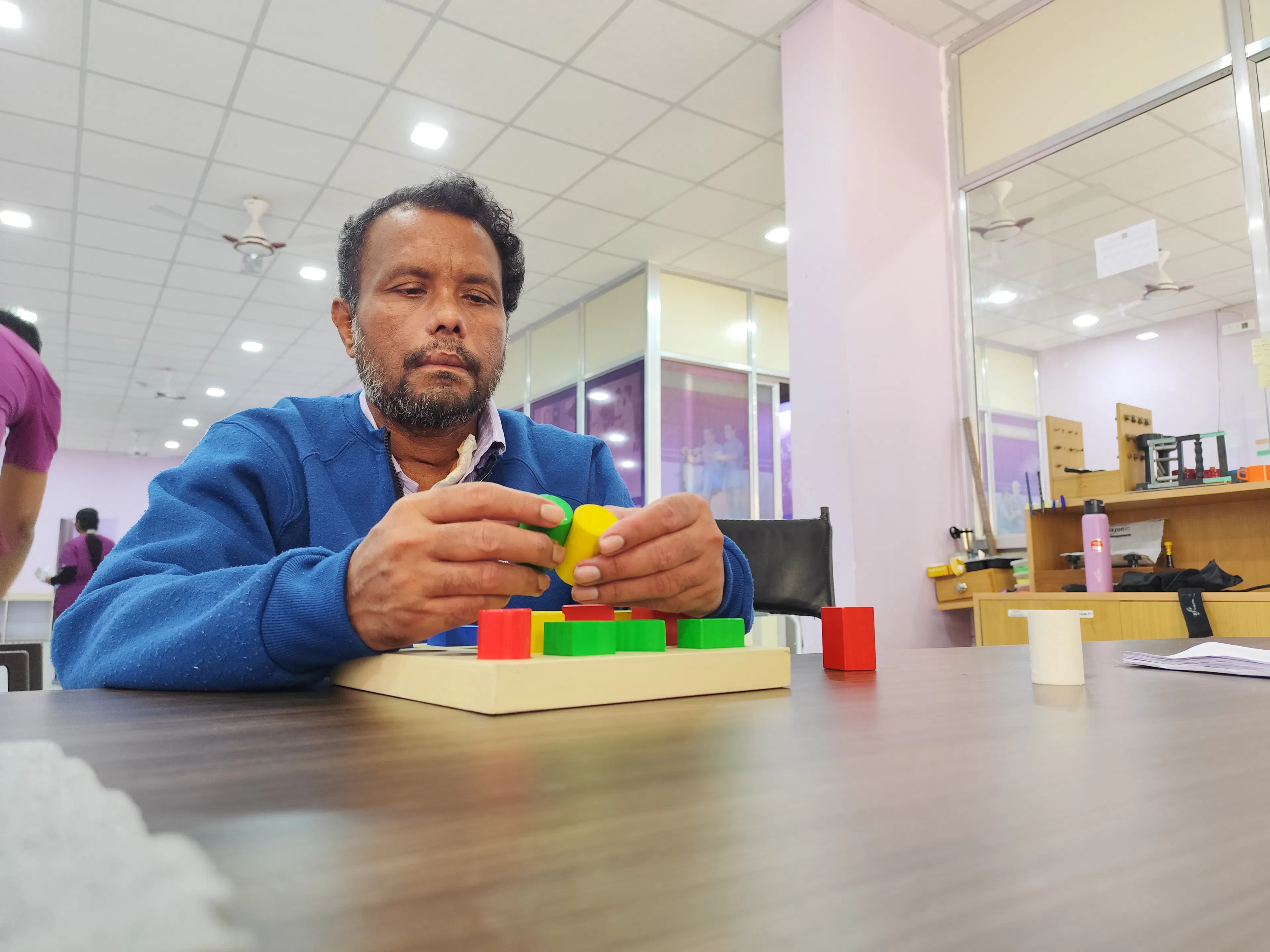
Older man giving a thumbs up at an activity table, stroke rehabilitation at Rehabana, Kolkata

Stroke recovery happens over time

Recovery changes over time, so rehab has to change with it. It should keep up with what the person can do and what they want to achieve.

There's no fixed timetable. One person picks things up quickly. Another needs longer rehab and a fair bit of adjusting. Even in one person, skills come back at different speeds, and walking may return before hand use or communication. To be honest, this part takes time. The plan needs to be checked and changed regularly, because one programme won't stay right all the way through.

Two therapists working with a patient lying on a treatment table, stroke rehabilitation at Rehabana, Kolkata

Our approach

Rehabana's stroke rehabilitation approach

At Rehabana, clinical assessment, everyday goals, team-based (multidisciplinary) rehabilitation and results we can measure all come together in one rehabilitation pathway.

We see stroke rehabilitation as a cycle that keeps going: understand the condition → identify problems → measure function → establish goals → intervene → reassess → measure outcomes → review → involve the caregiver. Running therapy sessions isn't the goal in itself. We want real progress for the person, so they can be more independent and take a bigger part in daily life.

Frequently asked questions

What is stroke?

A stroke is a sudden injury to the brain. It happens when blood flow to part of the brain gets cut off, or when a blood vessel in the brain bleeds. After that, movement, speech, swallowing, eyesight, thinking and other abilities may be affected.

What happens to the brain during a stroke?

What are the common effects of a stroke?

What is stroke rehabilitation?

Why is rehabilitation important after a stroke?

Who is involved in stroke rehabilitation?

What should a structured stroke rehabilitation programme include?

What are the different types of stroke?

What causes a stroke?

What problems can happen after a stroke?

What is Neuroplasticity?

When should rehabilitation start after a stroke?

How does multidisciplinary stroke rehabilitation work?

Looking for structured stroke rehabilitation?

Book a stroke rehabilitation assessment

Explore Rehabana's stroke rehabilitation services, or talk to our rehabilitation team about which pathway may suit your needs.