After a spinal cord injury, things like walking, sitting up or using the toilet can suddenly feel hard. What changes depends on where the spine was hurt and how badly. Rehab helps people build strength, learn new ways to do daily tasks, and get back as much independence as possible.
Our approach
At Rehabana, we first find the level of the injury in the spinal cord (the Neurological Level of Injury, or NLI). We use the ASIA/ISNCSCI assessment for this. Why start there? It tells us what your family member can be expected to manage. We plan their own programme around it, starting from how they are when they arrive. Then we track progress, test again often, and push for as much independence and as full a return to community life as possible.
NLI: In simple words, it shows which parts of the body the spinal cord injury has changed. That tells us which movements or tasks a person may still manage. Our spinal cord injury rehabilitation in Kolkata focuses on what matters to your family member, like moving from bed to chair, getting around safely or managing daily care, so they can live as independently as possible.
Life can look very different after a spinal cord injury. Moving, feeling, breathing and the daily routine can all change. Rehab helps people get back more independence and a better life, whether they use a wheelchair, crutches or nothing at all.
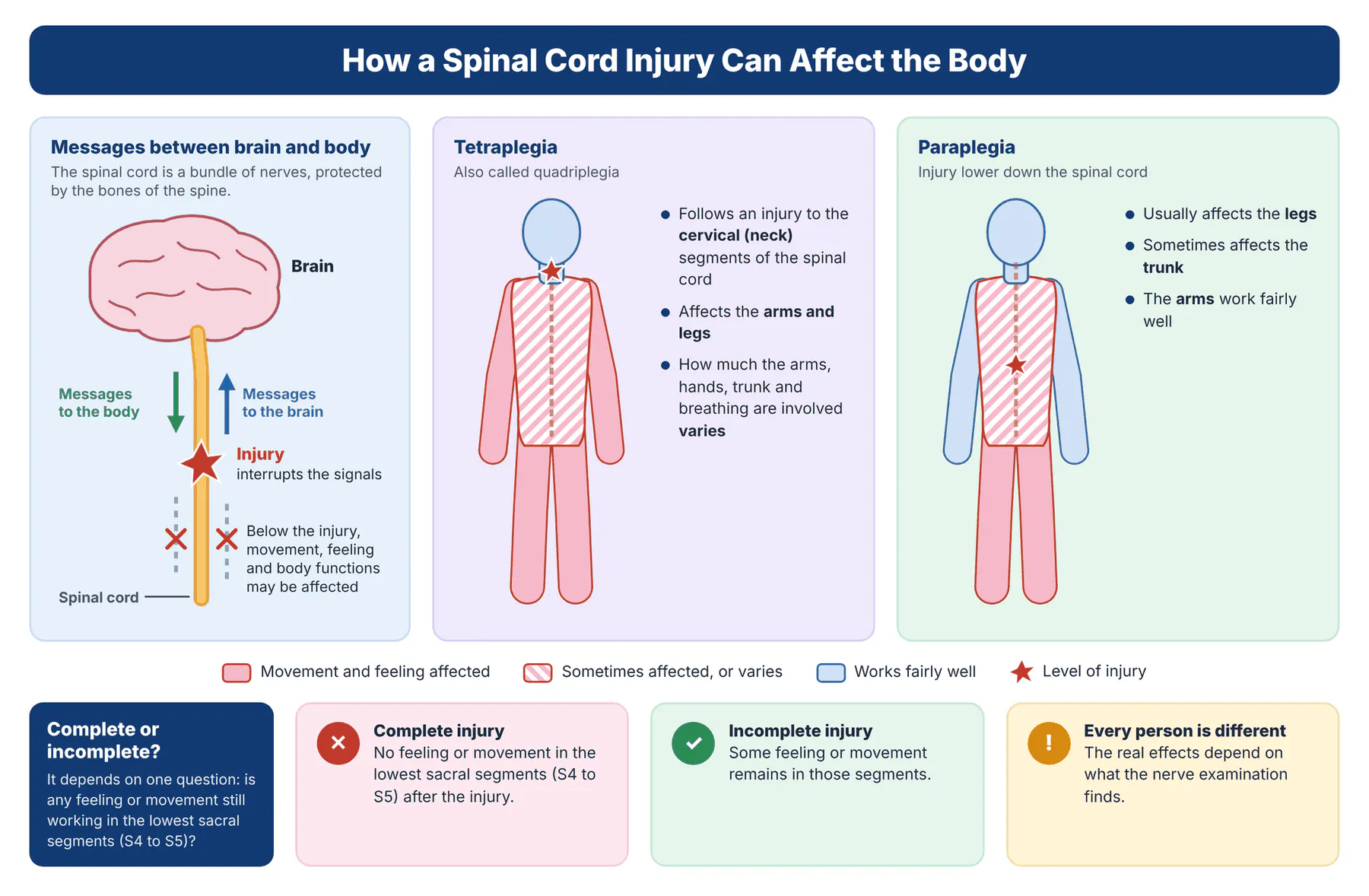
A spinal cord injury (SCI) gets in the way of the messages between the brain and the body. Movement and feeling are the changes you notice first. But bladder and bowel control, breathing and other body functions can also change. No two are quite the same.
We start by working out exactly what has changed. Then we work on stopping new health problems (complications) and on practical skills, with goals the person really cares about. At Rehabana, a whole team of health experts does this together. They handle the body's changes and help your family member do more daily tasks alone.
It's damage to the spinal cord that gets in the way of nerve messages between the brain and the body.
The cord is a bundle of nerves. The bones of the spine sit around it like a protective case. A road accident, a fall or any other injury (trauma) can hurt it. But not every SCI starts with an accident. Some tumours, infections and blood vessel problems (vascular conditions) can damage the cord too.
What you'll see depends on where the damage is and how bad it is. There may be weakness or no movement at all (paralysis), changes in feeling, or trouble with body functions. Medical checks and treatment come first. Rehab starts once the doctors say it's suitable.

The care team looks at two things most. The level of the injury, and whether it's complete or incomplete. Together they show which body functions may be affected, and that shapes the rehab plan.
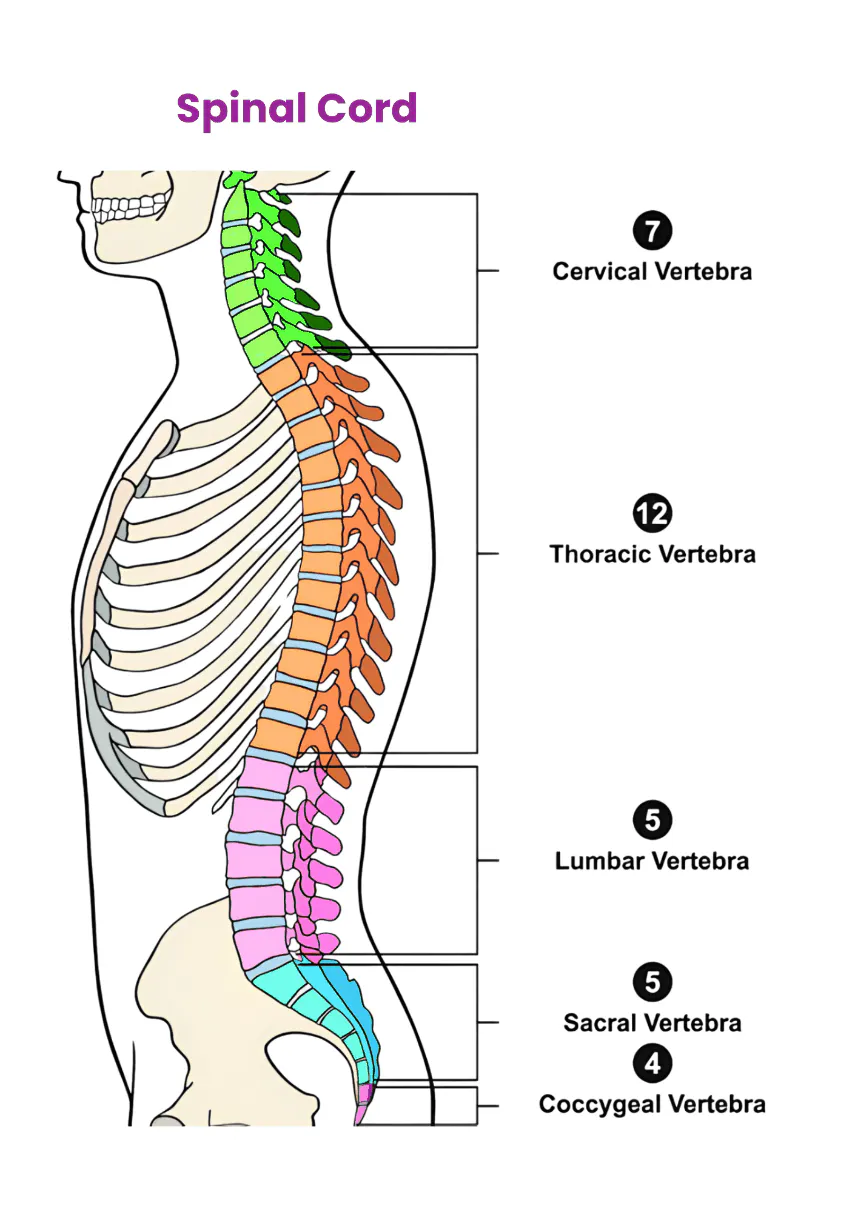
Both are on the medical report, along with the part of the spine. That's the neck (cervical), upper and middle back (thoracic), lower back (lumbar) or the base of the spine (sacral).
Roughly, a neck injury may affect the arms and legs. Lower injuries more often affect the main part of the body (the trunk) and the legs. Families sometimes read the X-ray report and think that's the full answer. Here's the thing. The X-ray shows which bone was hurt, but what really counts is the nerve check. A specialist does this check, and it shows the type of injury and what it means for daily life.

It comes down to one question. Is there any feeling or movement left in the lowest part of the spinal cord (the lowest sacral segments)?
Look at those lowest segments, S4 to S5, after the injury. If there's no feeling (sensory function) and no movement (motor function) there at all, it's a complete spinal cord injury. If some feeling or movement is left, it's incomplete.
These are only labels for what the nerve check shows, and we don't plan around them. At Rehabana, each programme is built on what your family member can do and how much they may still recover. We aim for as much independence as possible. We check which muscles still work, what they can feel, balance, hand use and breathing needs. We also see how they're managing day to day.

Both words give a rough idea of which parts of the body have trouble moving and feeling after a spinal cord injury.
With paraplegia it's usually the legs, sometimes the trunk, and the arms work fairly well. Tetraplegia (also called quadriplegia) affects the arms and legs. It follows an injury to the neck (cervical) part of the cord. How much the arms, hands, trunk and breathing are affected differs a lot.
Families often ask us, "My father has paraplegia. Will he manage on his own?" To be honest, neither word can tell you that. At Rehabana, our short-term and long-term goals depend on his injury level, what still works and his medical needs. His home and what matters to him count just as much.
Most people think about movement and feeling first. But SCI also changes the things your body does without you thinking about them (automatic functions). Which problems show up depends on the person.
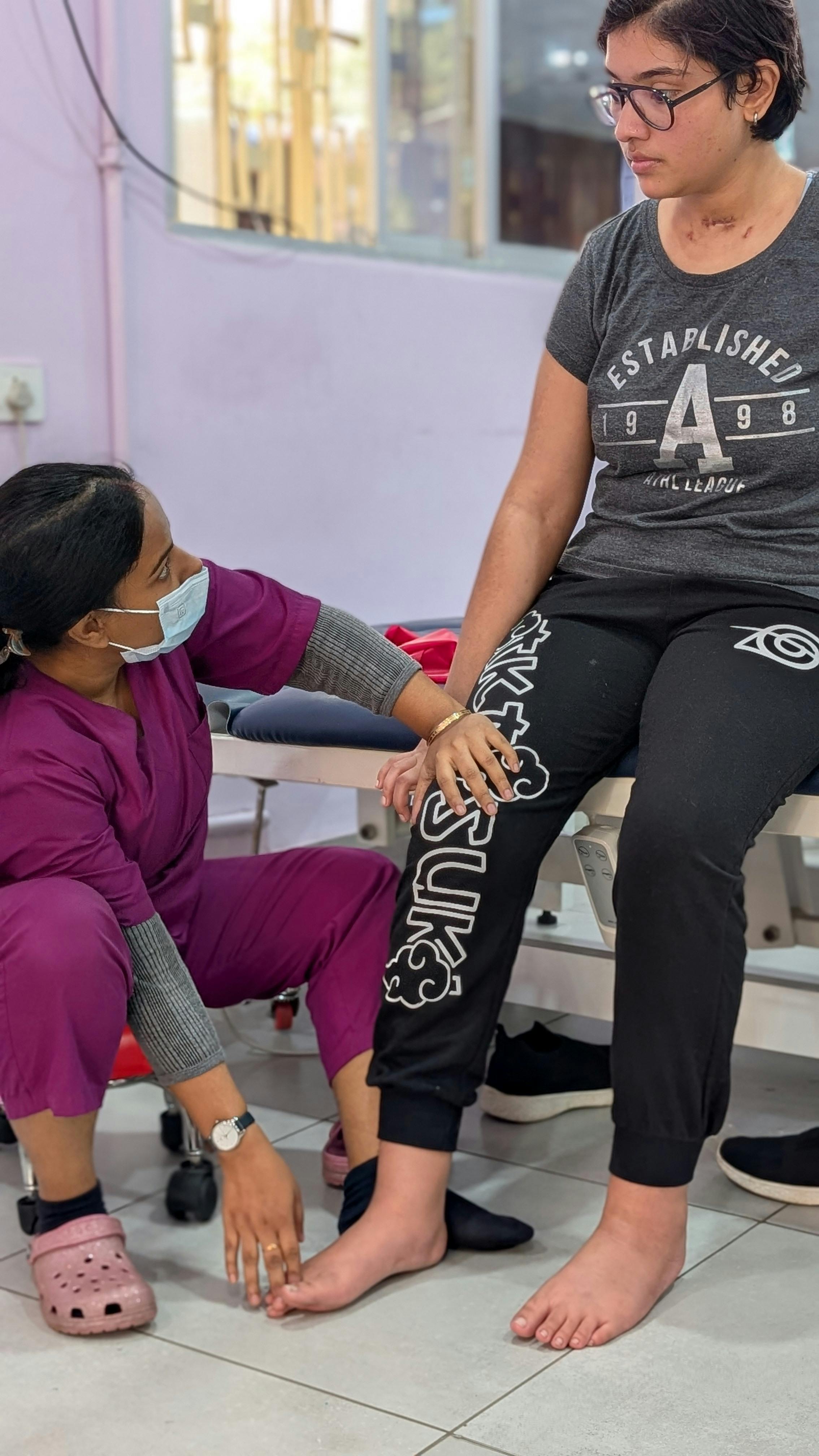
Say your husband can't roll from his back onto his side in bed unless someone helps him. Moving in bed can be that hard. So can sitting, standing, walking or moving from bed to chair and back (transfers). There may be weakness or paralysis, changes in feeling, pain, and muscles that stay tight and stiff (spasticity). Breathing can get harder. And bladder, bowel or sexual function may change.
It isn't only about moving, though. Your family member may need help with dressing, bathing, eating, using the toilet or the daily routine. Each symptom and problem needs its own check. And if something is new or getting worse, please don't just blame the old injury.
Want to know how much SCI really changes things? Watch an ordinary day. See what your family member can do safely and on their own.
Staying in one position in bed might be hard. So might sitting without losing balance, or using the hands. Getting from bed to wheelchair, personal care, and joining in with family and community life can all take effort. And everyone needs a different amount of help.
Our job is to turn those problems into clear goals, like a safer transfer, better wheelchair skills, or dressing and grooming with less help. For some, it's going back to job training (vocational training) and work. Equipment, changes at home and teaching the caregiver can matter as much as the exercise.

Recovery starts with the right medical care. Then it carries on through rehabilitation, preventing complications and support over the long term.
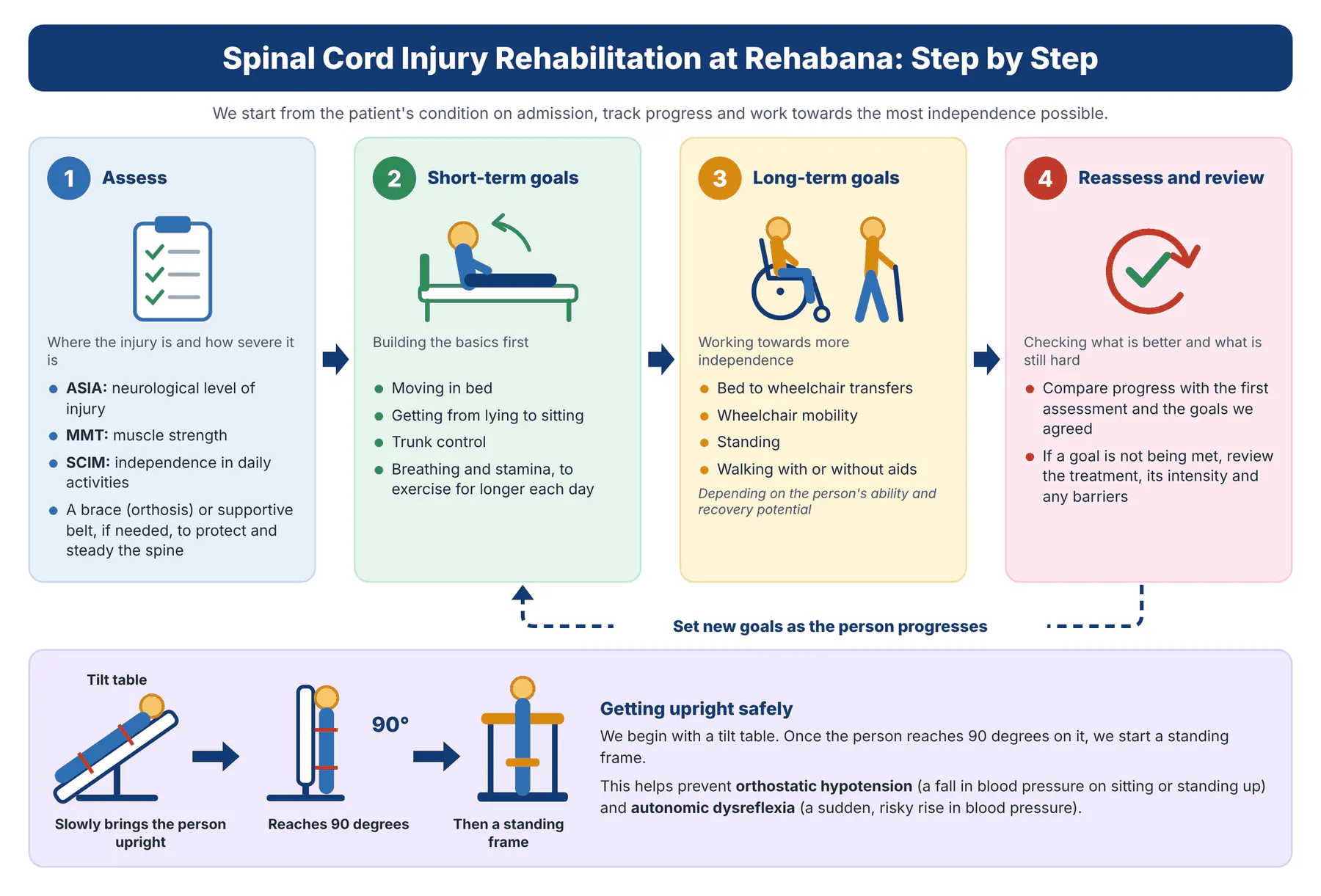
At Rehabana, we first check where the injury is and how bad it is. That tells us if a brace (orthosis) or a support belt is needed to protect and steady the spine. Then come the short-term goals. Moving in bed. Getting from lying to sitting. Keeping the trunk steady. We also build up breathing and stamina so they can exercise for longer each day. Bit by bit, we move to the long-term goals. These are bed to wheelchair transfers, moving about in the wheelchair, standing, and walking with or without aids. It depends on the patient's ability and how much they may recover.

It's a planned programme run by a team of different experts (a multidisciplinary team). The main aim is helping the person do more and be more independent, while keeping complications in check.
Who's involved? Neuro rehabilitation after a spinal cord injury can include physiotherapy, occupational therapy, medical rehabilitation and nursing. It can also include equipment, emotional support and teaching for caregivers. It depends on what your family member needs.
Therapy works on movement, strength, balance, transfers, wheelchair use and self-care. The medical side looks after bladder, bowel, skin, pain or stiff muscle problems. Nothing is fixed. As your family member's abilities, health and goals change, the programme changes with them.
You can't measure progress if you don't know where you started. That starting point (baseline) helps the team pick priorities, set goals they can measure and see real change over time.
So the first check is careful. We look at the nerves, muscle strength, feeling, joint movement and sitting balance. Then moving around, transfers, hand use, self-care and any medical risks. We also ask about home, who's there to help and what matters most to them.
We use standard tests. The ASIA (American Spinal Injury Association) assessment finds the level of the injury. The MMT (Manual Muscle Test) checks muscle strength. The SCIM (Spinal Cord Independence Measure) shows how independent someone is in daily life. Families often care about that one most. They show where the patient is now and how far they've come, so we know which goal to set next.
What we choose depends on how the nerves are working and how medically stable your family member is. It also depends on their goals and how safely they can join in.
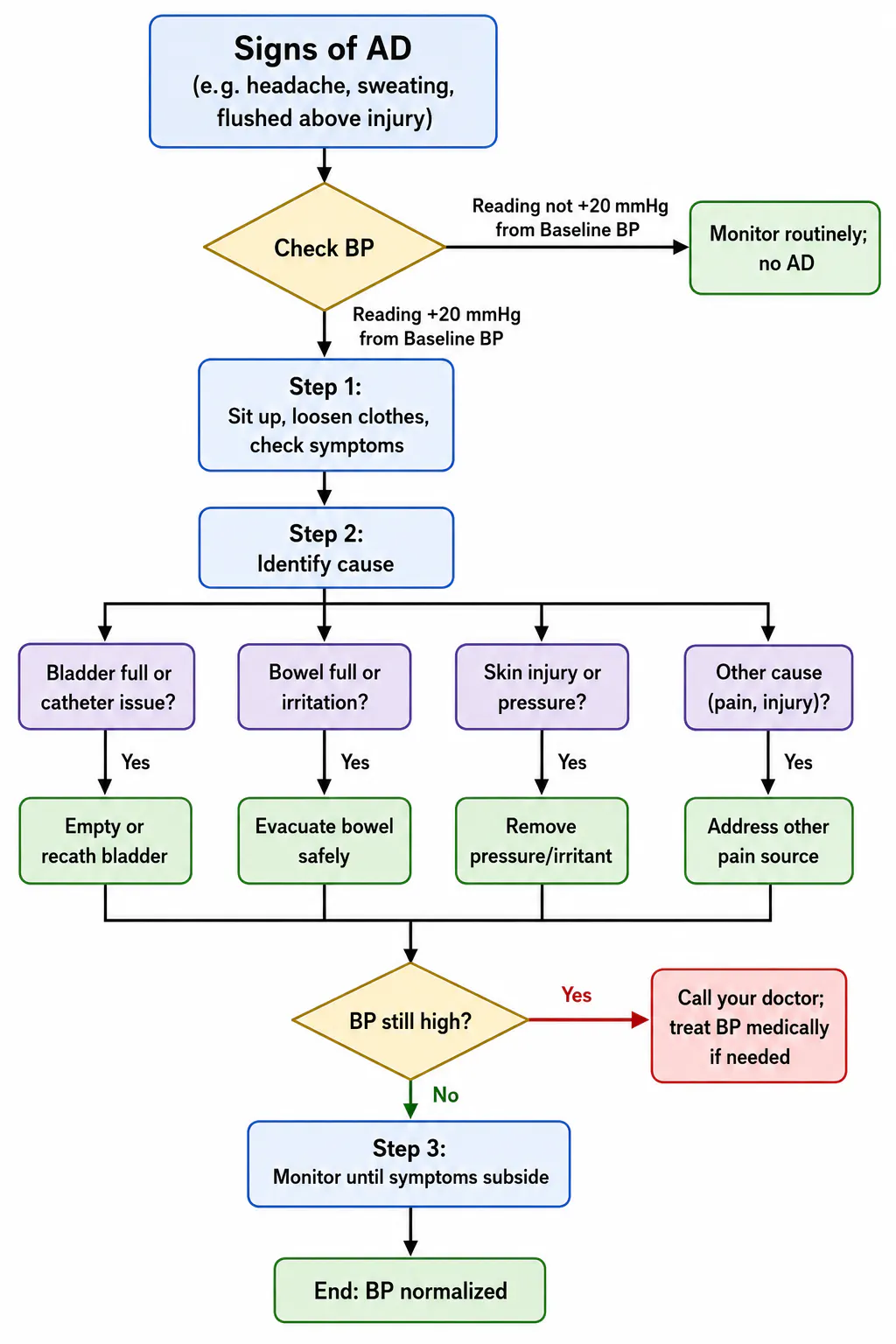
There's no set list. Depending on the person, SCI rehab at Rehabana can mean strength work and exercises that move the joints fully (range-of-motion exercises). It can also mean positioning, sitting balance, transfer practice, wheelchair skills and self-care training. Standing comes slowly. We begin on a tilt table, which slowly brings the person upright. Only when they reach 90 degrees on it do we start a standing frame. This helps prevent a drop in blood pressure when sitting or standing up (orthostatic hypotension), and a sudden, dangerous rise in blood pressure (autonomic dysreflexia). We also practise everyday tasks. Breathing support, helpful devices and ways to handle complications come in when needed.
What about robotic rehab? Families ask about it a lot. Robotic or technology-assisted rehabilitation can suit some patients when it's medically right. But it must help with a clear goal, and it doesn't replace a personal assessment or close watch by skilled staff.

We check again regularly. That shows us what's getting better and what's still hard, and it's usually where we spot what needs to change in the plan.
Each review compares your family member with their first check and the goals we agreed. Progress doesn't always show up where you'd expect. It might be needing less help, a better transfer, wheelchair use or self-care. Or it might be the arms and hands, stamina or daily tasks.
And if a goal isn't being met? Then we look again at the treatment and how hard we push, at what's getting in the way and at medical reasons. The plan should follow your family member's progress, not just the number of sessions.

The injury can lead to new health problems (secondary complications). Preventing and handling them is a big part of spinal cord injury care. For us, it's part of rehab itself.
Bed sores (pressure injuries) are the ones most families know about. Bladder and bowel problems, urine infections and stiff muscles may also need ongoing care. Pain, breathing problems, sudden rises in blood pressure and bone health may need attention as well. The risks depend on each person's injury and medical history.
Catch problems early and treat them properly. With teaching and regular follow-up, that helps prevent avoidable harm. We want patients and caregivers to know which signs need urgent medical help, and who to call.
Now, rehab ends, but life at home goes on. We try to get the person and their family ready for the practical side of what comes next.
We teach caregivers how to position the person, help with transfers and check the skin. We also go through daily routines, using equipment and the warning signs to watch for. We have to be realistic, too. What one caregiver can safely manage, another can't. And the person being helped gets a say in how it's done.
Back home, there may be changes to make in the house, travel to sort out, and study, work or social life to get back to. Planning this early links rehab goals to life outside the centre.
Mobility training helps a person move as safely and independently as their abilities and health allow.
That might mean standing or walking with the right support. Or the bigger gains might come from wheelchair skills, transfer skills and daily routines that save effort. It depends on how the nerves work, strength, balance, medical factors and the person's own goals.
A few good steps in the therapy room are only part of it. At Rehabana, we want your family member moving well at home and out in the community.
Good spinal cord injury care also covers things people don't always talk about. That includes body functions, relationships and the everyday activities that matter to them.
Breathing, swallowing or communicating may need extra help. Sexual or reproductive health might too, or using the arms and hands. It depends on the injury, any linked conditions and what the person is worried about.
Medical need decides what we check and who we refer you to, and the right specialists come in when needed. Some of these topics feel awkward to bring up. We talk about them with respect and add them to the care plan when they matter.

At Rehabana, our neurorehabilitation brings together medical checks, each person's goals and practice of everyday tasks. All of it aims at more independence.
Looking for a spinal cord injury rehabilitation centre in Kolkata? Ask how the programme deals with medical risks. And ask about mobility, daily activities, equipment and long-term needs too.
This page explains Rehabana's spinal cord injury rehabilitation services, step by step. It helps patients and caregivers see which ones may suit them, and how to ask for a personal assessment. We only decide on the right programme, and how long and how hard it should be, after a medical check.
Skill matters. So does making decisions based on research (evidence), setting goals you can measure and checking them regularly.
Depending on what the person needs, the team can include rehabilitation doctors, physiotherapists, occupational therapists and rehabilitation nurses. Sometimes it also includes a speech and language therapist or a psychologist.
Medical decisions should follow the latest research and the person's own assessment. Case studies help here. A family can see how goals were picked, how problems were handled and how progress was recorded. But two rules apply. Patients' privacy is protected. And no result should suggest everyone will do just as well.
It's much easier to walk into an appointment prepared. The good news is that reliable information helps families understand the care needed, and it makes rehab decisions feel less scary.
Rehabana's spinal cord injury resources cover symptoms, what a person may be able to do with their condition, mobility, preventing complications and community life. Use them to get ready for your talks with the team. They help with those talks, but they don't replace personal medical advice.
It's damage to the spinal cord that gets in the way of messages between the brain and the body. Rehab can bring together physiotherapy, occupational therapy and practising everyday tasks (functional training). Equipment, preventing complications and teaching the caregiver also come into it. The whole programme is planned around the person's needs and goals.
Start with an assessment
Looking for a spinal cord injury rehabilitation centre? Ask how the programme deals with medical risks. And ask about mobility, daily activities, equipment and long-term needs too. We only decide on the right programme, and how long and how hard it should be, after a medical check.