
How Long Does Stroke Rehabilitation Take? Recovery Timeline
How long stroke rehab takes depends on severity, timing and therapy dose. What recovery looks like if rehab starts early, at 3 months or after a year.
Read MoreDysphagia means difficulty swallowing food, liquids or even saliva. It is common after a stroke, Parkinson's disease, traumatic brain injury and other neurological conditions. It is treated through a swallowing assessment followed by individualised rehabilitation — swallowing exercises, food-texture changes, safe positioning and caregiver training.

A person with dysphagia may struggle to move food or liquid from the mouth safely past the windpipe (airway) and into the oesophagus (food pipe).
Dysphagia is commonly seen in people who have had a stroke, Parkinson's disease, traumatic brain injury or other neurological conditions, and in some cancers (oncological conditions).
Swallowing difficulties can affect eating, drinking, nutrition and overall health. With proper assessment and rehabilitation, they can be managed according to the patient's condition.
At Rehabana, we understand that swallowing is an important part of daily life. Our approach focuses on identifying the problem and planning appropriate rehabilitation to support a safe, efficient swallow and a better quality of life.
Sometimes swallowing difficulties are easy to notice; in other cases they go unnoticed. Common signs include:
Important — silent aspiration: some patients have food or liquid entering the airway without coughing. This is called silent aspiration. Swallowing problems should not be ignored even if the patient does not cough during meals. An instrumental assessment can help identify silent aspiration.

Swallowing requires precise coordination of the muscles of the mouth, tongue and throat, and the brain controls these movements. When a neurological condition affects the brain or the nerves controlling these muscles, swallowing can become difficult. Common causes include:
The problem differs from one patient to another. Some struggle with chewing, while others have difficulty moving food from the mouth into the throat.
Treatment depends on the patient's swallowing ability and the underlying medical condition. At Rehabana, rehabilitation planning may involve a PM&R doctor and a speech and language therapist, along with other healthcare professionals when needed. Treatment may include:
Some patients need specialised swallowing investigations, such as FEES (fibreoptic endoscopic evaluation of swallowing) or VFSS (videofluoroscopic swallow study), to understand their swallowing difficulty.
If swallowing is not safe enough, or the patient cannot take enough nutrition by mouth, the medical team may recommend alternative feeding methods, such as a feeding tube.
Not every treatment suits every patient — the rehabilitation plan should be individualised.

Neurological rehabilitation is not limited to walking, balance or hand movement. Swallowing difficulties also need attention because they affect nutrition, health and independence. Our approach includes:
Our goal is to help patients manage swallowing difficulties, maintain adequate nutrition and improve their quality of life. Learn more about speech and swallowing therapy in Kolkata and how speech therapy works.
It can, but the possibility of improvement depends on the cause, the severity of the swallowing difficulty, general health and response to treatment. Some patients gradually improve their swallowing, while others need long-term support and dietary modification.
At Rehabana, we focus on realistic rehabilitation goals and regular monitoring to understand each patient's progress.
Do not ignore swallowing difficulties. If your loved one coughs frequently during meals, struggles to swallow or has repeated chest infections, seek a medical assessment. Early identification can help prevent complications and guide appropriate treatment.
In neurological rehabilitation, the most common cause is stroke. Parkinson's disease, traumatic brain injury, motor neuron disease, multiple sclerosis and some head and neck cancers can also cause dysphagia.
Silent aspiration is when food, liquid or saliva enters the airway without causing a cough. Because there are no obvious signs, it is often identified only through an instrumental swallowing assessment such as FEES or VFSS.
Dysphagia is usually assessed and treated by a speech and language therapist (pathologist), working with a doctor — at Rehabana, a PM&R doctor — and other team members such as nurses and dietitians when needed.
Many people see their swallowing improve in the weeks and months after a stroke, especially with assessment and therapy. Others need longer-term strategies such as modified food textures. Recovery varies from person to person.
There is no single safe diet. The right food texture and liquid thickness depend on the individual swallowing assessment, so follow the specific advice of your speech and language therapist.
Our PM&R doctor and speech and language therapists can assess swallowing safety and plan individualised dysphagia rehabilitation.
Knowledge That Guides Recovery
Get expert neuro rehabilitation tips from the doctors at Rehabana, Kolkata — simple guidance on stroke recovery, spinal cord injury rehab, Parkinson’s care, and enhancing quality of life after neurological conditions.
How long stroke rehab takes depends on severity, timing and therapy dose. What recovery looks like if rehab starts early, at 3 months or after a year.
Read More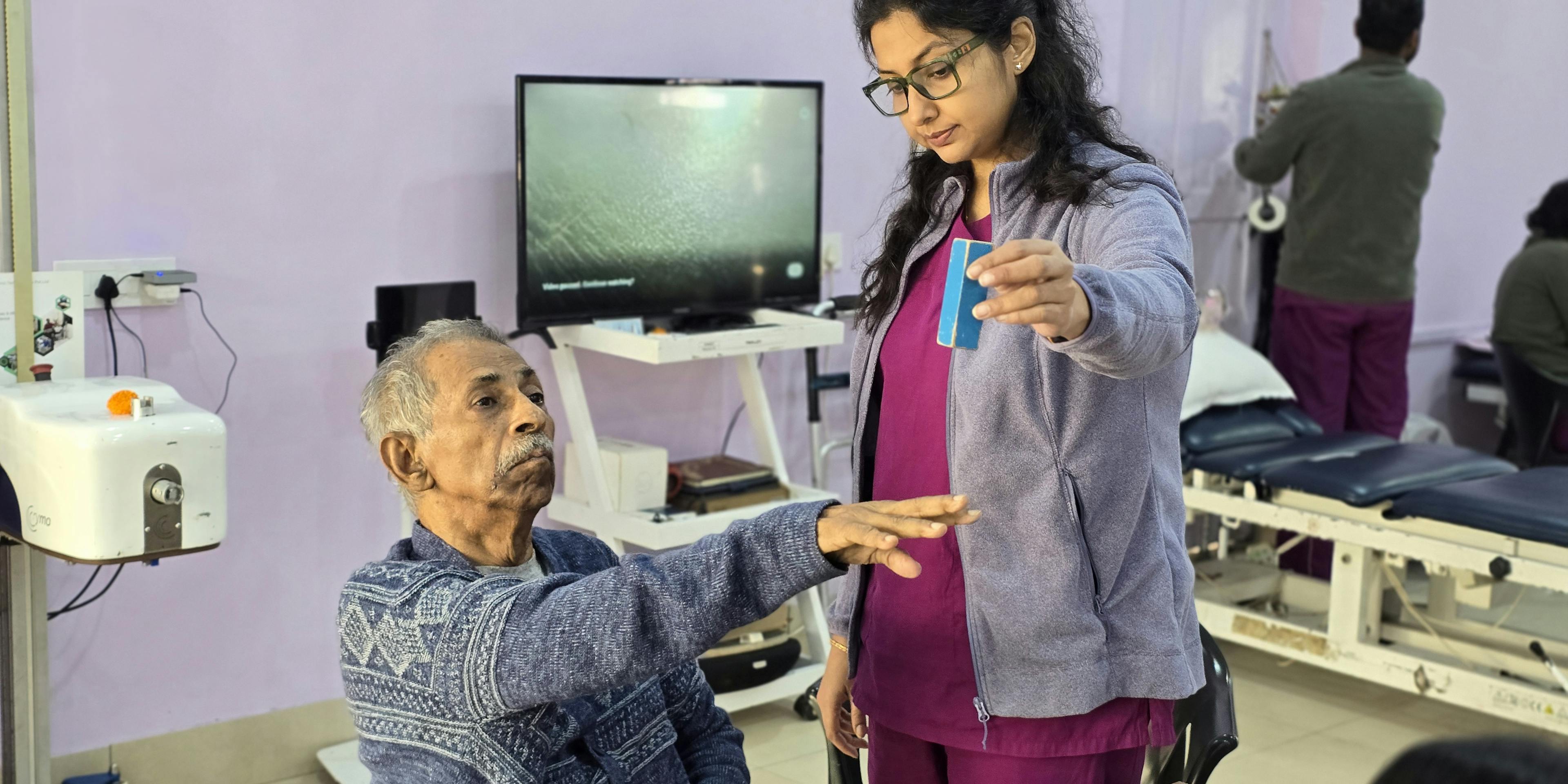
Physiotherapy vs occupational therapy: PT improves movement, strength and walking; OT builds daily skills like eating and dressing. When you need both.
Read More
Choosing a traumatic brain injury rehab centre in Kolkata? Use this 9-point checklist: PM&R-led assessment, family training, progress reports and more.
Read More