

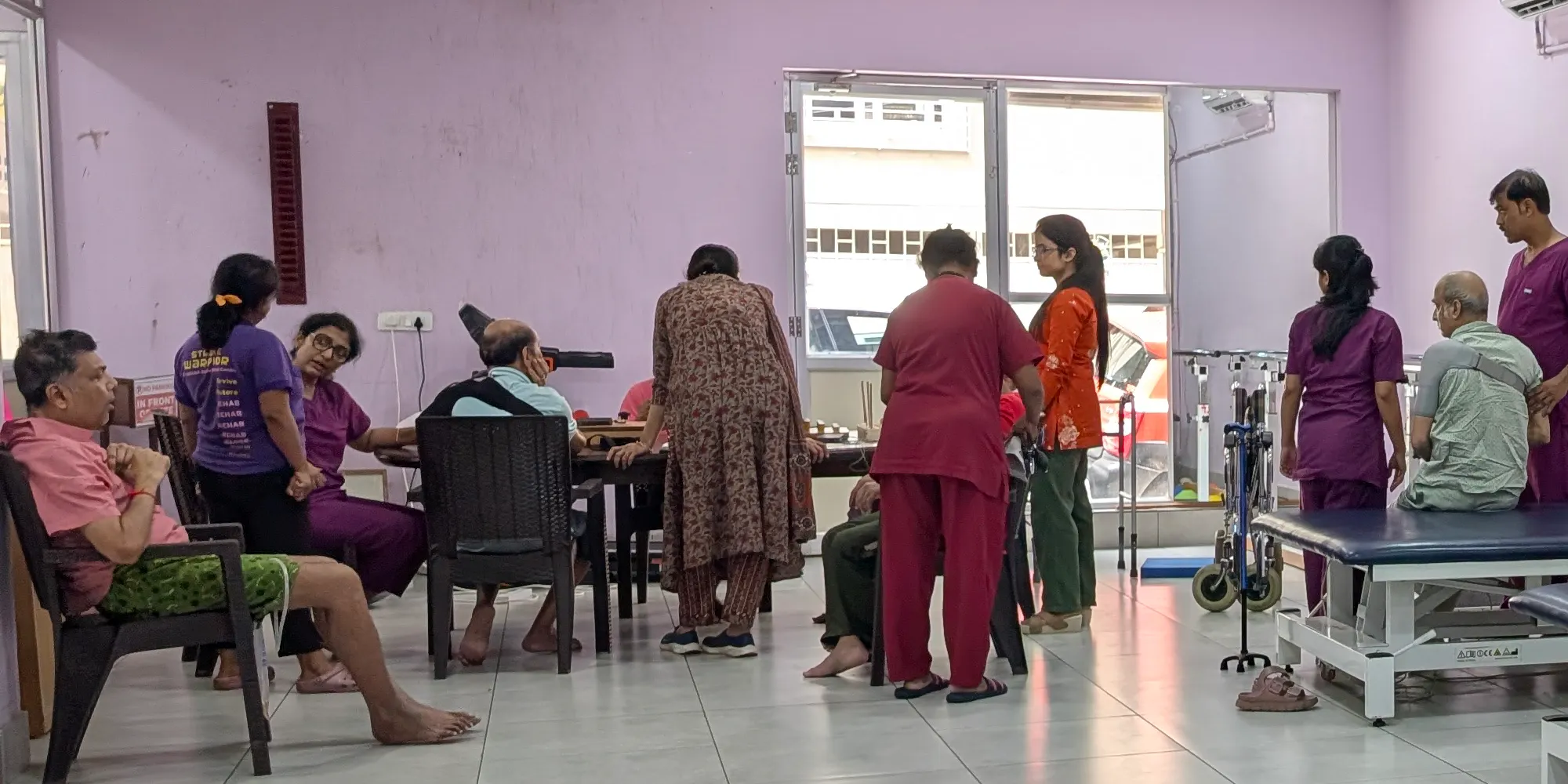
Neuro Rehabilitation in Kolkata After Hospital Discharge
Returning to West Bengal after hospital treatment? Continue structured, multidisciplinary Neuro Rehabilitation closer to home with Rehabana.
Read MoreMaybe your mother is walking again, but she still can't button her blouse or hold a cup of tea without spilling it. That gap is what occupational therapy is for. It's practical, patient work on small daily tasks, and the family is part of it from the first day.
Doctor-supervised OT for neuro conditions
Dressing, bathing, eating and toilet practice
Hand, memory and planning work
Home set-up advice your family can use

What the word really means
People search "occupational therapy kya hai" all the time, and fair enough. The name is confusing. "Occupation" here has nothing to do with your job. It means anything that fills your day. Brushing your teeth. Paying the bills. An occupational therapist, usually just called an OT, works out which of these have become hard after an illness or injury, and why. It's a proper, recognised health profession in India, listed in a 2021 law on allied health professions. The OT works on two fronts at once. One is getting the lost skill back. The other is finding another way. Say your father's right hand won't close around a spoon after a stroke. His OT works on that hand week by week. Meanwhile, a spoon with a thick foam handle lets him feed himself today.

One name, several branches
OT has a few branches. Paediatric OT helps children with play, handwriting and school skills. Hand therapy looks after the hand and wrist. Mental health OT helps people build a steady daily routine again. And there's vocational rehabilitation, which is a long name for help getting back to work or study. Our work is neurological OT. That's for adults whose brain, spinal cord or nerves have been damaged, say by a stroke, a head injury or Parkinson's. In real life the branches mix. A man getting over a stroke might need hand work now and, a few months later, a plan for going back to his job.

Two therapies that work together
This comes up in nearly every first meeting. Put simply, physiotherapy works on how the body moves, and occupational therapy works on what you do with that movement. The physio builds strength, balance and walking. The OT carries those gains into the bathroom, the kitchen and the office. So physio might get someone up and walking to the bathroom. OT helps them wash, use the toilet safely, get dressed and come back out without a fall. The two overlap most around the arm and hand. OTs also look after memory, planning and the way the home is set up. Trouble with speech, swallowing or finding words? That belongs to speech therapy.

Signs worth noticing
If someone now needs help with things they used to do alone, ask about OT:
Conditions we work with
Every condition gets in the way of daily life differently, so OT for one person can look nothing like OT for the next.
One side often goes weak, and attention or memory can be hit too. OT works on self-care and on getting the weaker hand back into daily use. See occupational therapy after stroke and arm and hand function after stroke.
Everything slows down. Handwriting shrinks and buttons get fiddly. OTs teach simple cues and break tasks into small steps. UK guidance from NICE says anyone struggling with daily tasks should see an OT. More on occupational therapy for Parkinson's disease.
So much depends on where the spine was hurt. OT covers getting from bed to wheelchair, self-care and making the most of the hands. See occupational therapy for spinal cord injury and wheelchair skills and independence.
The hidden problems are often the hardest. Poor memory, planning and a heavy tiredness can stop someone working even when they walk fine. Read about occupational therapy after brain injury and cognitive rehabilitation after brain injury, which means training the thinking skills.
Tiredness is one of the commonest problems in MS, along with weak or numb hands. OTs help people pace the day and change how tasks are done on bad days. See occupational therapy for multiple sclerosis.
In MND, needs can change within weeks. The OT tries to stay one step ahead, sorting out equipment and home changes before they become urgent. See occupational therapy for motor neuron disease.

MD Physical Medicine and Rehabilitation doctors supervise every programme and keep an eye on pain and medicines.

Physio, speech therapy and psychological support sit in the same team, all working on your goals.

You tell us what matters most. We test, agree goals with you, then check again regularly.

We train with wheelchairs, walkers and adapted cutlery, and advise on simple changes at home.

We run sessions just for family members, so helping at home feels a lot less scary.

Sessions at our centres, therapy at home on request, and daily OT for our inpatients.
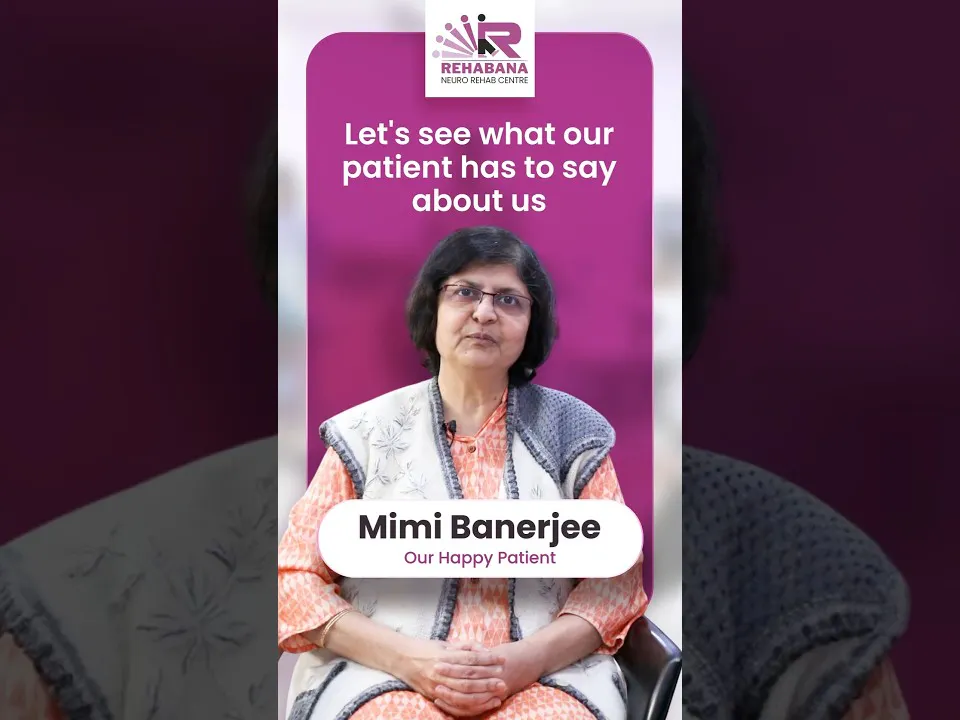
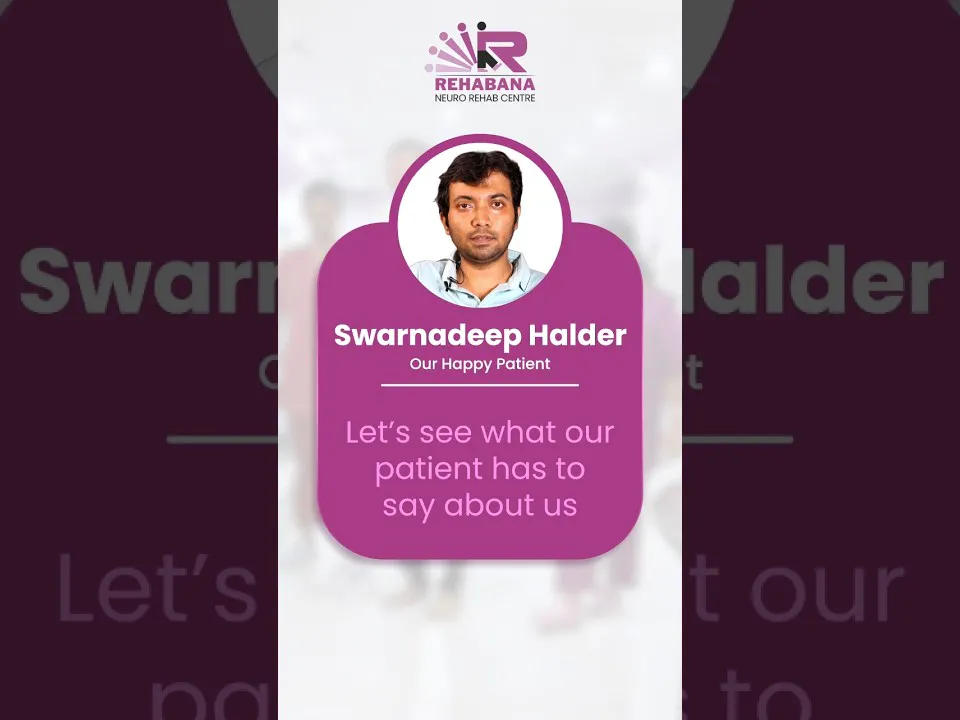
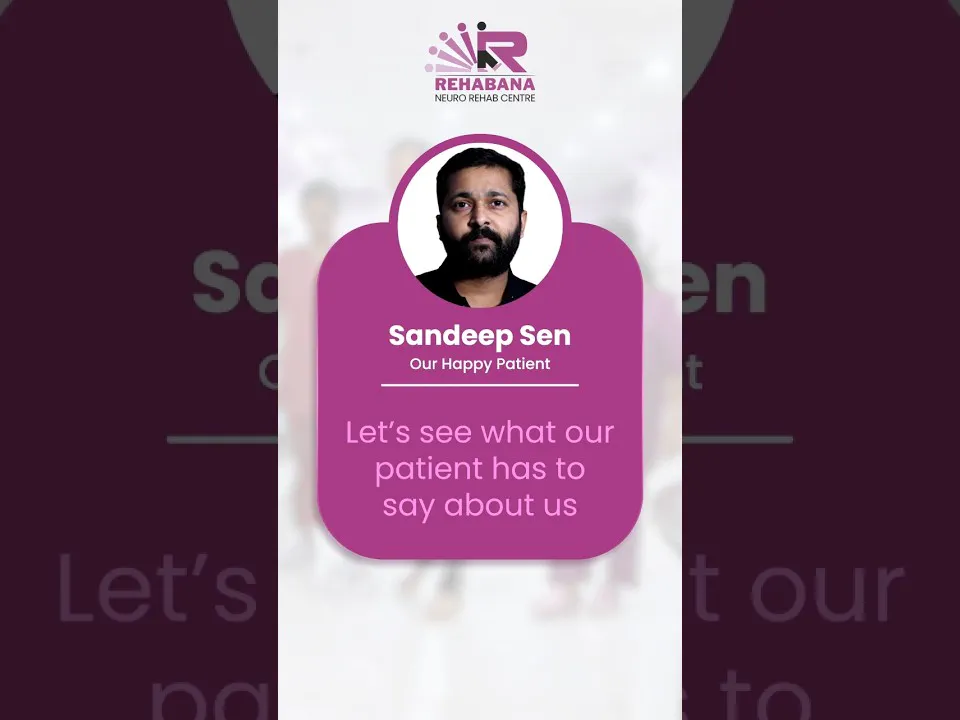
Patient Stories
Hear directly from patients and families who have experienced meaningful recovery at Rehabana. Their stories reflect our commitment to personalized care, consistent progress, and compassionate support throughout the rehabilitation journey.
Your Recovery Starts With the Right Care

Our treatments follow evidence-based protocols delivered by certified rehabilitation professionals.

Specialized care for stroke, paralysis, spinal injuries, and chronic pain recovery.

Continuous care and emergency assistance whenever you need us.
What to expect
It goes round in a loop. We watch, we agree goals, we practise, then we check again.

A long chat with you and the family. Then we watch real tasks, like putting on a shirt, and score them.
A good goal is specific. "In four weeks, Ma will put on her blouse by herself, sitting down."


Practice of the task itself, broken into small steps, plus a short home programme to keep going between visits.
We repeat tests like the Barthel Index, a score for daily tasks, every two to three weeks. If things stall, the plan changes.


Inside a session
It looks a lot like ordinary life, only slowed down.

Weeks, months and patience
There's no fixed number of sessions. The truthful answer is that it depends on the condition, how severe it is and what you're aiming for. Easier dressing might come within a few weeks. Going back to work can take months. After a stroke or brain injury the biggest gains usually come early. Many people keep improving for longer, though. With Parkinson's, MS and MND, OT tends to come in rounds, whenever needs change. The research is fairly encouraging. A Cochrane review, a careful summary of many trials, found people who had OT after a stroke managed personal care better. The authors did say the studies had weak spots. Nobody can promise a set result, so be a little careful with anyone who does.

Centre, ward or home
Yes, and for some goals home is the best place for it. There might be two steps at the front door and an Indian-style toilet. Practising there helps the skill actually stick, and the OT can show exactly where a grab rail should go. They may suggest adaptive equipment too, meaning ordinary tools made easier to use, like a commode chair that fits over the toilet. We offer therapy at home on request. If a visit isn't possible, a few photos of the house help a lot. Some people first need a stay at a rehab centre, with therapy every day and a doctor close by. Ask us whether some practice in between can be guided through digital rehabilitation.

A word for families
Say your mother takes twenty minutes to get dressed and you could do it in two. Before office, it's tempting to just take over. We know. But every time you do, she loses a chance to practise. Where it's safe, let her go slowly and step in only for the part she can't manage yet. Sit in on a session or two, or come to one of our family training sessions. If family members take turns, share the home programme so everyone helps in the same way. Notice small wins, like a cup held steady. And please look after yourself. Our stroke caregiver guide and Parkinson's caregiver guide go into much more detail.

Keeping everyone safe
OT is low-risk for most people. Still, some signs mean you stop and get medical help first. A drooping face, a suddenly weak arm or slurred speech can mean a new stroke, so call 112 or 108 straight away. A sudden, severe headache, new confusion or a fit needs urgent care too. So do chest pain, breathlessness, a fall with a knock to the head, or a swollen, sore calf. Red marks over bony areas that don't fade can be an early pressure sore. After a spinal cord injury at chest level or higher, a pounding headache with sweating or flushing may be autonomic dysreflexia, a dangerous jump in blood pressure. And never pull on a weak arm to help someone up. It can damage the shoulder.
A Closer Look at Healing in Action
Step inside Rehabana and experience our doctor-led rehab environment. From advanced therapy equipment to guided sessions, every space is designed to support meaningful neurological recovery.
Take the first step
Not sure OT will help? Come for an assessment and find out. Bring the discharge papers, the list of medicines and a few photos of the bathroom and bedroom. We'll tell you plainly what we think is possible.
FAQs
It's therapy that helps you manage everyday tasks again, like dressing, eating, bathing or working. "Occupation" just means anything that fills your day, from brushing your teeth to going to the office.
Knowledge That Guides Recovery
Get expert neuro rehabilitation tips from the doctors at Rehabana, Kolkata — simple guidance on stroke recovery, spinal cord injury rehab, Parkinson’s care, and enhancing quality of life after neurological conditions.
Returning to West Bengal after hospital treatment? Continue structured, multidisciplinary Neuro Rehabilitation closer to home with Rehabana.
Read More
Join the Neuro Rehabilitation Support Network, a community initiative convened by Rehabana. Connect with survivors, caregivers and professionals to learn, share and rebuild life together.
Read More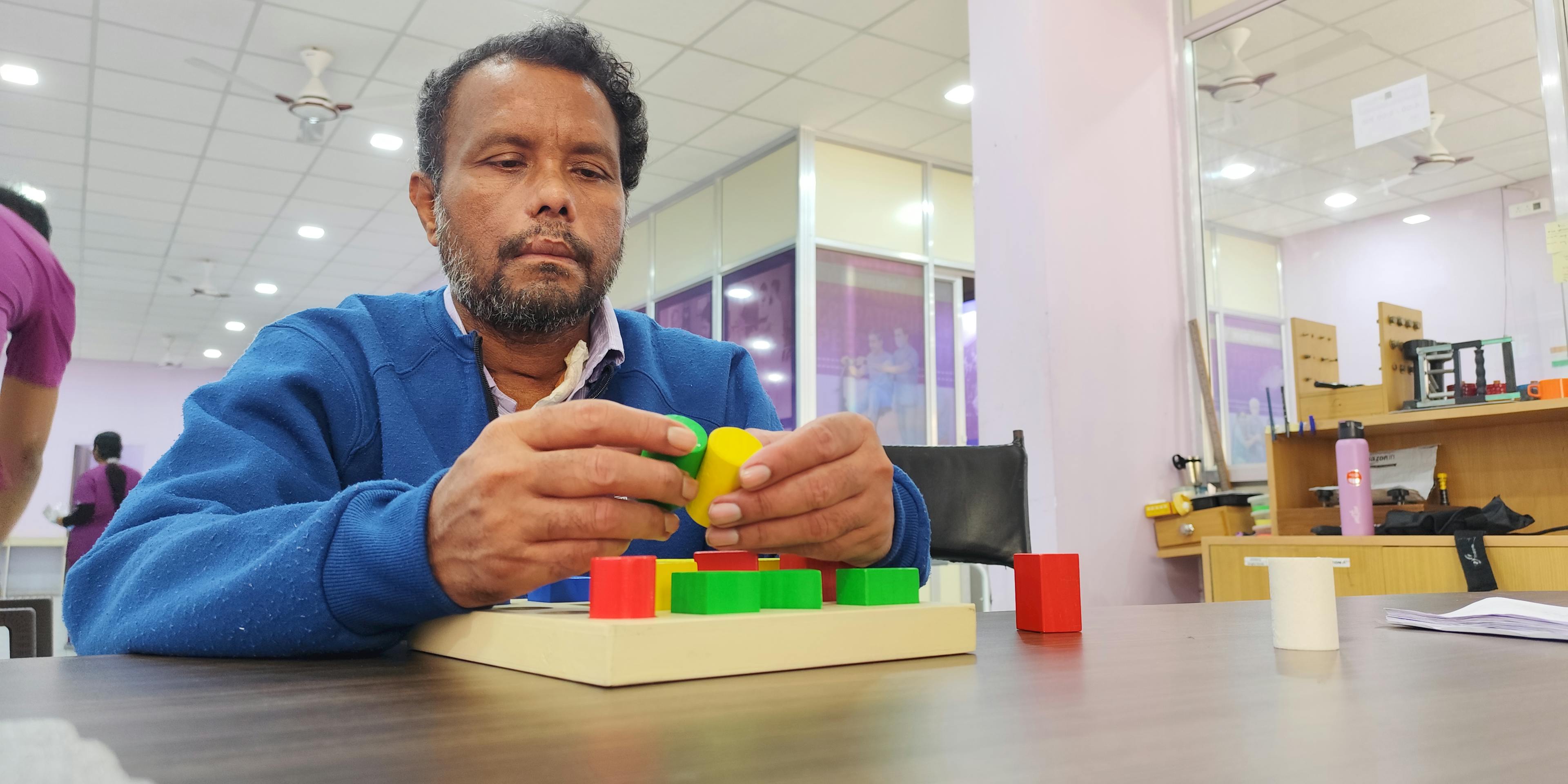
Complete Parkinson's home care guide for families, rehabilitation, safety and daily living.
Read MoreKnowledge That Guides Recovery
Get expert neuro rehabilitation tips from the doctors at Rehabana, Kolkata — simple guidance on stroke recovery, spinal cord injury rehab, Parkinson’s care, and enhancing quality of life after neurological conditions.
Returning to West Bengal after hospital treatment? Continue structured, multidisciplinary Neuro Rehabilitation closer to home with Rehabana.
Read MoreJoin the Neuro Rehabilitation Support Network, a community initiative convened by Rehabana. Connect with survivors, caregivers and professionals to learn, share and rebuild life together.
Read MoreComplete Parkinson's home care guide for families, rehabilitation, safety and daily living.
Read More