Berg Balance Scale: Measuring Balance in Everyday Activities

How Rehabana uses the 14-task Berg Balance Scale to identify balance difficulties, plan rehabilitation and show families measurable progress.

Older man with a walker on a computerised balance trainer during balance rehabilitation, Rehabana, Kolkata

Balance assessment

What is the Berg Balance Scale?

The Berg Balance Scale (BBS) is a clinical assessment used by the multidisciplinary team (MDT) to understand how well a person can maintain balance while performing everyday activities.

After a stroke, brain injury, spinal cord injury or other neurological conditions, a person may experience difficulty sitting, standing, reaching, turning or walking without losing balance.

At Rehabana, we use the Berg Balance Scale to identify these difficulties, understand the patient's current balance ability and plan appropriate rehabilitation activities.

It helps us understand how safely and independently you can maintain your balance during daily activities.

Patient walking with a cane while a therapist walks alongside to check balance, Rehabana, Kolkata

Why we use it

Why does Rehabana use the Berg Balance Scale?

A person may be able to stand or walk but still experience difficulty maintaining balance during everyday activities.

At Rehabana, we do not judge balance only by whether someone can walk. We assess different movements to understand the patient's actual difficulties.

This assessment helps our MDT:

  • Identify specific balance problems.
  • Understand the patient's current functional ability.
  • Plan suitable rehabilitation activities.
  • Monitor improvement through reassessment.
Therapists helping a man practise standing up from a seat, one of the Berg Balance Scale tasks, Rehabana, Kolkata

What it involves

What activities are performed during the Berg Balance Scale assessment?

The Berg Balance Scale includes 14 functional activities. During the assessment, the MDT observes how safely and independently the patient performs each activity.

These activities help the MDT understand different aspects of sitting and standing balance, weight shifting and functional mobility.

  • Sitting without support: ability to sit safely without support.
  • Standing up from a chair: ability to get up from a chair.
  • Standing without support: ability to stand independently.
  • Sitting down safely: ability to sit down in a controlled manner.
  • Transfer between chairs: ability to move safely from one chair to another.
  • Standing with eyes closed: ability to maintain balance without visual support.
  • Standing with feet together: ability to maintain balance with feet close together.
  • Reaching forward while standing: ability to reach forward without losing balance.
  • Picking up an object from the floor: ability to bend down and pick up an object safely.
  • Turning to look behind: ability to turn the head and body while standing.
  • Turning around completely: ability to turn in a full circle safely.
  • Placing alternate feet on a step: ability to perform controlled alternate stepping.
  • Standing with one foot in front of the other: ability to maintain balance in a narrow standing position.
  • Standing on one leg: ability to maintain balance on one leg.
Doctor watching a patient carry out a task during an assessment, Rehabana, Kolkata

Understanding the score

How does the Berg Balance Scale scoring work?

Each activity has its own scoring rules, which may consider time, distance, support or supervision.

The score is not a percentage of recovery. For example, 28/56 does not mean that someone is "50% recovered"; it is a total of scores from different balance tasks.

In general:

  • A score of 0 represents the lowest level of performance for that activity.
  • Scores of 1–3 represent intermediate levels according to the task-specific criteria.
  • A score of 4 represents the highest level of performance for that activity.
Older man practising stepping on training stairs with a therapist, Rehabana, Kolkata

Planning rehabilitation

How does Rehabana use the assessment results to plan rehabilitation?

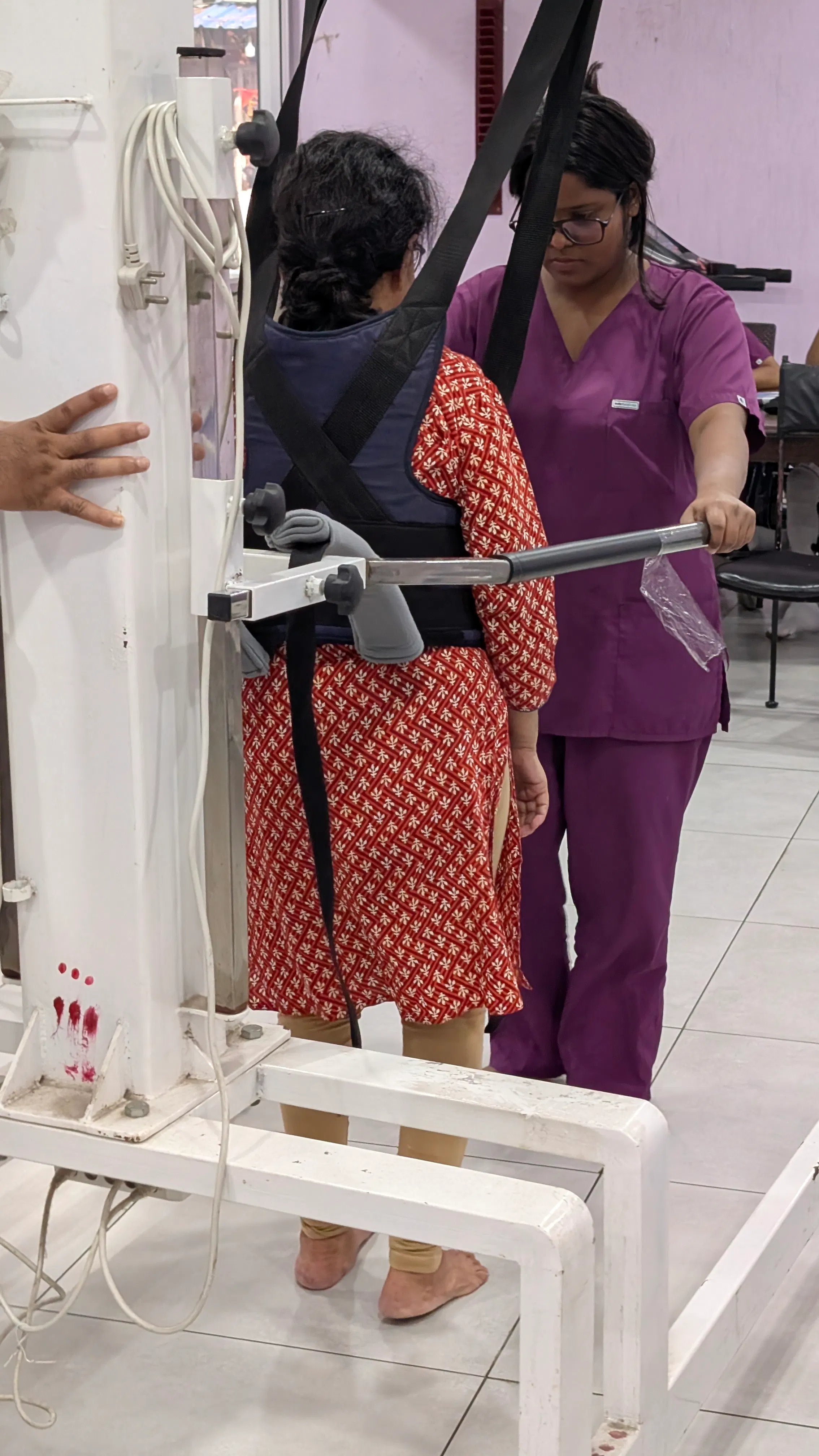
At Rehabana, the assessment is not just about giving a score. We use the findings to understand which movements are difficult and which activities need more attention during rehabilitation.

The activities are selected according to the patient's ability, safety and rehabilitation goals. Our physiotherapists provide appropriate support and supervision throughout the training.

Depending on the patient's assessment, our MDT may work on:

  • Sitting balance: maintaining a stable sitting position without support.
  • Standing balance: improving the ability to stand safely and independently.
  • Weight-shifting activities: learning to shift body weight from one leg to another.
  • Reaching activities: practising forward and sideways reaching without losing balance.
  • Sit-to-stand training: improving the ability to get up from and sit down on a chair.
  • Stepping activities: practising alternate foot placement and controlled stepping.
  • Turning activities: improving balance while changing direction.
  • Functional activities: practising movements important for everyday independence.
Therapists guiding an elderly woman walking at parallel bars to measure progress, Rehabana, Kolkata

Tracking progress

Does the Berg Balance Scale help monitor rehabilitation progress?

Yes. Repeating the assessment at appropriate intervals helps our rehabilitation team compare the patient's balance performance over time.

By comparing the initial and subsequent assessment scores, we can understand whether the patient's balance performance has improved and identify areas that still need attention.

At Rehabana, we consider both the change in assessment score and the patient's actual ability to perform daily activities.

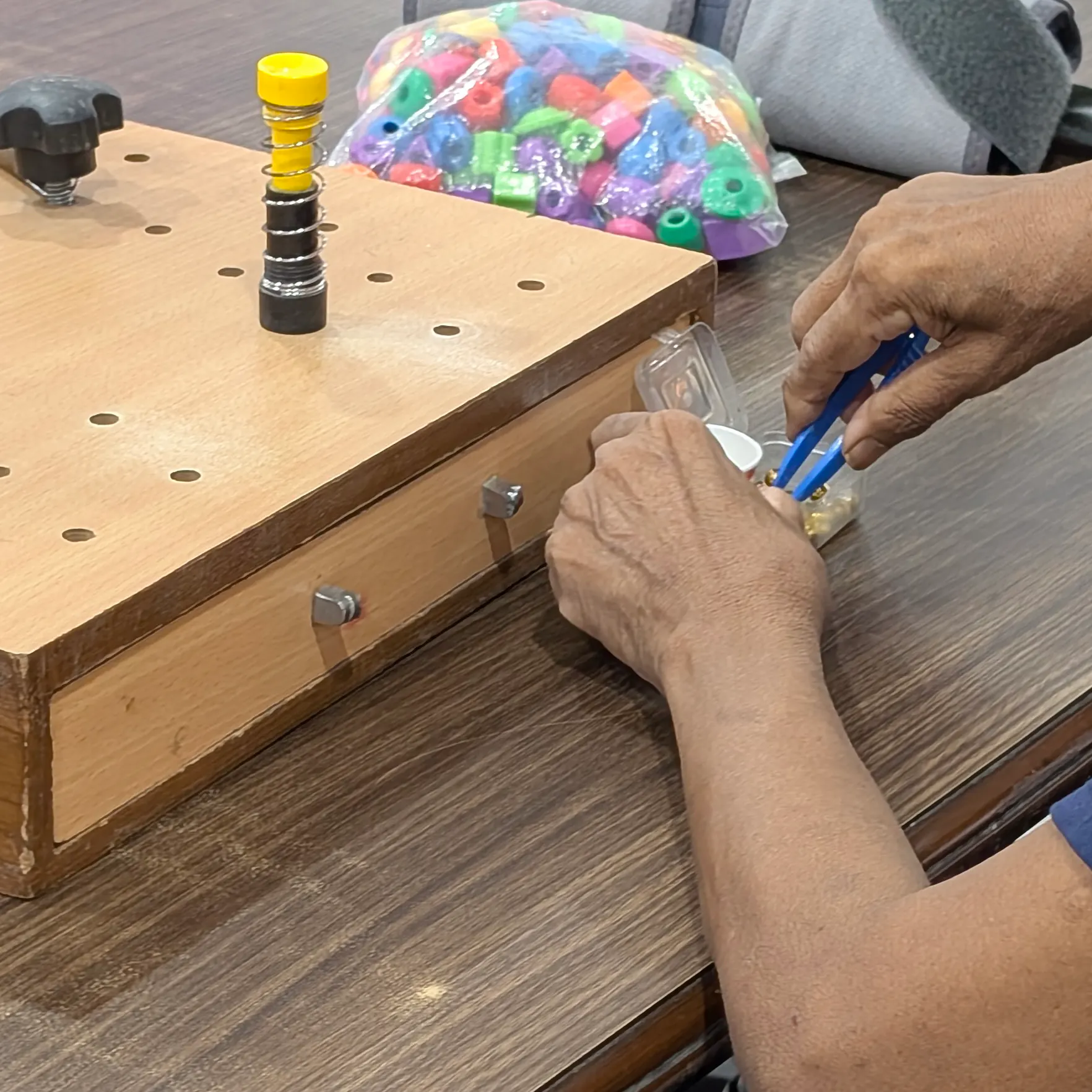
Older man giving a thumbs up at an activity table during rehabilitation, Rehabana, Kolkata

Case report example

A real rehabilitation progress example

The following scores are taken from one patient's rehabilitation progress report. Only the Berg Balance Scale results are shown.

  • 15 August 2026: 3/56 (first recorded assessment)
  • 15 September 2026: 10/56 (increased by 7 points)
  • 10 October 2026: 19/56 (increased by 9 points)
  • Overall change: 3/56 → 19/56 (increased by 16 points)
Therapist with a reassuring hand on an older man's shoulder, Rehabana, Kolkata

Reading the result

What does this improvement mean?

The patient achieved progressively higher scores across three assessments, indicating better performance on the balance activities measured by the scale. However, a score of 19/56 remains well below the maximum: improvement should not be confused with complete recovery or proof that walking without assistance is safe.

The report records total scores, not the scores for each of the 14 activities. Therefore, these results alone do not tell us exactly which activities improved or how much assistance the patient currently needs for each task.

For families, the key message is:

"The balance score has improved from 3 to 19 out of 56. This shows progress in the activities assessed, but the rehabilitation team still needs to assess which movements require support and supervision."
Clinician talking with a family member across a desk about rehabilitation progress, Rehabana, Kolkata

For families

How does the Berg Balance Scale help patients and their families understand improvement?

At Rehabana, we understand that every patient's family has one important question: "Is our patient really improving?"

Families often want to know whether their loved one's balance, safety and independence are getting better with rehabilitation.

Simply saying that a patient is improving may not always be enough. They also want to see evidence of that improvement.

For example, a patient who initially needs support while standing may gradually perform the activity independently. This functional improvement, together with a change in the assessment score, helps families understand the patient's progress.

This is where the Berg Balance Scale becomes useful.

  • We assess the patient's balance ability at the beginning of rehabilitation.
  • We document the assessment score.
  • We repeat the assessment at 15-day intervals.
  • We compare the scores to demonstrate measurable changes in balance performance.
  • We explain the improvement and remaining difficulties to the patient and family.
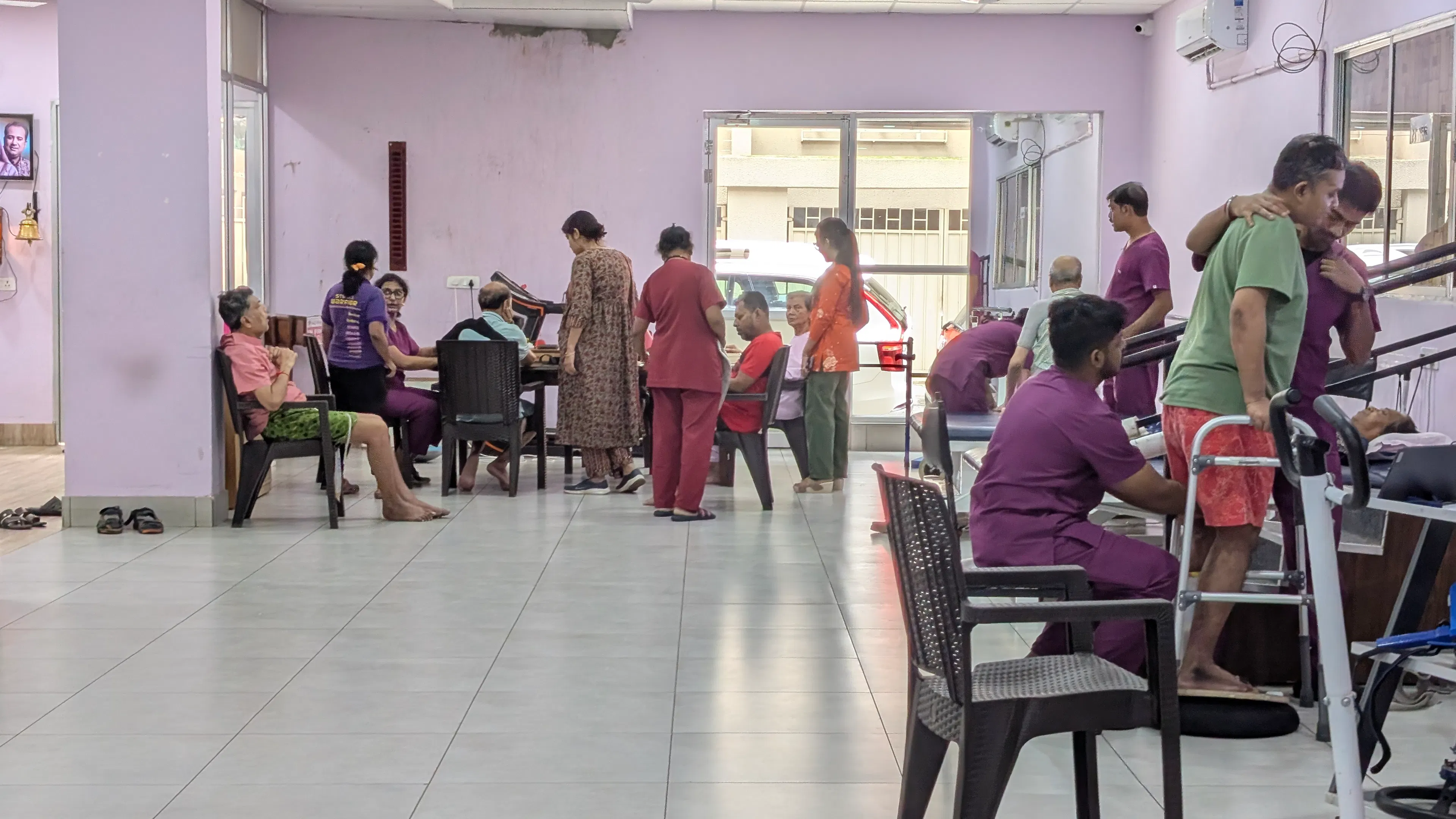
Busy therapy hall with patients working with their therapists, Rehabana, Kolkata

Our approach

How does Rehabana make every improvement count?

At Rehabana, we believe every improvement in balance matters.

From sitting safely to standing, reaching, turning and moving confidently, each activity provides valuable information about a patient's functional recovery.

Our approach focuses not only on improving assessment scores but also on helping patients become safer, more confident and more independent in their everyday lives.

FAQs

Frequently Asked Questions

Is the Berg Balance Scale painful?

No. It is a non-invasive physical assessment involving simple movements such as sitting, standing, reaching and turning. Activities are performed under appropriate supervision.

Can the Berg Balance Scale predict falls?

Will every patient improve at the same rate?

Who needs a Berg Balance Scale assessment?

How often should the assessment be repeated?

Does a higher score mean the patient can walk independently?

Book an Assessment

Concerned about balance or falls?

Our physiotherapists assess balance, plan targeted training and review progress regularly at our Salt Lake and Kalighat centres in Kolkata.