Neuro Rehabilitation in Kolkata After Hospital Discharge
Returning to West Bengal after hospital treatment? Continue structured, multidisciplinary Neuro Rehabilitation closer to home with Rehabana.
Read MoreThe Neuro Rehabilitation Support Network is an inclusive community that brings together survivors, families, caregivers, healthcare professionals, volunteers, students, and organizations to support one another throughout the rehabilitation journey. Recognizing that every recovery experience is unique, the Network fosters learning, shared experiences, mutual encouragement, and meaningful connections. It provides a welcoming space where people can ask questions, share knowledge, and find hope, reinforcing the belief that no one should have to face recovery alone.
For many people, the journey of recovery begins with an unexpected event - a Stroke, Spinal Cord Injury, Traumatic Brain Injury, Parkinson's Disease, Multiple Sclerosis, Peripheral Nerve.
Injury, or another neurological condition. In a matter of moments, life can change in ways that no one anticipated.
The first days and weeks are often filled with hospital visits, medical tests, treatments, and rehabilitation sessions. Families meet doctors, therapists, nurses, and many other healthcare professionals who work together to support recovery. Every small achievement - sitting independently, taking a few steps, swallowing safely, speaking a word, moving a hand - becomes an important milestone. As rehabilitation progresses, many people gradually return home. Yet going home does not mean the journey is complete.
Recovery continues long after discharge from hospital or rehabilitation center. It continues while preparing meals, climbing stairs, travelling to work, returning to school, attending family gatherings, celebrating festivals, and participating in everyday life. New questions emerge. New challenges appear. Progress may feel encouraging one day and frustrating the next.
Many survivors and caregivers discover that although rehabilitation services remain important, there is another need that is often overlooked - the need to connect with people who truly understand the journey.
A conversation with someone who has faced similar challenges can provide reassurance that no textbook can offer. Learning how another family adapted their home, managed fatigue, returned to work, or rebuilt confidence can transform uncertainty into possibility. Sharing experiences helps people realize that recovery is not only a clinical process but also a deeply human one.
The Neuro Rehabilitation Support Network is a welcoming community where people affected by neurological conditions come together to learn, encourage one another, exchange practical experiences, and build meaningful relationships. It brings together survivors, family members, caregivers, healthcare professionals, volunteers, students, community organizations, and anyone who believes that recovery becomes stronger when people support one another.
The Network is not built on the idea that everyone has the same journey. Every person's experience is unique. Every diagnosis is different. Every family faces its own circumstances. What unites the community is not the condition itself, but a shared belief that no one should have to navigate recovery alone. Whether someone is taking their first steps after a stroke, adjusting to life with Parkinson's disease, supporting a loved one with a spinal cord injury, or living many years after a neurological condition, there is always something to learn, something to contribute, and someone to encourage.
The Neuro Rehabilitation Support Network exists to create those connections. It is a place where knowledge is shared freely, questions are welcomed without judgement, experiences are respected, and hope is strengthened through community.
Recovery is rarely a straight line. Some days bring remarkable progress. Other days may feel slow and uncertain. There may be moments of confidence, frustration, celebration, disappointment, determination, and hope—all within the same week.
If you are living with a neurological condition, caring for someone who is, or supporting recovery in any way, we want you to know this:
Neurological conditions affect far more than the body. They influence confidence, relationships, routines, employment, education, emotional wellbeing, family life, and participation in society. Recovery is therefore about much more than regaining movement or improving speech. It is about rebuilding a meaningful life.
Healthcare professionals play a vital role by providing medical treatment and evidence-based rehabilitation. Families provide love, care, encouragement, and practical support every day.
A Support Network complements both. It creates opportunities for people to learn from others who have travelled similar paths, to celebrate progress together, to discuss everyday challenges, and to discover that hope often grows through shared experience.
None of these conversations replace professional rehabilitation. Instead, they reinforce it by helping people remain motivated, connected, and engaged in their recovery. A Support Network reminds us that healing is not something that happens only inside hospitals or rehabilitation centers. It also happens around dining tables, during community gatherings, over a cup of tea, during a group discussion, or while encouraging someone to take one more step.
The greatest strength of a community is not that everyone has the same experience. Its strength lies in ensuring that nobody has to face their experience alone.
Living with a neurological condition often brings emotional challenges that are difficult to explain. People may grieve the loss of abilities they once took for granted. They may worry about becoming dependent on others, returning to work, maintaining relationships, or participating in social activities. Some withdraw from friends because they fear being misunderstood or treated differently.
Caregivers also experience emotional strain. Many balance employment, household responsibilities, financial concerns, and caregiving while trying to remain optimistic for their loved one. These emotions are natural. Yet they are often experienced in silence.
A Support Network provides a safe environment where people can speak openly without fear of judgement. Listening to another person's story often reminds us that our own feelings are shared by many others. Members discover that asking questions is encouraged, expressing emotions is accepted, and seeking support is viewed as a sign of strength rather than weakness.
Feeling understood does not remove every challenge. But it often makes those challenges feel more manageable.
Recovery is a shared journey that extends beyond the individual to include families, caregivers, and loved ones. As parents, spouses, children, siblings, relatives, neighbors, and friends take on new roles and responsibilities, caregiving becomes both meaningful and challenging. The Neuro Rehabilitation Support Network recognizes caregivers as essential partners in recovery, providing them with encouragement, education, and opportunities to care for their own wellbeing. Through the Network, caregivers can share experiences, ask questions, learn from one another, and build lasting friendships, creating a supportive community that strengthens both families and the recovery journey.
When caregivers feel supported, families become stronger. When families become stronger, recovery becomes stronger.
The goal of rehabilitation is not only to improve physical abilities but also to help people participate fully in everyday life with confidence and independence.
Participation may include:
These achievements require courage as much as physical recovery. Seeing others reach meaningful milestones inspires hope and motivates those who are just beginning their own journey. Every milestone represents possibility, and every step forward is celebrated by the community. Recovery is measured not only by what a person can do today, but also by the confidence they gain to keep moving forward tomorrow.
Hope is not about pretending that recovery will always be easy or promising outcomes that cannot be guaranteed. True hope is built on honesty, perseverance, knowledge, encouragement, and meaningful human connections.
Hope grows when people:
Even after formal therapy becomes less frequent, the Neuro Rehabilitation Support Network continues to provide opportunities for learning, belonging, and contributing. Every member, regardless of where they are in their journey, has something valuable to receive and something valuable to share.
Every country has its own healthcare system, culture, social structures, and way of supporting people through illness and recovery. In India, these realities shape the rehabilitation journey in unique ways.
For many individuals living with neurological conditions, recovery is not experienced in isolation. It unfolds within families, neighborhoods, workplaces, schools, religious communities, and social networks that influence everyday life. These relationships can become one of India's greatest strengths.
Family members often step forward to provide care with remarkable dedication. Neighbors offer practical assistance. Friends organize transport to hospital appointments. Employers, teachers, community leaders, and volunteers frequently become part of the recovery journey in ways that extend far beyond formal healthcare.
At the same time, families may also face uncertainty, financial pressures, limited access to specialized rehabilitation, and a lack of reliable information.
The Neuro Rehabilitation Support Network recognizes both the strengths and the challenges of the Indian context. By bringing people together, the Network aims to complement professional rehabilitation with peer support, shared learning, and community participation that reflect the realities of everyday life across India.
In India, rehabilitation often begins long before a person returns home. During hospitalization, family members closely observe therapy sessions, learn transfer techniques, assist with communication, and gradually prepare for caregiving responsibilities. Once home, they frequently become partners in implementing rehabilitation plans, encouraging practice, monitoring safety, and supporting daily activities.
This level of family involvement is one of India's greatest assets. Parents, spouses, children, siblings, relatives, and close friends often work together to create an environment where recovery can continue beyond formal therapy sessions.
Yet caregiving is rarely easy. Families may experience physical fatigue, emotional stress, financial concerns, changes in family roles, and uncertainty about the future. Many caregivers quietly place their own wellbeing aside while focusing entirely on their loved one.
Supporting caregivers is therefore not separate from supporting recovery—it is an essential part of it. A Support Network creates opportunities for caregivers to learn from one another, share experiences openly, celebrate successes, and realize that they are not carrying these responsibilities alone. Strong families help build stronger recoveries.
There is no single model of family in India today. Some people live in large joint families where responsibilities are shared across generations. Others live in nuclear families where one or two individuals manage most caregiving responsibilities.
Many older adults live independently. Some survivors live away from their hometown because of work or education. Others rely on neighbors, friends, or community organizations when immediate family members are unavailable. Each situation brings its own strengths and challenges.
The Neuro Rehabilitation Support Network welcomes every family structure with equal respect. Recovery is not defined by the size of a family, but by the strength of the relationships that surround the individual.
India's geography presents unique opportunities and challenges for rehabilitation. Specialized neuro rehabilitation services are more readily available in some cities than in many smaller towns and rural areas. Travelling long distances for therapy may be difficult because of mobility limitations, financial constraints, work commitments, or limited transportation.
As a result, many families continue much of their rehabilitation journey at home. This makes access to trustworthy information, practical guidance, and peer support even more valuable.
Support Networks can help bridge these distances by creating opportunities for people to connect locally as well as through online platforms, allowing knowledge and encouragement to travel even when people cannot. Technology cannot replace face-to-face human connection. But when used thoughtfully, it can help extend community across cities, districts, and states.
India is home to extraordinary linguistic and cultural diversity. People communicate in hundreds of languages and dialects, each carrying its own traditions, expressions, and ways of understanding health and recovery.
A truly inclusive community recognizes this diversity as a strength. Information should be shared in languages that people understand. Members should feel comfortable communicating in the language that allows them to express themselves most naturally.
Different cultural backgrounds should be welcomed with curiosity and respect. Although our languages may differ, the emotions experienced during recovery—hope, uncertainty, determination, resilience, love, and compassion—are shared across communities. The Network seeks to create spaces where everyone feels heard, understood, and respected.
Rehabilitation is an investment of time, effort, and resources. Many families face difficult decisions about treatment costs, travel expenses, home modifications, assistive devices, employment, and caregiving responsibilities.
Financial pressures can influence how frequently people access rehabilitation services and how confidently they plan for the future.
While a Support Network cannot solve every financial challenge, it can help families make more informed decisions by sharing experiences, introducing available resources, discussing practical solutions, and learning from others who have navigated similar situations.
Knowledge shared within a community can often reduce uncertainty and help families discover possibilities they may not have known existed.
Neurological conditions affect people of every age, gender, occupation, language, religion, culture, and socioeconomic background. An inclusive Support Network recognizes that everyone deserves equal dignity, respect, and opportunity to participate.
This means creating environments that are physically accessible whenever possible.
Recovery is not only about regaining function. It is also about rediscovering purpose. A person may return to employment, education, parenting, hobbies, sports, volunteering, creative pursuits, or community leadership.
Some may become advocates for accessibility. Others may mentor newly diagnosed families. Many simply wish to participate fully in everyday life once again.
Every meaningful role strengthens both the individual and the community. When communities recognize abilities rather than limitations, opportunities begin to replace barriers, that shift benefits everyone.
The Neuro Rehabilitation Support Network is a community initiative founded and convened by Rehabana. It is intended to serve the wider neuro rehabilitation community and welcomes participation from individuals and organizations who share its purpose and values.
Rehabana established this initiative with a simple belief: recovery becomes stronger when people have opportunities to connect, learn from one another, and support each other beyond formal rehabilitation. While Rehabana serves as the founding convener and provides the initial platform for the Network, the community belongs to its members.
The Network welcomes participation from individuals, families, healthcare professionals, hospitals, rehabilitation centers, non-governmental organizations, volunteers, educational institutions, and community groups who share its values and purpose.
Over time, the Network is intended to grow through the ideas, leadership, and participation of its members and local chapters across India.
Communities are not built simply by bringing people together. They grow when people share a common understanding of how they wish to learn, communicate, support one another, and work together.
The Neuro Rehabilitation Support Network welcomes people from different backgrounds, cultures, professions, experiences, and stages of recovery. Every member brings a unique perspective that enriches the community.
To ensure that everyone feels safe, respected, and encouraged to participate, the Network is guided by a set of shared principles. These principles are not rules imposed upon members. They are commitments we make to one another.
Together, they create an environment where trust can grow, conversations remain respectful, knowledge is shared responsibly, and every individual feels they belong.
Every person deserves to be treated with dignity, kindness, and respect. A neurological condition does not define a person's identity, abilities, or potential.
Within the Network, we recognize that every individual's journey is unique. We respect differences in age, diagnosis, culture, language, beliefs, abilities, recovery goals, and personal experiences.
Respect also means listening with patience, avoiding judgement, and acknowledging that different approaches may work for different people. Everyone deserves to feel heard.
Recovery often involves challenges that are not immediately visible.
Compassion encourages us to respond with understanding rather than assumption. Sometimes the greatest support we can offer is simply listening without interruption, recognizing another person's experience, and allowing them to feel understood. Communities become stronger when kindness is practiced consistently in everyday interactions.
No single individual has every answer. Healthcare professionals contribute scientific knowledge and clinical expertise.
The Network encourages curiosity, respectful discussion, and lifelong learning where every member has opportunities both to learn from others and to contribute their own experiences.
The Network believes that professional rehabilitation should always be guided by the best available scientific evidence. At the same time, lived experience provides practical insights that textbooks alone cannot teach.
Evidence and experience are not competitors. They complement one another. Members are encouraged to share their experiences openly while recognizing that medical decisions should always be made in consultation with qualified healthcare professionals. This approach helps create discussions that are both supportive and responsible.
Neurological conditions affect people from every part of society. The Network welcomes individuals regardless of age, gender, language, religion, culture, disability, profession, socioeconomic background, or stage of recovery.
Every member deserves equal opportunity to participate, ask questions, contribute ideas, and feel valued within the community. Diversity strengthens learning, Inclusion strengthens belonging.
Trust is built over time but can be lost quickly. Members are encouraged to respect one another's privacy and to treat personal stories with sensitivity and care.
People should feel confident that they can share experiences without fear of ridicule, gossip, or unnecessary judgement. Creating a trusted environment allows honest conversations to flourish and encourages deeper connections between members.
Recovery rarely follows a straight path. Every person's journey is unique, and every achievement deserves recognition. For one individual, success may mean returning to work; for another, it may be taking independent steps, speaking clearly again, preparing a meal, attending a family celebration, or simply feeling confident enough to leave home. Each milestone reflects meaningful progress toward greater independence and a better quality of life.
At The Network, we celebrate progress without comparing journeys. We believe that rehabilitation is about achieving personal goals, no matter how big or small. Every milestone represents courage, perseverance, and hope, reminding us that recovery is not defined by the speed of progress, but by the determination to keep moving forward.
The Network belongs to everyone who is part of it. A strong community is built through shared responsibility, mutual respect, and a commitment to helping one another grow. Every member plays an important role in creating a welcoming, supportive, and inclusive environment where everyone feels valued and connected.
Members strengthen the community by welcoming newcomers, sharing knowledge and experiences, volunteering their time, participating in activities, encouraging others, and offering support whenever possible. No contribution is too small—every act of kindness, no matter how simple, helps build a stronger, more compassionate community for all.
Recovery is never the responsibility of one person alone. It is made possible through the combined efforts of individuals, families, healthcare professionals, friends, volunteers, employers, educators, community organizations, and many others who contribute in different ways. Every person has a role in supporting life after neurological illness or injury.
The Neuro Rehabilitation Support Network brings together this diverse community with a shared purpose—to promote recovery, independence, and quality of life through learning, encouragement, and meaningful human connection. Whether you are living with a neurological condition, caring for someone you love, working in healthcare, or simply looking to make a positive difference, there is a place for you here.
The strength of the Network lies in the diversity of its members. Every perspective broadens our understanding, every experience offers hope, and every connection reminds someone that they are not alone. Together, we create a community where everyone can learn, support, and grow.
The Neuro Rehabilitation Support Network welcomes people living with a wide range of neurological conditions, including stroke, spinal cord injury, traumatic brain injury, Parkinson's disease, multiple sclerosis, cerebral palsy, peripheral nerve injuries, motor neuron disease, neuromuscular disorders, and many other conditions that affect movement, communication, cognition, swallowing, or participation in daily life. Whatever the diagnosis, every individual is welcomed with dignity, respect, and understanding.
Some members may be beginning their rehabilitation journey, while others may have been living with their condition for many years. Some may be making steady progress, while others are adapting to long-term changes. Every journey is equally valued. The Network is not a place for comparison—it is a community where experiences are shared with respect, encouragement, and hope, ensuring that no one has to face the journey alone.
Behind every rehabilitation journey is a family adapting to new routines, responsibilities, and expectations. Parents, spouses, children, siblings, grandparents, relatives, friends, and neighbors often become caregivers in ways they never expected. Their encouragement, patience, and daily support play a vital role in the recovery journey.
The Neuro Rehabilitation Support Network recognizes that caregivers need support too. Here, caregivers can share practical advice, discuss challenges openly, learn from one another's experiences, celebrate progress together, and find comfort in knowing they are not alone. By supporting caregivers, we strengthen the foundation for recovery and improve the well-being of everyone involved.
The Network welcomes physiotherapists, occupational therapists, speech-language pathologists, rehabilitation physicians, neurologists, neurosurgeons, nurses, psychologists, dietitians, prosthetists and orthotists, rehabilitation engineers, social workers, vocational rehabilitation specialists, and other professionals who contribute to neuro rehabilitation.
Healthcare professionals bring scientific knowledge, clinical expertise, and valuable educational perspectives to the community. At the same time, the Network provides professionals with opportunities to better understand the lived experiences of survivors and families.
Learning flows in both directions. Professional knowledge and lived experience together create richer, more meaningful conversations.
The future of neuro rehabilitation depends upon the next generation of healthcare professionals. Students from medicine, physiotherapy, occupational therapy, speech-language pathology, nursing, psychology, social work, rehabilitation sciences, engineering, public health, and related disciplines are encouraged to participate.
Exposure to the lived experiences of survivors and caregivers helps students develop empathy alongside clinical knowledge. Communities often become classrooms where lessons about resilience, communication, dignity, and person-centered care are learned in ways that textbooks cannot fully teach.
Many people wish to contribute to society by sharing their time, skills, and compassion.
Volunteers strengthen the Network by creating opportunities for participation and belonging. Every act of service, however small it may seem, contributes to a stronger and more connected community.
Building inclusive communities requires collaboration. The Network welcomes hospitals, rehabilitation centers, educational institutions, non-governmental organizations, self-help groups, disability organizations, community clubs, corporate organizations, local government bodies, and other institutions that share the goal of improving life after neurological conditions.
Partnerships create opportunities to share knowledge, organize awareness programmes, support local initiatives, improve accessibility, and expand the reach of community-based rehabilitation.
The Network grows stronger when organizations work together while respecting one another's unique strengths and expertise.
People often hesitate before joining a community because they feel they have little to offer.
The truth is that every person brings something unique.
Communities thrive not because everyone has the same knowledge, but because every member contributes something different. That diversity is one of the Network's greatest strengths.
Communities are not built through occasional events alone. They are built through conversations, friendships, shared experiences, and the simple act of showing up for one another over time.
The Neuro Rehabilitation Support Network brings people together in many different ways. Some activities focus on learning, others on emotional support, social participation, creativity, physical wellbeing, or simply enjoying each other's company.
Every chapter will be different because every community has different people, different resources, and different ideas.
There is no single model that every chapter must follow. Instead, the Network encourages local communities to create activities that are meaningful, inclusive, and relevant to the people they serve while sharing the common purpose of supporting long-term recovery.
Whether someone participates once a month or becomes involved more regularly, every interaction is an opportunity to learn, contribute, and build relationships that extend beyond organized meetings.
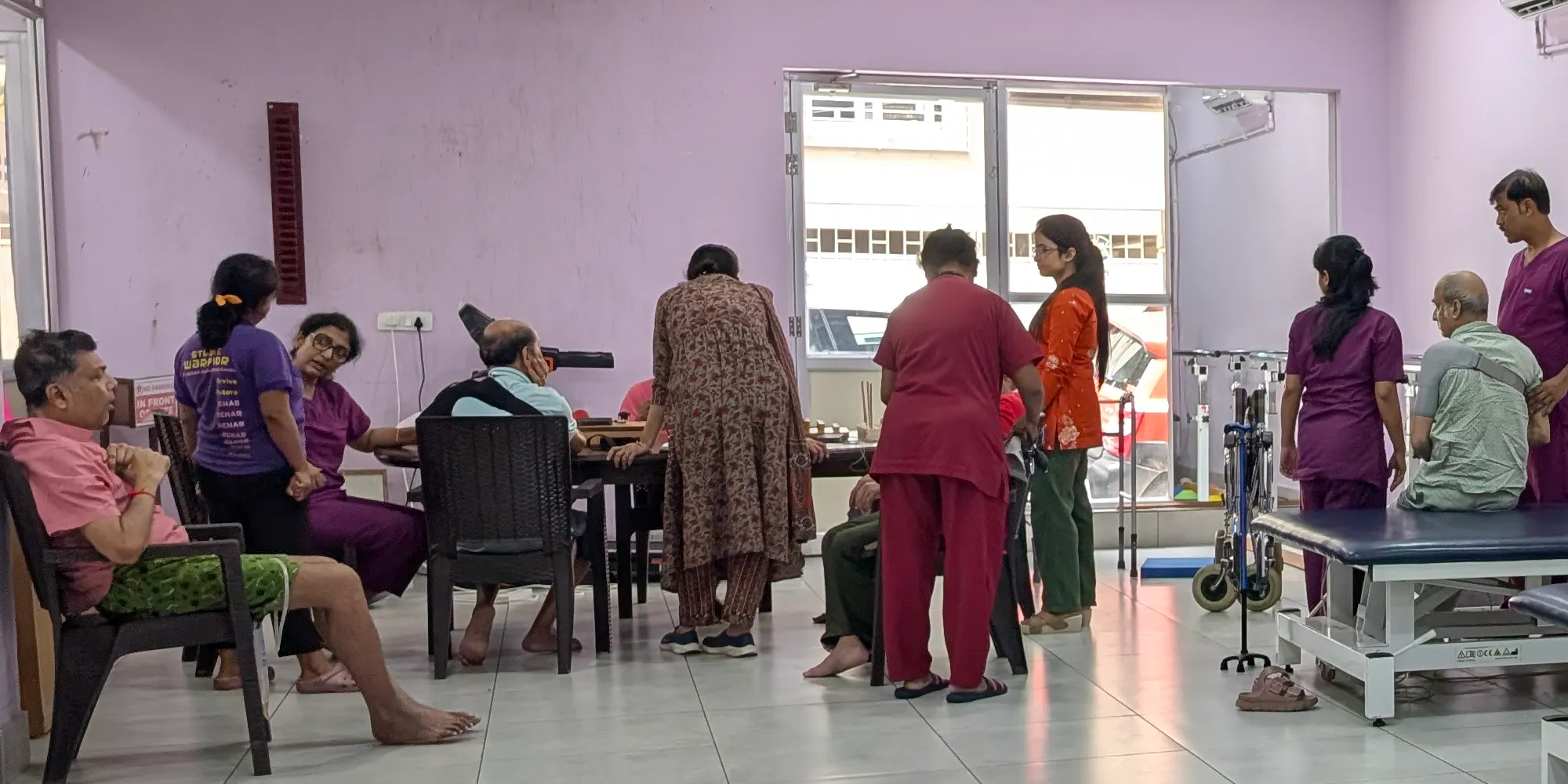
Sometimes the most meaningful conversations happen when people simply sit together and talk. Members share their experiences of recovery, discuss everyday challenges, celebrate progress, exchange practical ideas, and encourage one another through moments of uncertainty.
These conversations are not about finding perfect answers. They are about listening, understanding, and reminding one another that no one is facing recovery alone. Every person's story adds to the collective wisdom of the community.
The Network encourages lifelong learning. Educational sessions may be organized with rehabilitation physicians, neurologists, physiotherapists, occupational therapists, speech-language pathologists, psychologists, nurses, dietitians, social workers, rehabilitation engineers, and many other professionals.
Topics may include:
Members are encouraged to ask questions, explore new ideas, and better understand their rehabilitation journey. Knowledge empowers confidence, Confidence supports participation.
Not every lesson comes from a classroom. Some of the most valuable ideas are shared by people living the experience every day.
Members exchange recommendations about community resources, accessibility, transportation, employment, education, recreation, and many other aspects of life. These shared experiences complement professional guidance by offering practical perspectives from everyday living.
Communities become stronger when people enjoy spending time together. Local chapters may organize activities such as:
These activities create opportunities for friendships to develop naturally while encouraging participation, confidence, and enjoyment. Recovery should include moments of joy & communities help create those moments.
Caregivers often spend much of their time supporting others, the Network believes they also deserve opportunities to be supported.
Dedicated caregiver discussions provide spaces where family members can openly share experiences, discuss practical challenges, learn from one another, and explore strategies for maintaining their own physical and emotional wellbeing.
Supporting caregivers strengthens families, Strong families strengthen recovery.
Every rehabilitation journey includes milestones worth celebrating.
The Network celebrates every meaningful achievement without comparing one person's progress with another's. Every milestone represents determination, resilience, and hope.
Celebrating together reminds everyone that progress is possible.
As members gain confidence, many discover opportunities to support others.
The Network grows stronger when people move from receiving support to helping create opportunities for others. Every contribution strengthens the community, regardless of its size.
Communities continue to grow even when meetings have ended. Local chapters may stay connected through newsletters, online discussion groups, educational resources, community announcements, and shared celebrations.
Digital communication helps members remain informed and connected, particularly when travelling, health conditions, or distance make in-person participation difficult. Technology is not intended to replace personal interaction. Its purpose is to help people remain connected between opportunities to meet face to face.
Strong communities are not built by a single organization, a single leader, or a single event. They grow through shared relationships, mutual responsibility, and the willingness of members to support one another over time.
The Neuro Rehabilitation Support Network is founded on this long-term vision. While local chapters may begin with the guidance of healthcare organizations, rehabilitation centers, volunteers, or community leaders, their true strength comes from the active participation and ownership of the people they serve.
As members gain confidence and experience, they naturally take on new roles within the community:
A sustainable community is built when people gradually move through different stages of involvement:
Communities thrive when members feel a sense of belonging and responsibility. Someone who once attended their first meeting with hesitation may later welcome newcomers. A caregiver who once sought advice may become a trusted source of encouragement for another family. Every contribution—whether large or small—helps create a stronger, more compassionate, and sustainable support network.
A strong community is not defined by the number of people it serves, but by the number of people who choose to serve one another.
The Network encourages shared leadership rather than dependence on any one individual. Local chapters are stronger when responsibilities are distributed among members according to their interests, abilities, and availability.
Leadership is viewed as service. Every contribution helps the community flourish.
Healthy communities continue to grow. Every new member brings fresh experiences, questions, ideas, and perspectives that enrich the Network.
Existing members play an important role in creating a welcoming environment by introducing themselves, inviting conversation, explaining how the chapter works, and ensuring that newcomers feel comfortable participating at their own pace.
A warm welcome often becomes the first step towards long-term engagement.
Communities become stronger when they remain open to learning.
Local chapters are encouraged to regularly reflect on their activities by asking simple questions:
Small improvements made consistently over time help communities remain meaningful and responsive to local needs.
The Network believes that collaboration creates stronger communities than working in isolation.
Local chapters are encouraged to build relationships with hospitals, rehabilitation centers, educational institutions, disability organizations, local governments, community clubs, employers, and volunteer groups.
These partnerships can expand opportunities for education, awareness, accessibility, employment, recreation, and community participation. Every partnership should reflect the shared purpose of improving life after neurological illness or injury.
The true measure of a community is not how successfully it begins, but how well it continues. Communities become resilient when they are no longer dependent on one individual, one organization, or one source of support.
Instead, they are sustained by shared purpose, trusted relationships, distributed leadership, and a culture where members naturally support one another.
This is the future the Neuro Rehabilitation Support Network hopes to encourage across India: communities that continue to grow, adapt, and welcome new generations of members while remaining grounded in their shared principles.
One of Rehabana's core beliefs is that "what we measure, we can improve." While that principle belongs to Rehabana's clinical work, the Network can adopt a similar mindset for community development—without becoming overly formal or bureaucratic.
Success is not measured simply by how many meetings are held or how many people attend. A thriving community is reflected in the quality of relationships it builds and the opportunities it creates for participation, learning, and mutual support.
Every chapter will grow in its own way, but all can pause from time to time and reflect on what is changing.
These questions help us understand whether the community is becoming stronger, not just larger.
Rather than setting rigid targets, the Network encourages chapters to look for positive indicators of growth, such as:
These are signs that the community is developing resilience and long-term sustainability.
Starting something new can feel uncertain. Whether you are living with a neurological condition, supporting a family member, or simply curious about the Network, it is natural to have questions.
The following answers reflect the spirit of the Neuro Rehabilitation Support Network and are intended to help you understand what you can expect.
No, the Network welcomes people living with a wide range of neurological conditions, as well as their families, caregivers, healthcare professionals, volunteers, students, and organizations that share our purpose.
While members may have different diagnoses, many of the challenges and experiences associated with long-term rehabilitation are shared. Learning from one another often creates valuable insights that extend beyond a single condition.
No, the Neuro Rehabilitation Support Network is a community initiative convened by Rehabana, but participation is not limited to Rehabana's patients.
The Network is intended to serve the wider neuro rehabilitation community and welcomes people regardless of where they receive—or have received—their rehabilitation services.
The vision of the Network is to remain as accessible and inclusive as possible.
Some activities may be offered free of charge, while others may require a nominal contribution to cover venue, materials, or other local costs. Any such arrangements should always be transparent and communicated in advance by the local chapter.
The focus of the Network is community participation rather than commercial activity.
Absolutely, recovery is often a shared journey.
Family members and caregivers are encouraged to participate, learn, ask questions, and support one another. Many discussions and activities become even more meaningful when families participate together.
Not at all, there is no "right time" to become part of a supportive community.
You are welcome whenever you feel ready, you are free to participate at your own pace.
Yes, Participation does not require speaking.
Many people choose to listen during their first few meetings. Some contribute gradually over time. Others prefer helping in different ways, such as volunteering, assisting with activities, or simply offering encouragement to fellow members.
Every form of participation is valued.
No, Professional healthcare and rehabilitation remain essential.
The Network complements—not replaces—medical care by providing opportunities for connection, learning, mutual encouragement, and community participation.
Members should always seek personalized medical advice from qualified healthcare professionals for decisions about diagnosis, treatment, or rehabilitation.
Yes, Healthcare professionals are warmly welcomed.
The Network values opportunities for professionals to share evidence-informed knowledge while also learning from the lived experiences of survivors and caregivers. These conversations help strengthen understanding on both sides.
Yes, hospitals, rehabilitation centers, educational institutions, non-governmental organizations, disability groups, community clubs, and other organizations that share the Network's purpose are encouraged to collaborate.
Partnerships should always promote inclusion, learning, accessibility, and community wellbeing.
Yes, one of the long-term goals of the Network is to encourage the development of local chapters across India.
As the initiative evolves, guidance, resources, and a Community Charter will help individuals and organizations establish chapters that reflect the shared principles of the Network while responding to local needs.
Communities are strengthened by many different skills. You might welcome new members, organize activities, help with communication, share your own experiences, support accessibility, volunteer during events, connect local organizations, or simply offer encouragement to someone who needs it.
Kindness, reliability, and willingness to help are often more valuable than specialized knowledge.
We would love to hear it. The Network is intended to grow through the ideas, experiences, and leadership of its members.
Constructive suggestions, new activities, partnerships, and local initiatives all help the community evolve and better serve the people it supports.
Knowledge That Guides Recovery
Get expert neuro rehabilitation tips from the doctors at Rehabana, Kolkata — simple guidance on stroke recovery, spinal cord injury rehab, Parkinson’s care, and enhancing quality of life after neurological conditions.
Returning to West Bengal after hospital treatment? Continue structured, multidisciplinary Neuro Rehabilitation closer to home with Rehabana.
Read More
Join the Neuro Rehabilitation Support Network, a community initiative convened by Rehabana. Connect with survivors, caregivers and professionals to learn, share and rebuild life together.
Read More
Complete Parkinson's home care guide for families, rehabilitation, safety and daily living.
Read More