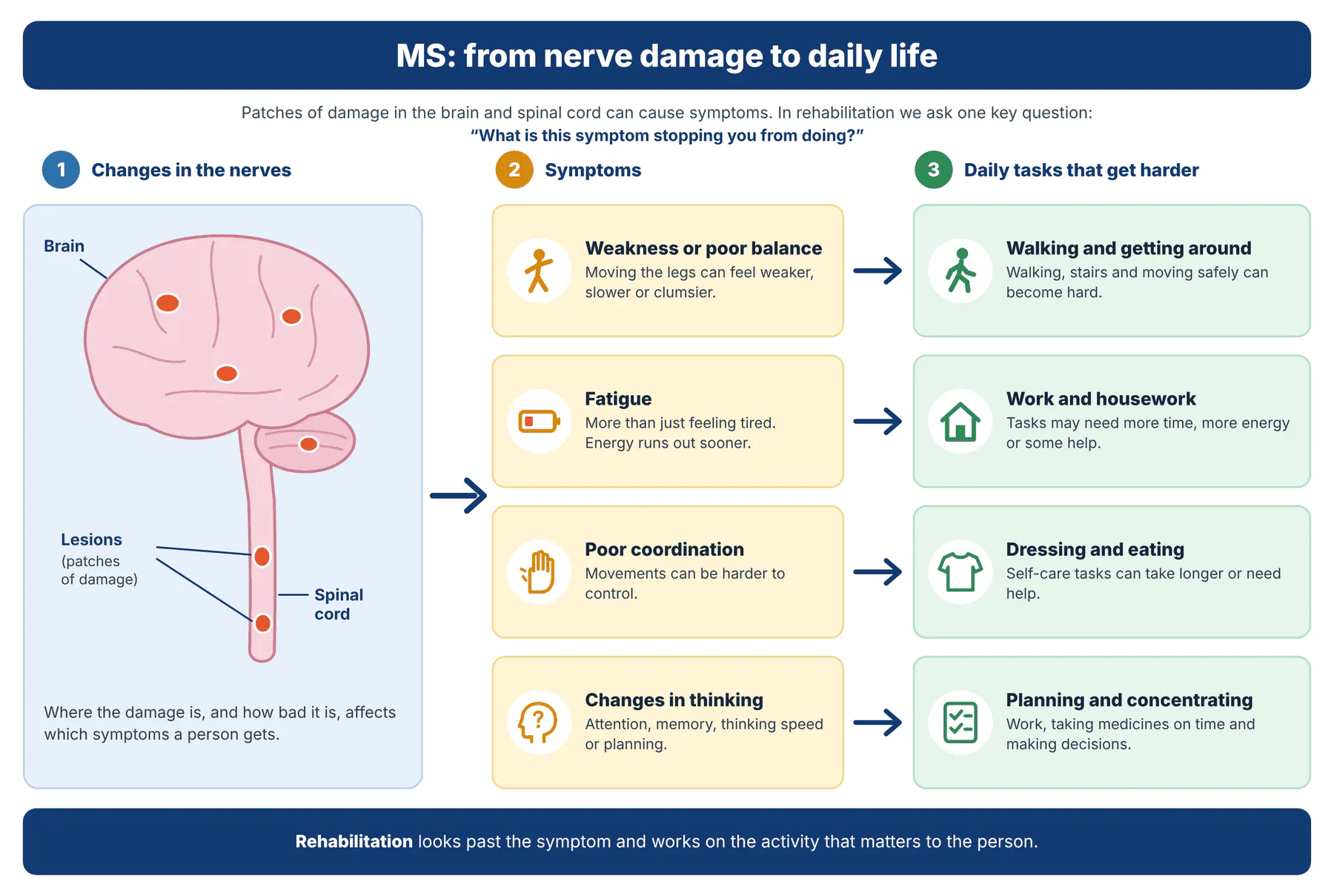
MS can affect movement, feeling, eyesight, energy, thinking and bladder control. Here is what the common symptoms look like, how relapses work, and when to get help.

Overview
Multiple sclerosis (MS) damages the protective coating (myelin) around nerves in the brain, spinal cord and the nerves behind the eyes. Messages travel more slowly along a damaged nerve, or don't get through at all. Which symptoms a person has depends on where those patches of damage are.
That's why two people with MS can look very different. One may mainly struggle with tiredness and tingling. Another may have trouble walking or seeing clearly. Symptoms can also change from week to week, and many are invisible to other people, such as fatigue, pain or changes in thinking.
Only a neurologist can diagnose MS, usually with an examination, an MRI scan and sometimes other tests. This page explains the common symptoms so you know what to look out for and what to tell your doctor.

Common symptoms
Most people have a mix of the symptoms below. Few people have all of them, and they rarely all appear at once.
Some symptoms get worse for a short time in hot weather, after a hot bath or with a fever. This is common in Kolkata's summers. It usually settles once the body cools down and does not mean new damage.
Early signs and relapses
For many people, the first sign is a single episode, such as blurred vision in one eye or numbness down one side that lasts days or weeks and then eases. Doctors call a first episode like this a clinically isolated syndrome. Not everyone who has one goes on to develop MS, which is why follow-up with a neurologist matters.
A relapse is when new symptoms appear, or old ones get clearly worse, for more than 24 hours, without an infection or fever to explain it. Relapses often improve over weeks or months, fully or partly.
A pseudo-relapse looks like a relapse but is caused by something else, most often a urine infection, a fever, heat or severe stress. Symptoms settle once the trigger is treated. Telling the two apart is a job for your doctor, so report any new or worsening symptoms rather than waiting. You can read about medicines and other treatments on our MS treatment options page.

Daily life
A symptom matters most when it gets in the way of something you need or want to do. Weak legs may mean you stop going to the market. Fatigue may cut your working day short. Tingling hands can make buttons, writing or cooking slow and frustrating.
Rehabilitation looks at exactly these problems. At Rehabana, a PMR doctor and therapists assess how symptoms affect walking, balance, hand use, energy, thinking, speech and swallowing. Then we agree a few clear goals with you and build a plan around them. Rehab works alongside the treatment your neurologist gives, not instead of it.
See a doctor urgently if you have sudden loss of vision, sudden weakness or numbness on one side, slurred speech or a severe new headache. These can be signs of other serious conditions such as stroke and need emergency care.
Hidden symptoms
Some MS symptoms are hard to bring up, even with a doctor. They are common, though, and most can be helped once they are mentioned.
Bladder problems affect many people with MS. You may need to rush to the toilet, go often, get up several times at night, or feel the bladder doesn't empty fully. Bowel problems, mostly constipation, are also common. These symptoms can make people afraid to go out, so treating them often brings back confidence as well as comfort. Pelvic floor exercises, timed toilet routines, enough fluids and fibre, and sometimes medicines all help.
Sexual problems, such as reduced sensation, erectile difficulties or low desire, happen in both men and women. They can be caused by nerve damage, fatigue, low mood or medicines, and there are treatments for each.
Mood changes are part of MS too. Depression and anxiety are more common than in the general population, partly because of the effects of MS on the brain and partly because of the stress of living with it. Some people have sudden laughing or crying that doesn't match how they feel. All of these deserve attention and treatment.
If you find these topics difficult to raise, write them on a note and hand it to your doctor. At Rehabana, our team asks about them as part of the assessment, so nothing important gets missed.
FAQs
Common first symptoms include blurred or painful vision in one eye, numbness or tingling, weakness in a limb, or problems with balance. They often last a few days or weeks and then ease. Any of these can have other causes, so see a doctor to find out what is behind them.
Next steps
If MS symptoms are making daily life harder, an assessment at Rehabana can show which problems matter most and where rehabilitation can help. Our doctor-led team in Salt Lake and Kalighat, Kolkata, works alongside your neurologist.