Tremor in Parkinson's Disease

Tremor is the best-known sign of Parkinson's, though not everyone has one. Here is what it looks like, what makes it worse and how it is treated.

Doctor checking a patient's hand and finger movement

What it looks like

What a Parkinson's tremor looks like

The typical Parkinson's tremor is a rest tremor. It happens when the limb is relaxed and supported, such as a hand resting in the lap or hanging by the side while walking, and it often eases or stops when the hand is used. A classic pattern is a rhythmic rubbing of the thumb and fingers, sometimes called 'pill-rolling'.

The tremor usually starts in one hand, finger or thumb, and often stays worse on that side for years. It can also affect a foot, leg, lip or jaw. It doesn't usually affect the head, which is more typical of other tremor conditions.

Tremor is often worse with stress, anxiety, excitement, tiredness or cold, and when concentrating on something else, such as doing mental arithmetic. It disappears during sleep. Many people find it embarrassing in public, even though it often causes less disability than slowness or balance problems.

Not everyone with Parkinson's has a tremor. Around a quarter or more never develop an obvious one.

All symptoms of Parkinson's

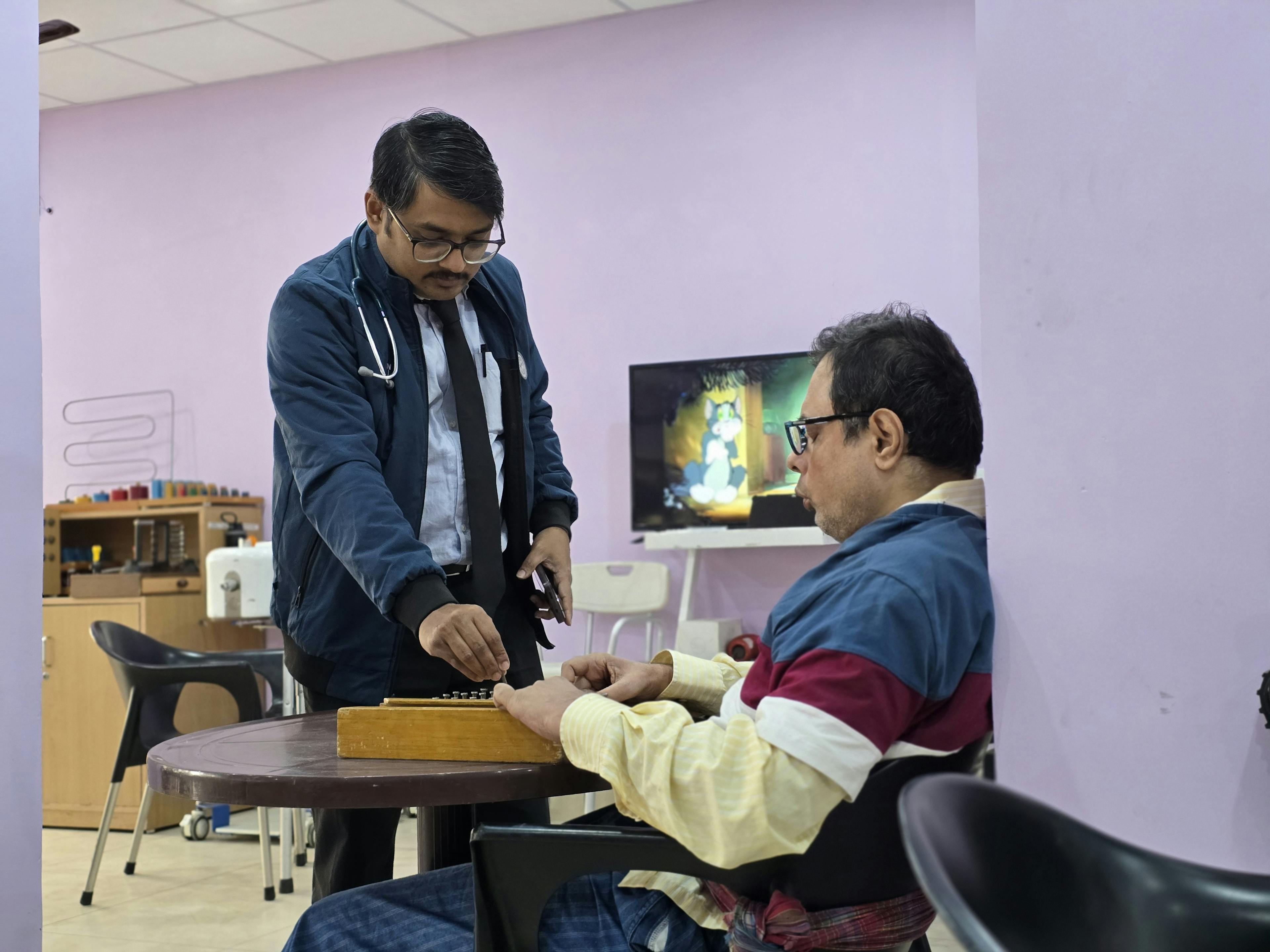
Doctor watching a patient carry out a hand task

Other tremors

Parkinson's tremor or essential tremor?

Essential tremor is a different, very common condition that is often confused with Parkinson's. The differences help neurologists tell them apart, although some people have features of both.

  • Parkinson's tremor is mainly at rest; essential tremor is mainly when using the hands, like holding a cup or writing
  • Parkinson's usually starts on one side; essential tremor usually affects both hands
  • Head and voice tremor are more typical of essential tremor
  • Parkinson's comes with slowness and stiffness; essential tremor usually doesn't
  • Essential tremor often runs in families and may ease briefly with a little alcohol
  • Writing gets small in Parkinson's but large and shaky in essential tremor
How Parkinson's is diagnosed
Clinician discussing treatment with a patient

Medicines

Medicines for tremor

Parkinson's tremor often responds to the same medicines used for slowness and stiffness, such as levodopa and dopamine agonists, although it can be more stubborn than other symptoms. Some people need higher doses or a combination of medicines before the tremor settles. Other medicines are sometimes added specifically for tremor, but they can have side effects, especially in older people, so a neurologist weighs the benefits carefully.

If the tremor is worse when a dose wears off, adjusting the timing may help. If it is mainly triggered by anxiety or stress, treating the anxiety and learning relaxation techniques can reduce it.

It is worth remembering that a mild tremor that doesn't interfere with daily life may not need extra medicine. Treatment is guided by how much the tremor bothers you and what it stops you doing.

Parkinson's treatment options
Parkinson's treatment and rehabilitation at Rehabana, Kolkata

Procedures

When tremor doesn't respond to medicines

For a small number of people, tremor remains severe and disabling despite the best medicine plan. In these cases, a neurologist may discuss procedures.

Deep brain stimulation involves placing thin wires in a specific area of the brain, connected to a small device under the skin of the chest. It can reduce tremor substantially in carefully selected people, and can also help 'off' periods and involuntary movements.

Focused ultrasound uses beams of sound, guided by MRI, to treat a tiny spot in the brain without a cut. It is mainly used for a severe tremor on one side and is available at a limited number of centres in India.

Both procedures need careful assessment by a specialist team. They are not suitable for everyone, and they don't help balance or memory. Rehabilitation remains important before and after either treatment.

Man practising a hand task at a table to keep everyday skills

Daily life

Practical ways to live with tremor

Occupational therapists help people manage tremor in everyday tasks. Because a Parkinson's tremor often settles when the hand is used, starting a task deliberately can calm it. Some strategies that help:

Brace the arm. Rest the elbow on a table when eating, writing or using a phone, and hold objects close to the body. Use both hands for heavier items.

Choose helpful tools. Weighted or built-up cutlery, mugs with lids and two handles, non-slip mats, an electric toothbrush and an electric razor all make tasks easier. Voice control or larger buttons help with phones.

Manage triggers. Since stress and anxiety make tremor worse, slow breathing and taking a moment before a task can help. Plan important activities for 'on' periods, get enough sleep, and limit caffeine if it seems to worsen the shaking.

In public, holding something lightly in the affected hand, or keeping it in a pocket, makes a rest tremor less noticeable for many people.

Occupational therapy for Parkinson's

FAQs

Frequently asked questions

Can you have Parkinson's without a tremor?

Yes. Many people with Parkinson's never have an obvious tremor. Slowness of movement is the key feature for diagnosis, not tremor.

Can exercise reduce tremor?

Does a worse tremor mean my Parkinson's is progressing?

Is focused ultrasound available in Kolkata?

Next steps

Get help with tremor in daily life

Book an assessment at Rehabana in Salt Lake or Kalighat, Kolkata. Our team will look at how tremor affects your day and find practical ways to make tasks easier.