Physiotherapy and Exercise for Parkinson's

Why exercise matters in Parkinson's, what a physiotherapy programme includes at each stage, and how to exercise safely at home.

Parkinson's physiotherapy session at Rehabana, Kolkata

Why exercise matters

Exercise is part of Parkinson's treatment

For people with Parkinson's, exercise is not an optional extra. It is one of the most important things you can do alongside your medicines. Regular exercise improves strength, flexibility, walking, balance and fitness, and many people find it helps mood, sleep and constipation too.

Parkinson's makes movements smaller and slower over time, and people naturally start to move less. Exercise pushes back against both. It works best when it is regular, challenging enough to make you work, and kept up for the long term.

General advice for adults is to aim for about 150 minutes of moderate activity a week, spread over several days, plus strength and balance work. A physiotherapist can help you build up to what is safe and realistic for you.

Read the full Parkinson's guide
Therapist guiding a patient with Parkinson's through an exercise

The programme

What a physiotherapy programme includes

After assessing you with tests such as the Timed Up and Go, the Berg Balance Scale and the Five Times Sit-to-Stand Test, your physiotherapist builds a programme from these parts:

  • Big-movement training: practising large, exaggerated steps, reaches and arm swings
  • Aerobic exercise: brisk walking, a treadmill or a stationary bike
  • Strength training for the legs, hips and back
  • Balance practice, including turning, reaching and stepping in different directions
  • Posture and stretching to counter a stooped, stiff trunk
  • Cueing strategies for freezing and starting to walk
  • Practice of everyday moves: rolling in bed, sitting to standing and getting in and out of a car
Walking and balance in Parkinson's
The Hoehn and Yahr stages of Parkinson's disease

By stage

How the focus changes at each stage

Early on, the aim is to build fitness, strength and good movement habits, and to make exercise part of everyday life. This is the best time to start, because it is easier to keep abilities than to win them back.

In the middle stages, the focus moves to balance, preventing falls, managing freezing and keeping walking safe. Exercises may be adapted to sitting or using support where needed.

In later stages, physiotherapy helps with getting in and out of bed and chairs, standing, posture in sitting, easing stiffness, keeping the chest clear, and teaching families safe ways to help. At Rehabana, most people reach us at Stage 3 or 4 on the Hoehn and Yahr scale. Physiotherapy still helps at that point, but starting earlier is better.

Patient with Parkinson's exercising with support at Rehabana

At home

Exercising safely at home

A home programme keeps the benefits of therapy going. Exercise during an 'on' period, usually 45 to 60 minutes after a medicine dose, when movement is easiest. Have a sturdy chair or kitchen counter nearby for support during standing and balance exercises, and clear the floor around you.

Wear supportive shoes rather than slippers. Drink water, and in Kolkata's heat, exercise in the cooler parts of the day. Stop and rest if you feel dizzy, short of breath or have chest pain, and tell your doctor.

Activities you enjoy count too. Brisk walking, cycling on a stationary bike, dancing and yoga or tai chi adapted for balance can all help. Exercising with a family member or group makes it easier to keep going.

Making the home safer
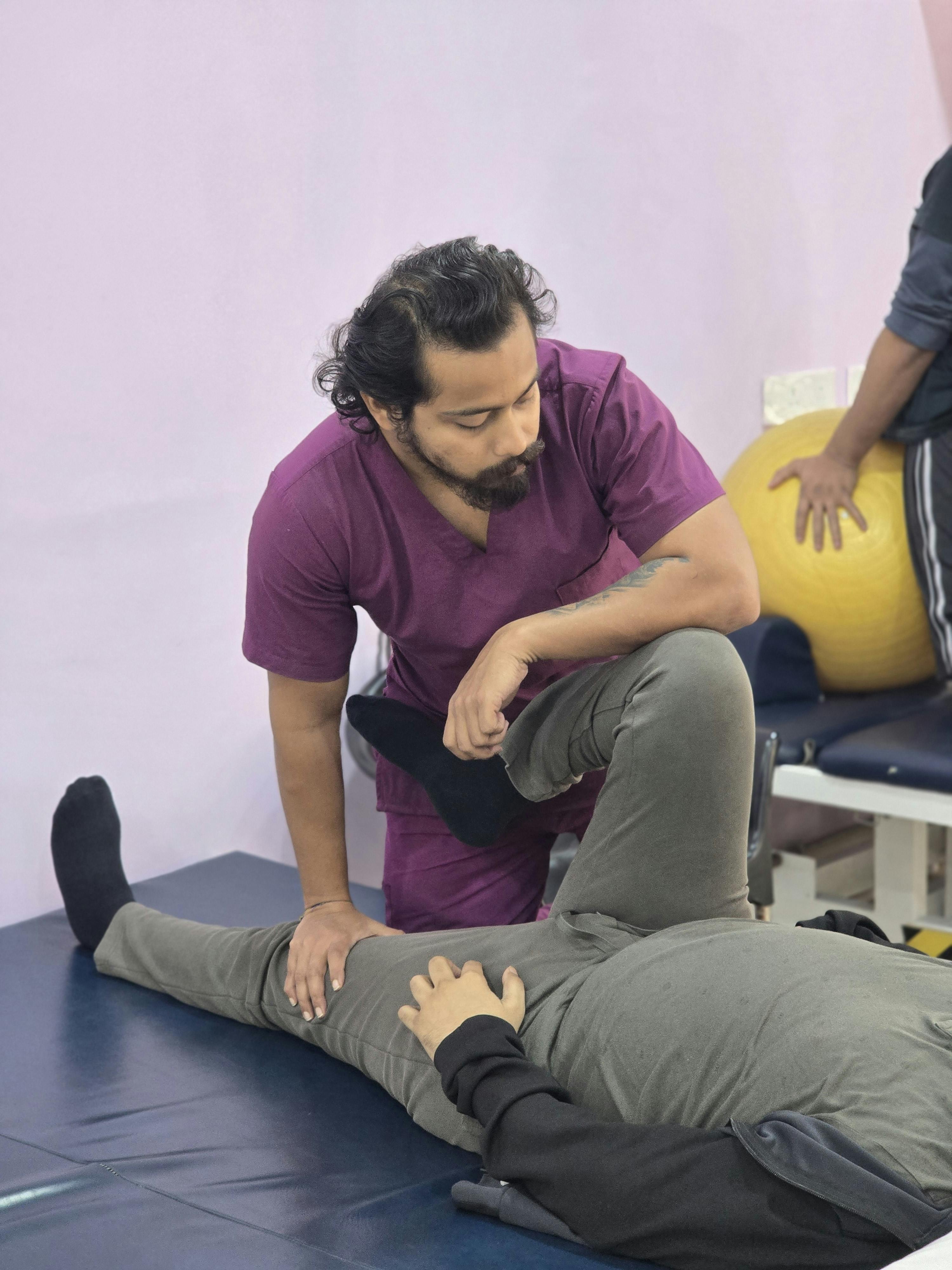
Therapist stretching the hip and knee of a patient lying on a mat

Posture

Posture, flexibility and stiffness

Over time, Parkinson's tends to pull the body forward. The head and shoulders round, the trunk bends, and the hips and knees stay slightly bent. Some people also lean to one side. This stooped posture affects balance, makes breathing and swallowing harder, causes neck and back pain, and makes it harder to look ahead while walking.

Posture work is a key part of Parkinson's physiotherapy. It usually combines stretches for tight muscles at the front of the body, such as the chest, hip flexors and hamstrings, with strengthening for the muscles that hold you upright, such as the upper back and buttocks. Simple exercises include lying flat on your back for a few minutes each day, if safe, wall stands with the back of the head towards the wall, shoulder blade squeezes, and gentle trunk rotations in sitting.

Stiffness in Parkinson's often affects the trunk as much as the limbs, so turning in bed, reaching and looking over your shoulder become harder. Regular rotation and reaching exercises help keep these movements.

Awareness matters too. Many people don't notice they are stooping. A therapist can teach a simple reminder, such as 'tall and proud', or use a mirror during practice. Good seating, with a supportive back and the right height, helps you sit well without effort through the day.

If posture is changing quickly, or a strong lean develops, tell your neurologist, as medicines or other treatments sometimes play a part.

Occupational therapy for Parkinson's
FAQs

Frequently asked questions

Can physiotherapy help Parkinson's patients?

Yes. Physiotherapy can improve walking, balance, strength and confidence, and reduce the risk of falls. Guidelines recommend that people with Parkinson's are offered physiotherapy, especially when balance or walking become difficult.

Is it too late to start if I have had Parkinson's for years?

What is LSVT BIG?

Next steps

Start Parkinson's physiotherapy

Book an assessment at Rehabana in Salt Lake or Kalighat, Kolkata. We'll build an exercise programme that fits your stage, your goals and your daily routine.