How occupational therapy helps people with Parkinson's manage daily tasks like dressing, eating, writing and bathing, with practical tools and home adaptations.

Overview
Parkinson's makes everyday tasks slower and more effortful. Buttons get fiddly, handwriting shrinks, eating takes longer and getting out of bed or a chair becomes a struggle. Over time, many people let family take over tasks they could still do with the right method.
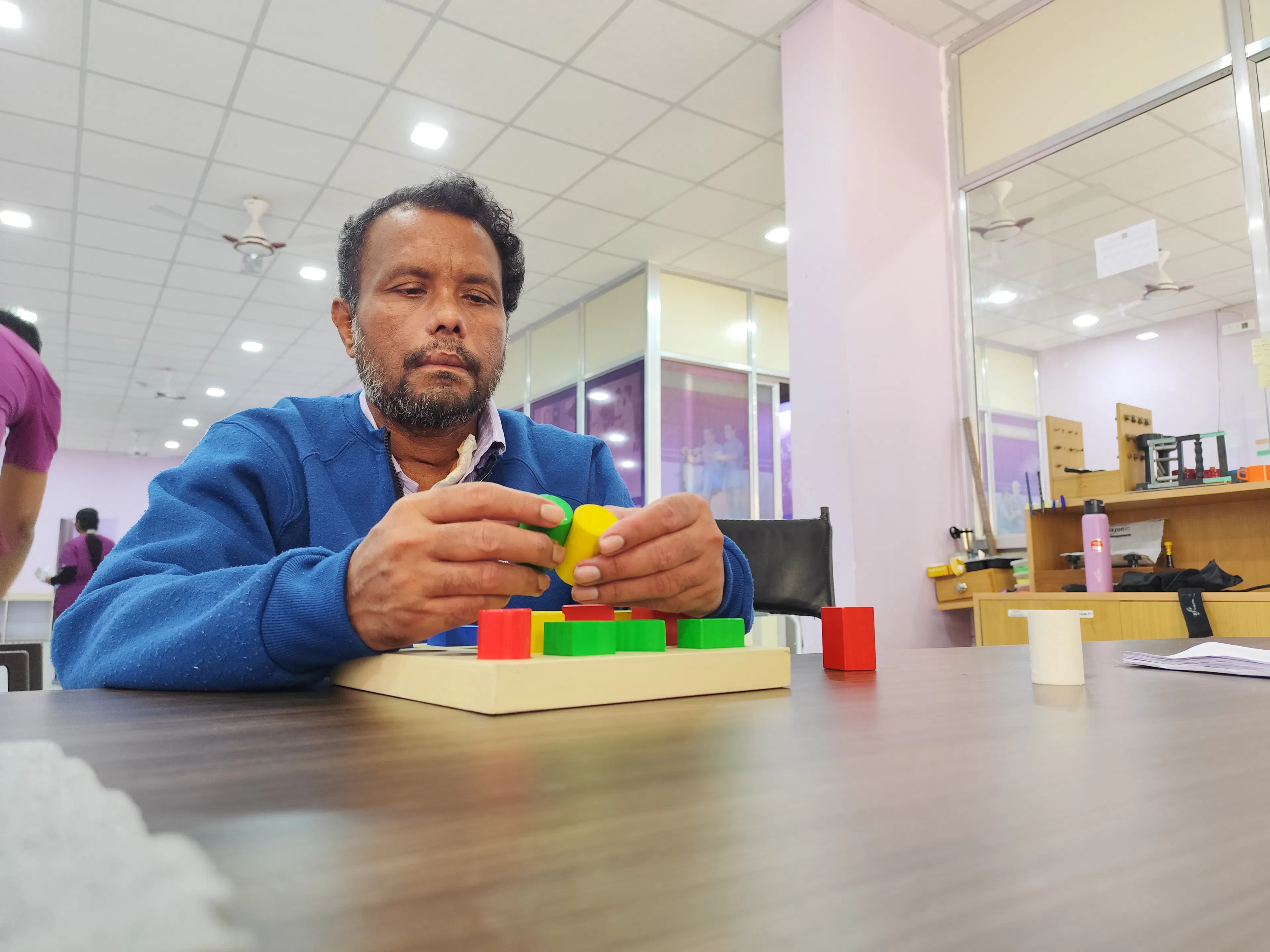
An occupational therapist (OT) helps you keep doing the things that matter, safely and with less effort. That may mean practising a skill, breaking a task into steps, using a cue, choosing a simple tool, or changing the home. The aim is to protect independence and dignity, and to make life easier for families as well.
Self-care
We assess daily tasks with tools such as the Functional Independence Measure and the Nine-Hole Peg Test, then work on the ones you find hardest. Common strategies include:

Bed, chairs and home
Turning over in bed and getting up are among the hardest tasks in Parkinson's, especially at night when medicines have worn off. An OT teaches step-by-step methods, such as bending the knees, rolling as one unit and pushing up sideways, and may suggest a bed rail, satin sheets that make turning easier, or raising a low bed.
For chairs, a firm seat with armrests at the right height makes standing much easier. Shuffle forward, feet back, lean forward 'nose over toes', then push up. Practising the sequence until it becomes automatic helps.
We also look at the whole home: clearing walkways, lighting, bathroom safety, and marking doorways with tape lines if freezing happens there.

Routines and thinking
A well-planned day makes a big difference. An OT helps you organise activities around medicine times, rest breaks and energy levels. Doing one thing at a time, without being rushed, usually works better than multitasking.
If thinking or memory has slowed, simple supports help: a written daily schedule, phone reminders for medicines, and keeping important items in fixed places.
OT is also about keeping a life outside self-care: hobbies, work, cooking, religious activities and time with family and friends. We look at what you have stopped doing and whether it can be adapted rather than given up. Staying involved supports mood and keeps you moving. Our Parkinson's disease overview explains how symptoms can change over time.

In the kitchen
For many people, cooking is more than a chore. It is a source of pride, a way of caring for the family and an important part of daily life. Parkinson's can make it harder through slowness, tremor, poor balance, fatigue and difficulty doing two things at once. An occupational therapist helps you keep cooking safely for as long as possible.
Plan meals for 'on' periods, and choose simpler dishes on difficult days. Prepare ingredients sitting down at the table, and break cooking into stages with rests in between. Keep the things you use most between waist and shoulder height, so you don't have to climb, stretch or bend low.
For tremor or weak hands, use a heavy chopping board with a non-slip mat underneath, a rocker knife or a chopper, lightweight pans with two handles, and a kettle tipper. Slide heavy pans along the counter rather than carrying them. A trolley helps move food and plates between rooms without carrying.
Safety matters with heat and gas. Turn pan handles inward, use the back burners, and consider an automatic shut-off or a timer if memory or attention has changed. Avoid carrying hot liquids while walking, especially if freezing or balance is a problem.
When it becomes unsafe to cook alone, many people can still take part: stirring, seasoning, supervising or teaching a family member a favourite recipe. Staying involved keeps hands busy and spirits up.
FAQs
Physiotherapy focuses on movement: walking, balance, strength and posture. Occupational therapy focuses on tasks: dressing, eating, bathing, writing and home safety. Most people benefit from both.
Next steps
Book an occupational therapy assessment at Rehabana in Salt Lake or Kalighat, Kolkata. We'll find practical ways to keep you doing the things that matter.