Fugl-Meyer Assessment (FMA) for Upper Extremity: How Does It Help Track Movement Recovery After a Stroke?
The Fugl-Meyer Assessment (FMA) checks how well a person can move their arms and legs, keep their balance and feel touch after a stroke. Here is what it measures, how it is scored and how Rehabana uses it to plan and track rehabilitation.
Movement recovery assessment
What is the Fugl-Meyer Assessment and why is it used?
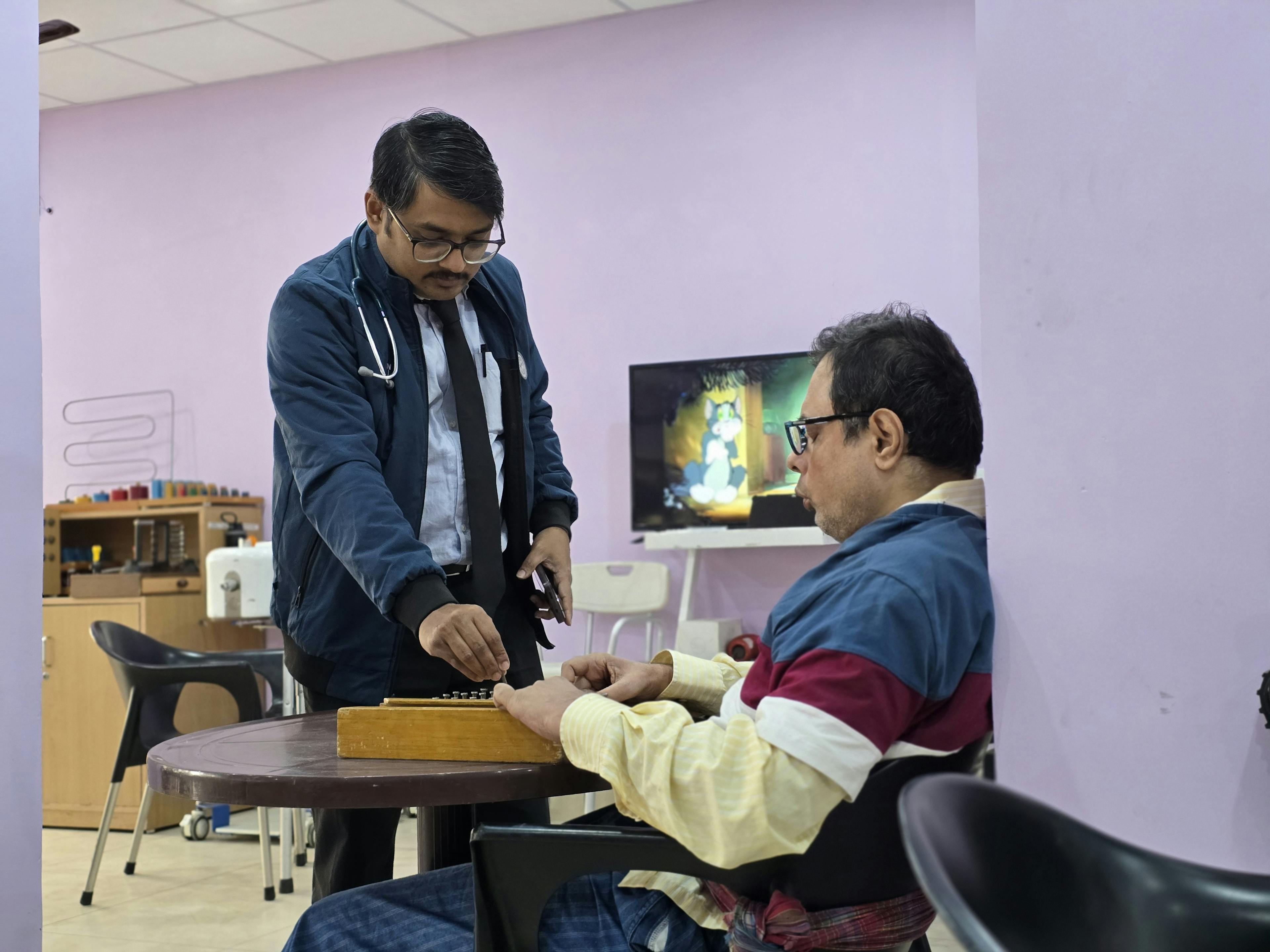
After a stroke, a person may find it hard to move an arm, open the hand, control the leg or keep their balance. These problems can affect everyday activities such as eating, dressing, standing and walking. The Fugl-Meyer Assessment (FMA) is a standardised tool used after a stroke to check how well a person can move their arms and legs, keep their balance and feel touch. It helps the rehabilitation team understand these movement problems, plan suitable rehabilitation activities and track changes over time. For example, a patient may be able to lift the affected arm but struggle to open the fingers. The assessment picks up differences like this, so rehabilitation can focus on what the patient actually needs. It helps the team:
Find which movements are difficult
Understand what the patient can and cannot do
Decide which areas need more attention during rehabilitation
Set individual rehabilitation goals
Track changes in the patient's abilities over time
What it checks
What does the Fugl-Meyer Assessment check?
The full Fugl-Meyer Assessment looks at the five main areas listed below. Each one matters for everyday tasks such as holding a glass, eating, dressing, keeping your balance and walking.
Arm and hand movement: shoulder, elbow, wrist and finger movements
Leg and foot movement: hip, knee and ankle movements
Balance: how steady you stay while sitting and standing
Sensation: feeling touch and knowing where your body parts are
Joint movement and pain: how far the joints move, and any pain during movement
Scoring
How is the Fugl-Meyer Assessment scored?
The therapist watches how the patient performs different movements and scores each one as shown below. The complete Fugl-Meyer Assessment has a maximum score of 226 points. The arm and leg movement sections together make up 100 of those points. A higher score generally means better performance in the areas tested. Comparing scores from different assessment dates helps the rehabilitation team see whether the patient's abilities have changed. Even so, a higher score does not automatically mean full recovery or independence in daily activities.
0: cannot do the movement
1: can do part of the movement
2: can do the full movement
Planning rehabilitation
How does the assessment help plan rehabilitation?
The findings show the rehabilitation team which movements and activities need more attention. Here are some examples of a difficulty the assessment may find, and the rehabilitation focus it can lead to:
Difficulty lifting the arm: assisted and active arm movement
Difficulty straightening the elbow: elbow control and movement practice
Difficulty opening the hand: practice opening the hand, grasping and letting go
Difficulty controlling the knee: leg strengthening and movement control
Poor sitting or standing balance: trunk control and balance training
Tracking progress
Example: how a patient's FMA scores change over time
The list below shows Fugl-Meyer scores from one patient's assessment sheet, recorded on 3 September, 20 September, 10 October and 20 October. So what do these results show? The motor function score rose from 8/66 to 35/66, the sensation score from 0/12 to 10/12 and the hand score from 0/14 to 5/14. Passive joint movement stayed at 24/24. These changes point to improvement in several of the areas tested. The rehabilitation team also looks at how well the patient actually manages daily activities.
Upper extremity: 4/36, 4/36, 20/36, 25/36
Wrist: 0/10, 0/10, 0/10, 1/10
Hand: 0/14, 0/14, 2/14, 5/14
Coordination and speed: 4/6, 4/6, 4/6, 4/6
Total motor function (sections A to D): 8/66, 8/66, 26/66, 35/66
Sensation: 0/12, 0/12, 9/12, 10/12
Passive joint motion: 24/24, 24/24, 24/24, 24/24
Joint pain: 20/24, 20/24, 18/24, 18/24
Recovery and sessions
How many sessions are needed, and how much recovery is possible?
This is one of the most common questions families ask our consultant physiatrist. The Fugl-Meyer Assessment helps track a patient's progress after a stroke. In patients with mild to moderate weakness, it can also help predict how much the arm may recover, especially in those who can lift the shoulder and straighten the fingers in the first week after a stroke. In many people, about 70% of their possible arm recovery happens within the first six months. For example, say a patient scores 26 on the Fugl-Meyer Upper Extremity (FMA-UE) assessment in the first week after a stroke and could gain about 40 more points. Around 70% of those 40 points, which is 28 points, may come within the first six months. With a suitable, goal-based rehabilitation plan, their FMA-UE score may rise from 26 to about 54 by six months. Actual recovery varies from patient to patient. Some patients show changes early in rehabilitation, while others need therapy for longer. The arm, hand and leg can also improve at different speeds. Progress depends on:
How severe the movement problems are
Time since the stroke
Movement ability at the start
Muscle stiffness, joint restrictions and sensory problems
Other medical conditions
How regularly the patient has rehabilitation and practises at home
Our approach
How Rehabana uses the Fugl-Meyer Assessment
At Rehabana, the rehabilitation team plans care around each patient, in the steps listed below, and works with the patient's primary PM&R doctor throughout. The aim of all this is to help the patient regain movement, manage everyday activities and become as independent as possible. The assessment score is one way of tracking that.
Assess the patient's movement at the start
Find the areas that need more attention
Set rehabilitation goals the patient can reach
Plan suitable physiotherapy and occupational therapy activities
Reassess at suitable intervals to track progress
Discuss any treatment difficulties with the primary PM&R doctor
Adjust rehabilitation activities and intensity to the patient's response and clinical needs
Book an Assessment
Worried about arm or hand movement after a stroke?
Our rehabilitation team assesses movement, balance and sensation, then plans rehabilitation around your goals.