Parkinson's changes over time, but not at the same speed for everyone. Here is how doctors describe each stage and keep track of changes.
Overview
How Parkinson's changes over time
Parkinson's disease is a progressive neurological condition. It affects movement and other body functions. Over time, a person may notice changes in walking, balance, hand movements, speech and daily activities such as eating and grooming.
Parkinson's does not progress at the same speed in everyone. Some people stay independent for many years. Others need more and more help with everyday tasks such as dressing, standing up from a chair or climbing stairs.
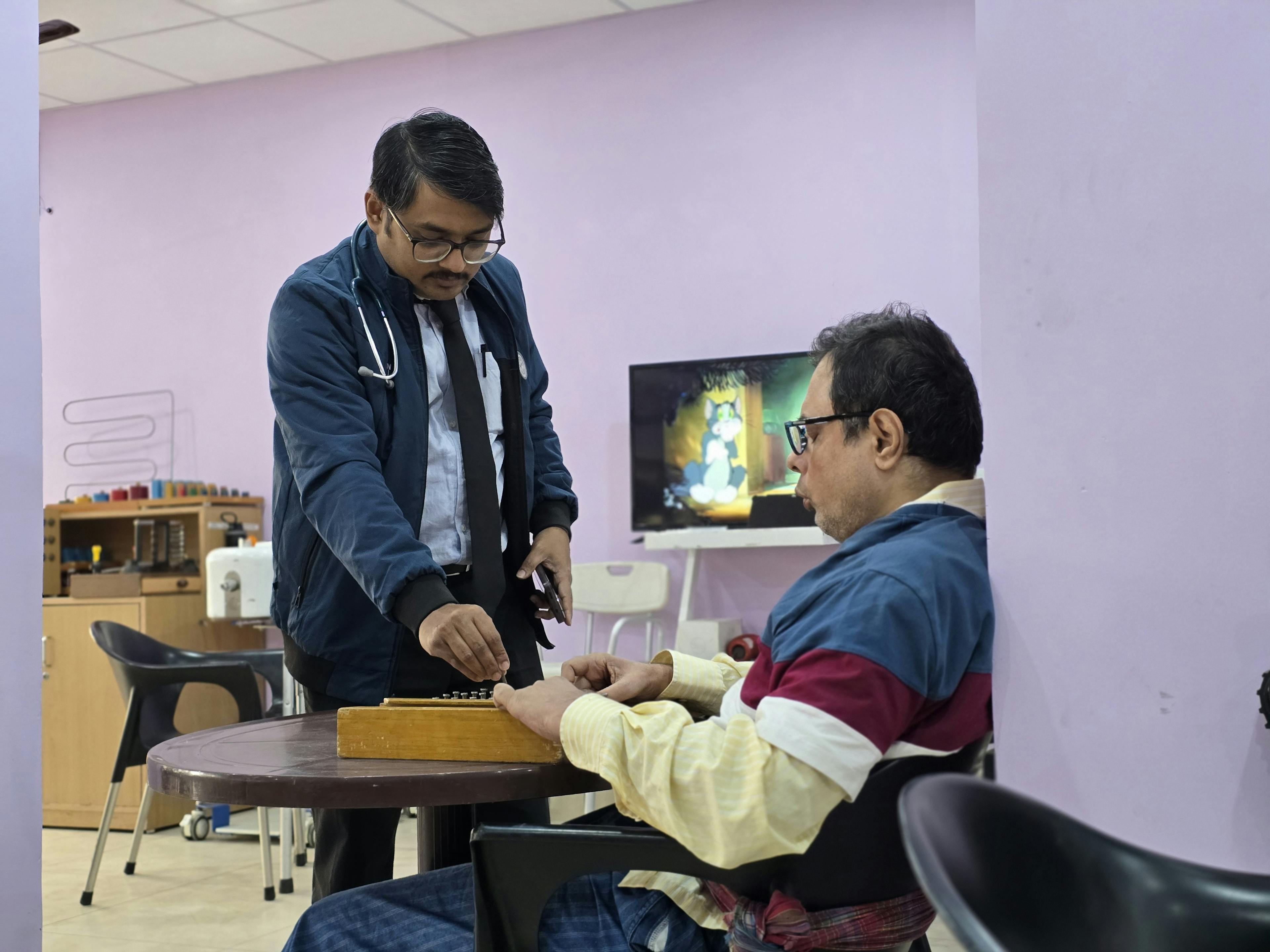
At Rehabana, doctors use different assessment tools to understand the stage of the disease, track changes and plan the right treatment and rehabilitation. Two of the most important are below.
Hoehn & Yahr Scale: shows the overall stage of Parkinson's, mainly from movement problems, balance and how independent the person is.
MDS-UPDRS (Movement Disorder Society Unified Parkinson's Disease Rating Scale): gives a more detailed picture of symptoms, movement problems and how they affect daily life.
What are the different stages of Parkinson's disease?
The Modified Hoehn & Yahr Scale describes Parkinson's in stages from 0 to 5, with two in-between half-stages. It helps doctors see whether symptoms affect one or both sides of the body, and how they affect balance, walking and independence.
Stage 0, no signs of Parkinsonism: the doctor finds no signs of Parkinson's during the examination.
Stage 1, symptoms on one side of the body: there may be shaking, stiff muscles or slow movement on one side. Handwriting, facial expression or walking may start to change, but most daily activities can still be done without help.
Stage 1.5, one side plus the neck and body: symptoms are still mainly on one side, but some stiffness or movement problems also affect the neck and the central part of the body (trunk). Balance and independence are usually kept.
Stage 2, symptoms on both sides: stiffness and slow movement are easier to notice, and walking, turning and daily tasks may take longer. Balance is usually fine, and the person can mostly manage daily activities alone.
Stage 2.5, mild symptoms on both sides with recovery on the Pull Test: there may be mild balance problems. In a balance check called the Pull Test, the person may take a few steps backwards but gets their balance back without help.
Stage 3, mild to moderate disease with unsteady balance: balance and body stability are affected. Turning, walking and catching your balance get harder, and the risk of falling goes up. Most people are still physically independent at this stage.
Stage 4, severe disability but able to stand or walk without help: standing, walking and changing position are hard. The person may need a walking aid, or help with bathing, dressing and moving around, but can usually still stand or walk without someone holding them.
Stage 5, in a wheelchair or bed unless helped: the person may not be able to stand or walk alone, and may need a wheelchair or bed to get around. They need a lot of help with daily activities, and carer support becomes very important for safety, comfort and everyday care.
Detailed assessment
How do doctors assess Parkinson's using the MDS-UPDRS?
The Hoehn & Yahr Scale gives an overall picture of the stage, but it does not describe every problem a person may have. For a more detailed check, doctors may use the MDS-UPDRS (Movement Disorder Society Unified Parkinson's Disease Rating Scale).
It looks at the areas below and is split into four parts.
Changes in daily activities
Problems with movement
Changes in mood, memory and other non-movement functions
Problems linked to Parkinson's medicines and their effects
MDS-UPDRS Part I
Part I: non-movement activities of daily living
This part checks how Parkinson's affects a person's general well-being and everyday life. It looks at things like:
Memory and thinking problems
Low mood, anxiety or sadness
Sleep problems
Constipation and other changes in the body
Tiredness and other non-movement symptoms
MDS-UPDRS Part II
Part II: movement in daily activities
This part checks how movement problems affect everyday tasks, such as:
Getting out of bed
Dressing and bathing
Eating and drinking
Walking and keeping balance
Writing and household work
MDS-UPDRS Part III
Part III: movement examination
The doctor or a trained assessor examines how the person moves, including:
Hand and leg movements
Muscle stiffness
Shaking (tremor)
Walking speed and movement
Standing balance and body posture
How smoothly the person can start and carry out a movement
MDS-UPDRS Part IV
Part IV: movement complications
This part checks movement problems that can develop during long-term treatment, such as:
Wearing-off: the medicine's effect fades before the next dose is due
Dyskinesia: body movements the person cannot easily control
Off periods: times when the medicine is not giving enough control of movement
Other problems caused by changes in how the body responds to the medicine
Scoring
How is the MDS-UPDRS score understood?
Each item in the MDS-UPDRS is usually scored from 0 to 4, as shown below. A higher score generally means more severe symptoms or difficulties. A lower score means fewer or milder ones. Comparing scores from different visits helps doctors see whether symptoms have changed.
The total score should always be read by a trained healthcare professional, who looks at each section and at the person's overall condition. The MDS-UPDRS score on its own does not decide the Hoehn & Yahr stage.
0: normal, no problem
1: slight problem
2: mild problem
3: moderate problem
4: severe problem
Two scales
Why are both assessment scales important?
The two scales give useful but different information. The main differences are listed below.
For example, two people may both be at Hoehn & Yahr Stage 3, yet have very different problems. One may struggle more with walking and balance, while the other finds hand movements, speech or daily activities harder. This is why doctors do a detailed assessment instead of looking at the stage alone.
The Hoehn & Yahr Scale shows the overall stage. The MDS-UPDRS gives a detailed assessment of symptoms.
Hoehn & Yahr mainly looks at movement and balance. The MDS-UPDRS covers both movement and non-movement problems.
Hoehn & Yahr shows the person's overall physical independence. The MDS-UPDRS shows how symptoms affect daily life.
Hoehn & Yahr uses stages from 0 to 5 in the modified scale. The MDS-UPDRS scores each item from 0 to 4.
Our doctors at Rehabana use the Hoehn & Yahr Scale and the MDS-UPDRS to understand your stage, track changes and plan your treatment and rehabilitation.