Stiff muscles are one of the main signs of Parkinson's. Here is why rigidity happens, how it affects posture and comfort, and what eases it.
What it is
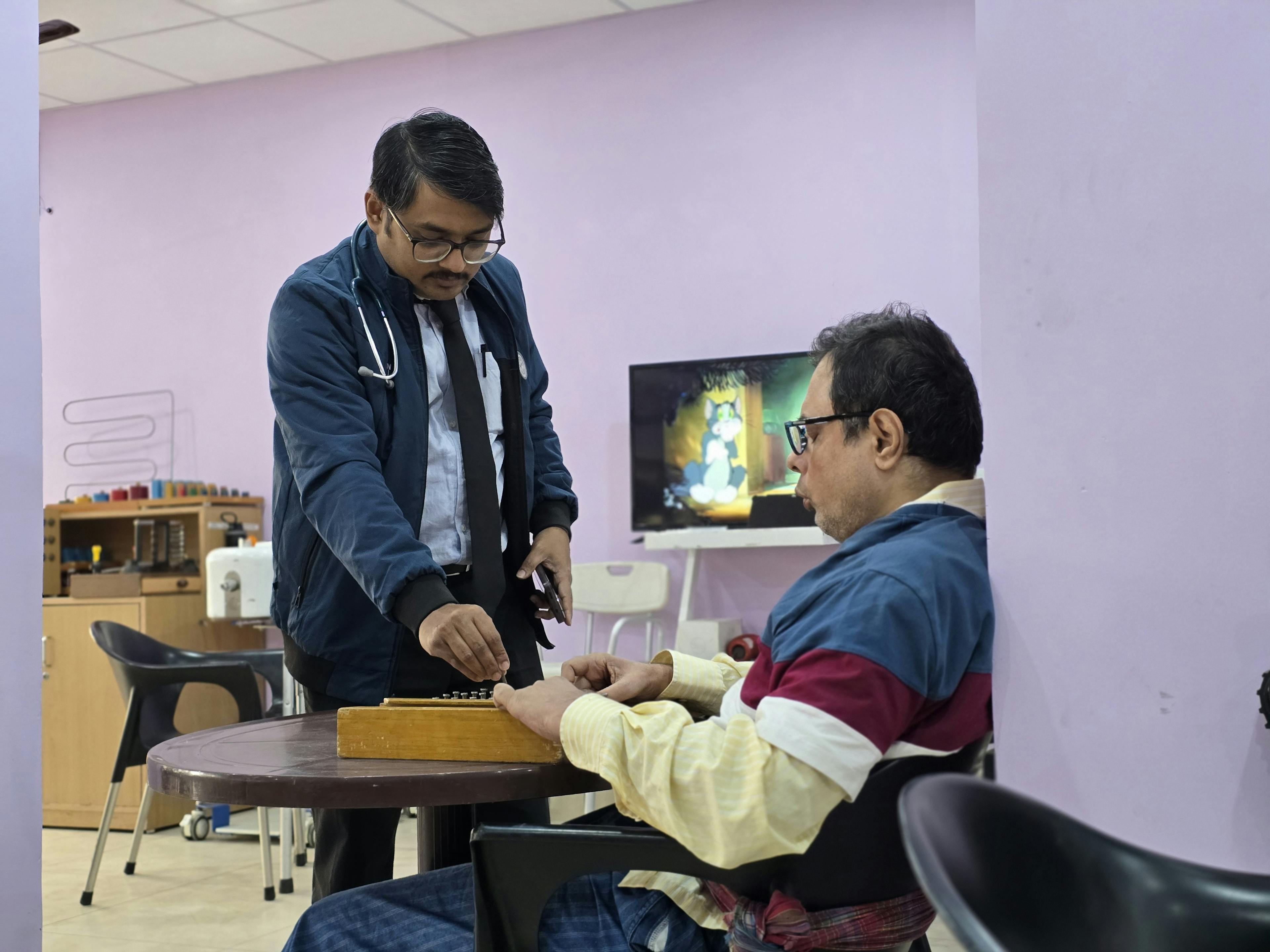
Rigidity is increased stiffness in the muscles that is present all the time, even when the person is trying to relax. When a doctor bends and straightens the arm or wrist, they feel steady resistance through the whole movement. Sometimes it has a jerky, ratchet-like feel, often called cogwheel rigidity, especially when a tremor is also present.
In Parkinson's, rigidity comes from changes in the brain's movement circuits, not from the muscles themselves. It is one of the main signs neurologists look for, alongside slowness and tremor. It often starts on one side and may first show up as an aching or stiff shoulder, sometimes mistaken for a frozen shoulder or arthritis.
Rigidity is different from spasticity, the stiffness seen after a stroke or in multiple sclerosis. Spasticity increases with faster movement and mainly affects certain muscle groups; Parkinson's rigidity is more even and affects both sides of a joint.
Effects
Rigidity affects more than the arms and legs. Stiffness in the neck and trunk is common and has a big effect on posture and movement.

Medical treatment
Rigidity usually improves with Parkinson's medicines such as levodopa. Many people notice their muscles loosen when a dose is working and tighten again when it wears off. If stiffness and pain come back before the next dose, tell your neurologist, as the timing or dose may need adjusting.
Some people get painful, cramping muscle spasms, especially in the feet or calves early in the morning before their first dose. This is called dystonia and is also worth reporting, as medicine changes often help.
Rigidity can be mistaken for other problems, and other problems can add to it. Arthritis, a frozen shoulder, back problems and poor sleep can all cause stiffness and pain. A doctor can help sort out which is which, so each is treated properly. At Rehabana, our PMR doctor looks at pain and stiffness alongside your neurologist's treatment.
Therapy
Physiotherapy helps keep the body flexible and upright, which medicines alone often can't do. A typical programme includes slow, sustained stretches for the muscles that tighten most in Parkinson's: the chest, the front of the hips, the hamstrings and calves. Trunk rotation exercises, done lying, sitting or standing, help with turning in bed and looking behind.
Strengthening the muscles that hold you upright, such as the upper back and buttocks, works against the forward stoop. Lying flat on your back for a few minutes a day, if safe, gives the spine a gentle stretch. Big, rhythmic movements, such as marching with full arm swings, also help reduce stiffness.
Regular aerobic exercise, like walking or cycling, warms the muscles and helps movement feel freer. Many people find yoga, tai chi or dance classes adapted for Parkinson's helpful and enjoyable.
Timing matters: exercise is often easiest during an 'on' period. Warm up gently first, and never stretch into sharp pain.
At home
Stiffness is often worst first thing in the morning and during the night, when medicines have worn off. Some practical steps help.
In bed, satin sheets or nightwear make turning easier. A bed rail gives something to pull on. Before getting up, do a few gentle movements: bend and straighten the knees, roll the shoulders, and turn the head side to side. Some people find a warm shower in the morning loosens the muscles.
During the day, change position regularly, at least every hour, and avoid sitting slumped in a low, soft chair for long periods. A firm chair with a supportive back and armrests encourages better posture.
If stiffness wakes you at night or makes the morning very hard, tell your neurologist. A change in the evening or night-time medicines sometimes helps. Families can help by learning the stretches from the therapist and supporting a short daily routine.
FAQs
Yes. A stiff, painful shoulder on one side is a fairly common early sign of Parkinson's and is sometimes treated as a frozen shoulder before the diagnosis is made.
Next steps
Book an assessment at Rehabana in Salt Lake or Kalighat, Kolkata. Our doctor and physiotherapists will look at stiffness, pain and posture and build a routine that keeps you moving.