Occupational Therapy for Multiple Sclerosis

Occupational therapy helps people with MS keep doing everyday tasks, at home, at work and outside, more safely and with less effort.

Occupational therapist working with an older woman on a peg board task

Overview

What occupational therapy does in MS

In occupational therapy, an 'occupation' is anything you do in a day: bathing, dressing, cooking, working, looking after children or meeting friends. MS can make these harder through weak or numb hands, fatigue, poor balance, blurred vision or changes in thinking.

An occupational therapist (OT) looks at the task, the person and the place where it happens. Sometimes the answer is to build up a skill. Sometimes it is to do the task a different way, use a simple tool, or change the room around you. The aim is to help you stay as independent as possible and spend your energy on what matters most to you.

Read the full MS guide
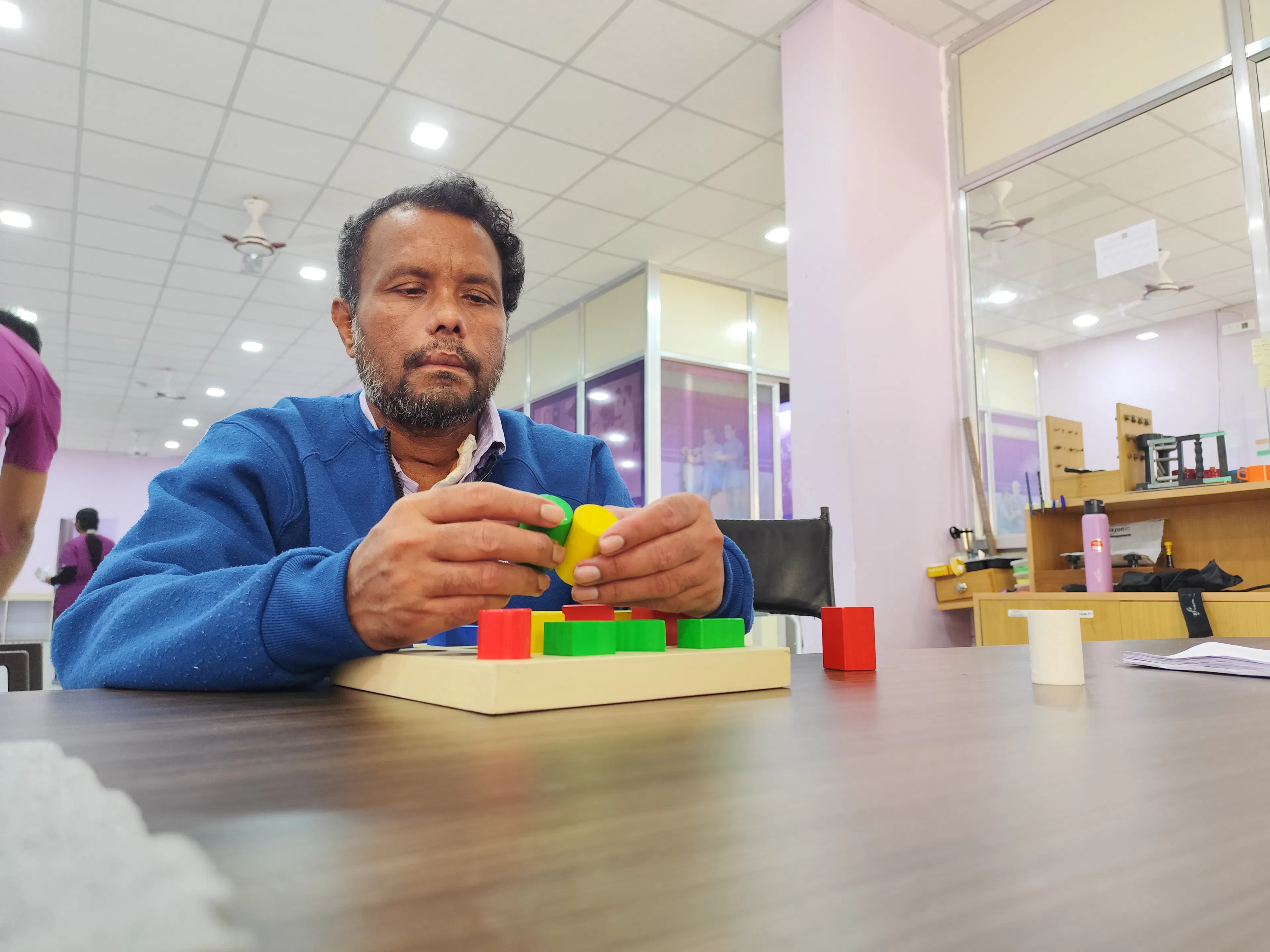
Man practising a block task at a table to keep everyday hand skills

Daily tasks

Self-care, hand function and home

We assess how you manage everyday tasks, often using the Functional Independence Measure, and test hand skills with tools like the Nine-Hole Peg Test. Then we work on the tasks that matter most to you. Common examples:

  • Dressing sitting down, with front-opening clothes, elastic laces or Velcro if buttons are hard
  • Built-up handles on spoons, pens and toothbrushes for a weak or numb grip
  • Hand and fine-motor exercises for buttons, writing and using a phone
  • A shower chair, grab rails and non-slip mats to make bathing safer
  • Kitchen changes, such as sitting to prepare food and keeping heavy items at waist height
  • Checking water temperature with the back of the hand if feeling is reduced, to avoid burns
Therapist doing a written thinking and memory task with a man at a table

Fatigue and thinking

Managing energy and memory day to day

Fatigue is one of the most common reasons people with MS stop doing things they enjoy. OTs teach energy management, often summed up as the four Ps: plan your day, prioritise what matters, pace yourself with rests, and position yourself to save effort, such as sitting rather than standing. Keeping a simple energy diary for a week often shows patterns you can change.

If memory or concentration has changed, an OT can help with practical strategies: a written routine, phone reminders, a fixed place for keys and medicines, doing one task at a time and doing harder thinking tasks when you're freshest.

Fatigue and sleep in MS
Patient with therapists and visitors celebrating progress in the therapy hall

Work and community

Staying at work and staying involved

Many people with MS keep working for years with the right adjustments. An OT can look at your job and suggest changes such as a better-set-up desk, voice typing, regular short breaks, or moving demanding tasks to the morning. We can also help you think through what to say to your employer.

OT also covers getting out and about: travel, shopping, hobbies and social life. We help you plan trips around energy and heat, choose the right mobility aid, and rebuild confidence in going out. Staying connected with people is good for mood and health.

Community life with MS
Older man using an upper-limb training device with a therapist

Arms and hands

Help for weak, numb or shaky hands

Hands do hundreds of small jobs a day, so even mild changes in hand function can make life much harder. MS can affect the hands in three main ways, and each needs a different approach.

Weakness makes gripping, opening jars and lifting difficult. Strengthening exercises with putty, grip tools and everyday objects help, along with tools that need less force, such as lever taps, jar openers and lightweight cups.

Numbness means you can't feel what you're holding, so things slip or get dropped, and there is a risk of burns or cuts without noticing. Using your eyes to guide the hand, choosing textured or larger handles, and testing hot water with a thermometer or the other hand all make tasks safer. Some people benefit from sensory retraining exercises.

Tremor and poor coordination make fine tasks like writing, eating and doing up buttons hard. Bracing the elbow on a table, holding objects close to the body, using heavier cutlery or cups with lids, and slowing down often help. Larger buttons, a phone with bigger keys or voice control, and a computer mouse that reduces the effect of tremor can make a real difference.

Your occupational therapist will assess which of these problems you have, practise real tasks with you, and help you choose equipment that is affordable and easy to find in Kolkata.

Balance and coordination in MS
FAQs

Frequently asked questions

What is the difference between OT and physiotherapy in MS?

Physiotherapy focuses on movement: strength, walking, balance and fitness. Occupational therapy focuses on tasks: self-care, hand use, energy, work and home. Many people benefit from both, working towards the same goals.

Can occupational therapy help with fatigue?

Do I need special equipment?

Can I keep driving with MS?

Next steps

Make daily life with MS easier

Book an occupational therapy assessment at Rehabana in Salt Lake or Kalighat, Kolkata. We'll look at the tasks you find hardest and find practical ways to make them easier.