Neuro Rehabilitation in Kolkata After Hospital Discharge
Returning to West Bengal after hospital treatment? Continue structured, multidisciplinary Neuro Rehabilitation closer to home with Rehabana.
Read More
It usually starts with a phone call.
"Come to the hospital. Baba had a stroke."
And just like that, your whole world tilts. You rush to the hospital. Doctors are talking. Nurses are moving fast. Someone mentions "clot." Someone else says "brain damage." You're nodding like you understand, but honestly? Your mind is blank.
I've seen this happen to hundreds of families here in Kolkata. The father who was perfectly fine yesterday morning drinking his cha, reading the newspaper is now lying in a hospital bed, unable to move one side of his body. Or unable to speak. Or both.
And the family? They're standing outside the ICU, Googling things like "stroke recovery time," "will my father walk again," "best rehab after stroke in Kolkata."
If that's you right now or someone you know this article is for you. Not a medical textbook. Not a list of complicated terms. Just an honest, simple conversation about what happens after a stroke, what recovery actually looks like, and what your family can do to help.

Let me explain this the way I'd explain it to my own family.
Your brain needs blood to work. Blood carries oxygen. Oxygen keeps brain cells alive. Simple so far, right?
Now, during a stroke, something blocks that blood flow. Either a clot blocks a blood vessel (doctors call this an ischemic stroke the most common type). Or a blood vessel bursts and causes bleeding inside the brain (that's called a hemorrhagic stroke).
Either way, the result is the same brain cells start dying because they're not getting oxygen. And whichever part of the brain is affected, that's where the problems show up.
So if the stroke affects the part of the brain that controls your right arm and leg? That side stops working. If it hits the area responsible for speech? The person struggles to talk or understand words.
That's why no two strokes look exactly the same. Your father's stroke might look completely different from your neighbor's uncle's stroke. The location, the size, the type everything matters.

Recommended: Role of Occupational Therapy After Stroke in Regaining Independence
Let me be straight with you here.
The first three days after a stroke are critical. This is when the medical team works to stabilize the patient managing blood pressure, preventing another stroke, reducing brain swelling.
During this phase, families often feel helpless. You're watching monitors beep, asking doctors the same questions over and over, and praying for some sign of improvement.
Here's what I want you to know: it's too early to judge recovery at this stage. I've seen patients who looked completely unresponsive in the first 48 hours go on to regain movement, speech, and independence within months.
The brain is incredible. It has this ability called neuroplasticity basically, healthy parts of the brain can learn to take over the work of damaged parts. Think of it like a road being blocked and traffic finding an alternative route. It takes time. It takes effort. But it happens.
Read More: How Speech Therapy Improves Quality of Life After Stroke
This is the part nobody prepares you for.
The hospital stay is stressful, yes. But at least there are doctors and nurses around 24/7. Once you come home, reality hits differently.
Your loved one might not be able to get out of bed on their own. They might need help eating, bathing, using the bathroom. They might get frustrated because they can't say what they're thinking. They might cry for no apparent reason and that's actually very common after stroke (it's called emotional lability, and it's the brain recovering, not a sign of depression necessarily).
And you the caregiver you're exhausted. Physically. Emotionally. Financially.
Here's where most families make one of two mistakes:
Mistake 1: They think physiotherapy at home is enough and skip specialized rehab altogether.
Mistake 2: They wait too long to start rehabilitation, thinking "let him rest first, we'll start therapy later."
Both of these can seriously slow down recovery. Let me explain why.

This is something most families in Kolkata and honestly, across India don't fully understand. And I don't blame them. Nobody explains it clearly.
Regular physiotherapy is great for joint pain, sports injuries, post-surgery recovery for knees and shoulders. The physiotherapist comes home, does some exercises, and leaves. That works for many conditions.
But stroke recovery? That's a completely different game.
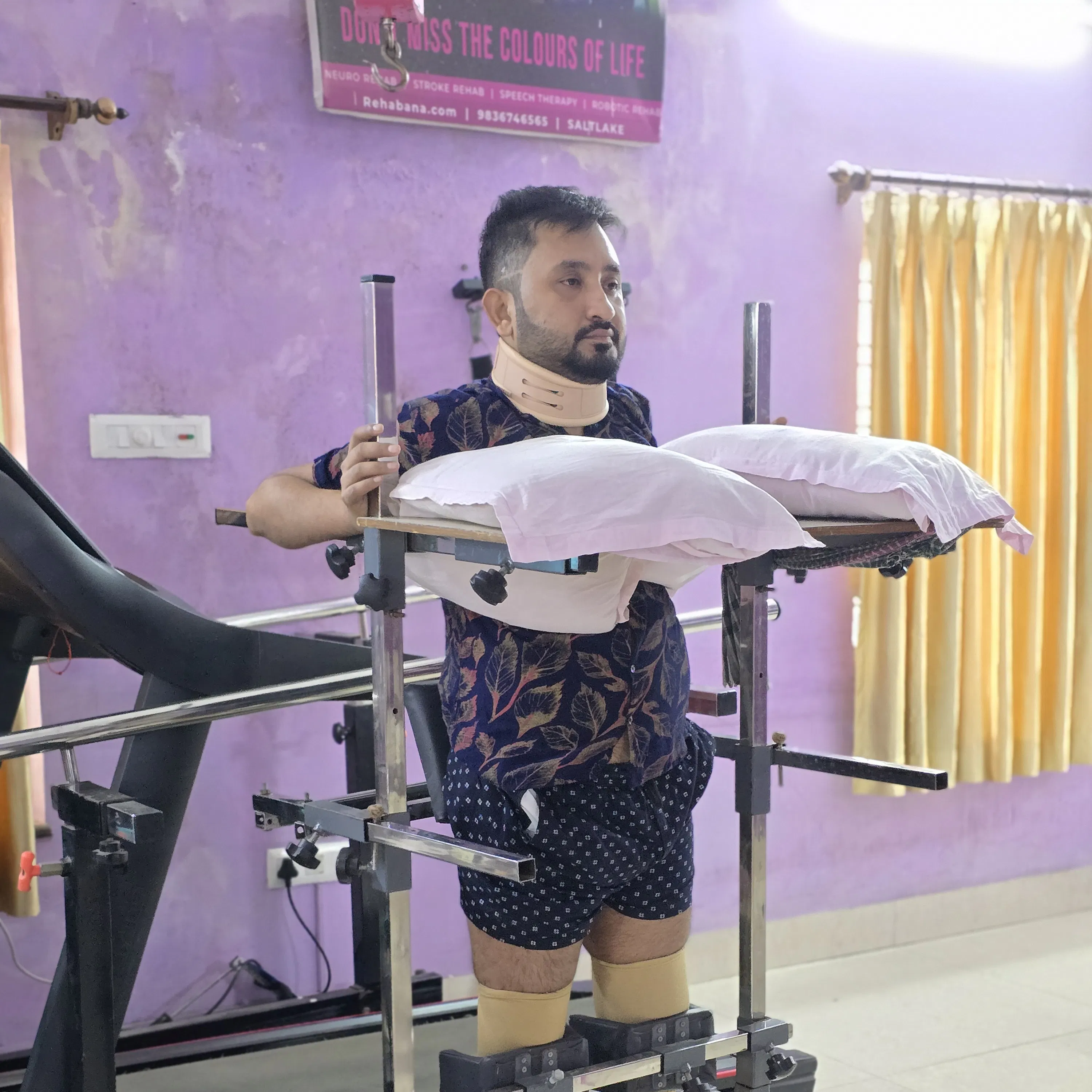
After a stroke, your brain needs retraining not just your muscles. The problem isn't that the arm is weak. The problem is that the brain has forgotten how to tell the arm what to do. So you need a program that works on the brain-body connection.
That's what neuro rehabilitation does.
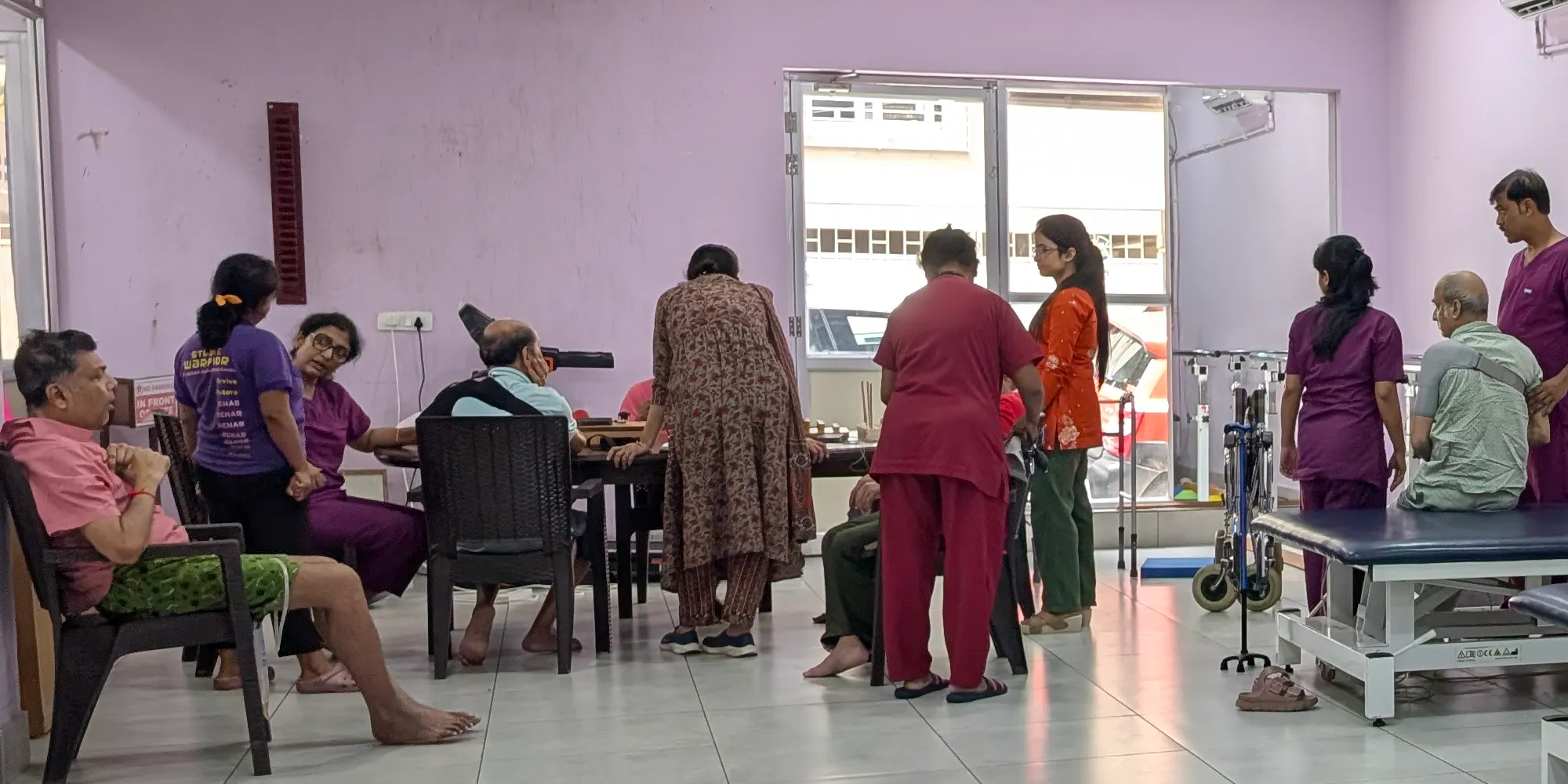
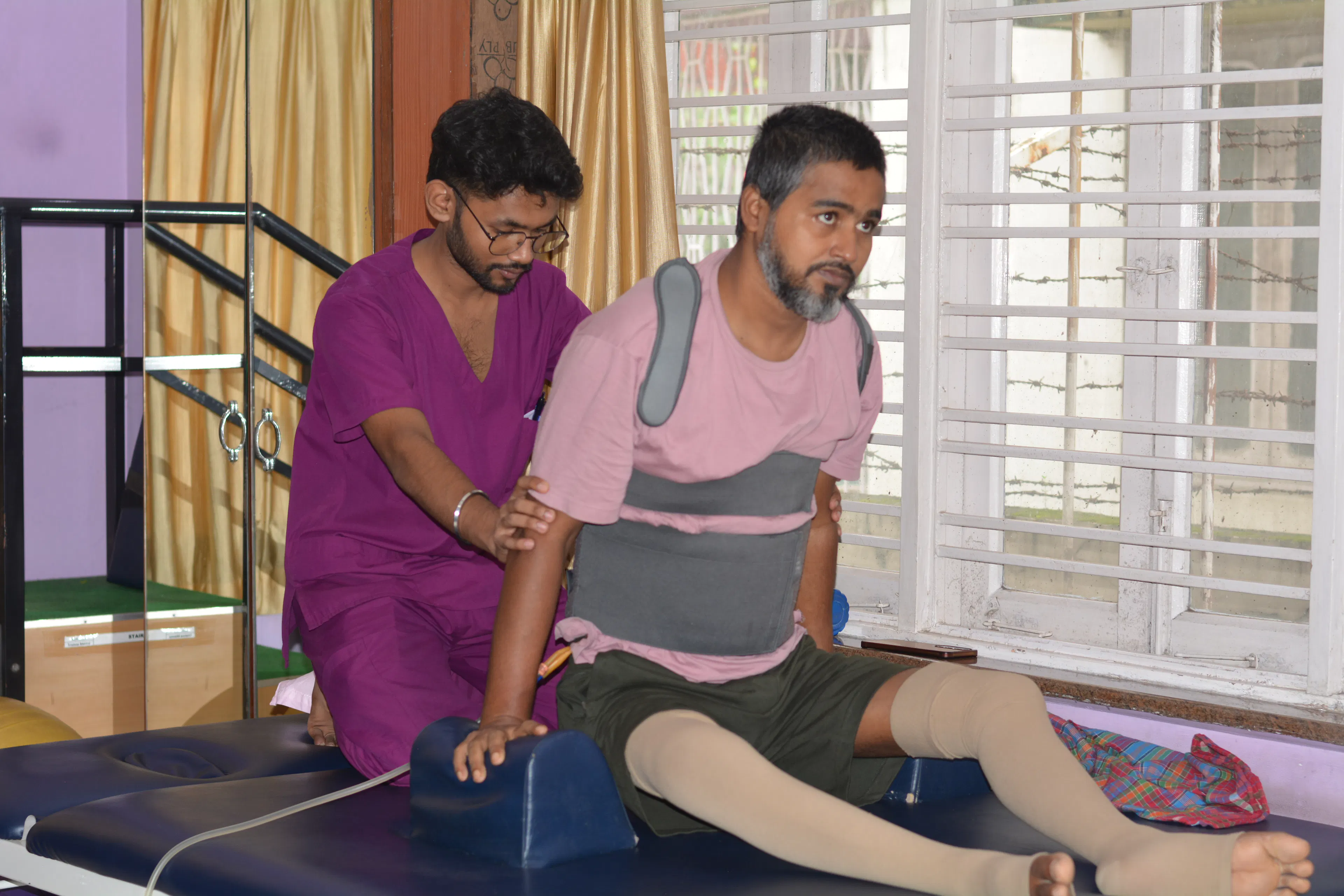
At Rehabana, our rehab programs are designed and led by doctors who specialize in Physical Medicine & Rehabilitation (PM&R). These are not general physicians. These are specialists who understand exactly how the brain recovers, what goals are realistic for each patient, and how to get there step by step.
Here's what makes it different from a regular physio setup:
Think of it this way. If regular physiotherapy is like studying on your own at home, specialized neuro rehab is like joining a coaching center with the best teachers, study plans, and regular tests to track your progress.
Both involve studying. But the results? Very different.
Also Read: Stroke Rehabilitation: Stop Making These Common Recovery Mistakes
I'm not going to give you false promises here. That's not how we work at Rehabana.
Every stroke is different. Every patient is different. A 50-year-old who had a mild stroke and started rehab within two weeks will recover very differently from a 70-year-old who had a massive stroke and started rehab after three months.
But here's a general idea of what the journey looks like:
First 3 months (the golden window):
This is when the brain is most ready to heal. Recovery is fastest during this period. Starting intensive neuro rehab here gives you the best chance at maximum recovery. If there's one thing I want you to remember from this entire article, it's this don't waste these three months.
3 to 6 months:
Recovery continues but may slow down a bit. This is where many families get discouraged. "He was improving so fast earlier, now it feels stuck." That's normal. The brain is still healing, but the easy gains have already happened. Now the harder, more detailed recovery begins fine motor skills, clearer speech, better balance.
6 months to 1 year:
Improvements still happen, but they require more effort and consistency. This is the phase where many patients either push through and see meaningful gains, or give up and plateau.
Beyond 1 year:
Contrary to what some people believe, recovery doesn't stop at one year. It slows down significantly, yes. But patients who continue with structured rehab, exercises, and a positive environment can keep improving for years.
The key? Start early. Stay consistent. Don't do it alone.

Let me tell you something that might surprise you.
In stroke recovery, the patient's family is almost as important as the medical team. I've seen patients with severe strokes recover beautifully because their family was involved, supportive, and consistent. And I've seen patients with mild strokes struggle because the family gave up too early or didn't understand their role.
Here's what families can do:
Be present in goal-setting meetings. At Rehabana, we involve families when setting recovery goals every two weeks. You should know what your loved one is working towards. It helps you support them at home too.
Encourage without pressuring. There's a fine line. "Try moving your hand" said gently is encouragement. "Why can't you do this yet?" is pressure. One heals. The other breaks someone who's already fighting hard.
Take care of yourself. I know this sounds cliché. But caregiver burnout is real and very common. If you collapse physically or emotionally who takes care of the patient? Eat properly. Sleep. Ask other family members for help. Talk to a counselor if you need to. At Rehabana, we offer counseling for families too, because your wellbeing matters just as much.
Learn about the condition. You're already doing this by reading this article. The more you understand about stroke and recovery, the less scared you'll feel. Knowledge replaces fear with action.

I want to end this with something real.
Every week at Rehabana, we see small miracles. A man who couldn't lift his arm six weeks ago now feeds himself. A woman who couldn't say her daughter's name after a stroke finally says it and the whole therapy room goes quiet for a second because everyone knows what that moment means.
Recovery after stroke isn't a Bollywood movie. There's no dramatic scene where the person suddenly stands up and walks. It's slow. It's frustrating. Some days feel like nothing is changing.
But something is always changing. The brain is always working. And with the right team, the right technology, and the right support system real, meaningful recovery happens.
If your loved one has had a stroke and you're wondering what to do next, you don't have to figure it out alone.
Rehabana is East India's first dedicated neuro rehab center, right here in Kolkata. Our programs are doctor-led, goal-driven, and built around your family's specific situation. We don't believe in one-size-fits-all. We believe in understanding your loved one as a person not just a patient.
Knowledge That Guides Recovery
Get expert neuro rehabilitation tips from the doctors at Rehabana, Kolkata — simple guidance on stroke recovery, spinal cord injury rehab, Parkinson’s care, and enhancing quality of life after neurological conditions.
Returning to West Bengal after hospital treatment? Continue structured, multidisciplinary Neuro Rehabilitation closer to home with Rehabana.
Read More
Join the Neuro Rehabilitation Support Network, a community initiative convened by Rehabana. Connect with survivors, caregivers and professionals to learn, share and rebuild life together.
Read More
Complete Parkinson's home care guide for families, rehabilitation, safety and daily living.
Read More